
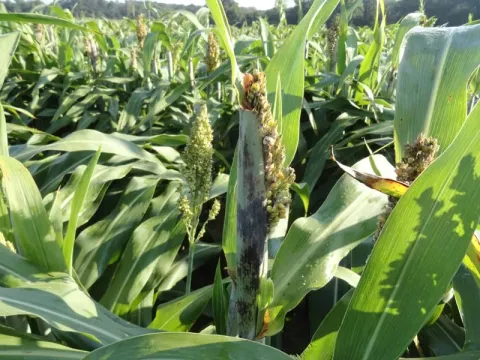
Fusarium stalk and grain rot of sorghum
Fusarium thapsinum
The disease is caused by the fungus Fusarium thapsinum, which is a member of the Ascomycota phylum. This pathogen is highly specialized in infecting sorghum and is a key component of the complex of fungi causing grain mold and stalk rot.
What the section contains
Fusarium stalk and grain rot of sorghum
The fungus survives as mycelium or resistant spores known as chlamydospores in crop debris and soil. Its ability to persist in the field for extended periods makes it a persistent threat to susceptible sorghum crops.
Fusarium thapsinum is characterized by its capacity to produce significant amounts of mycotoxins, particularly fumonisins. These compounds are secondary metabolites that pose risks to both animal and human health if contaminated grain enters the food chain.
Transmission occurs primarily through infected seeds, but spores are also dispersed through the air and water splashes, allowing for secondary spread during the growing season.
The pathogen demonstrates high versatility, infecting all plant parts including roots, stems, and reproductive heads, often acting as a facultative parasite that thrives on stressed plant tissues.
Symptoms of the disease often appear as seedling blight, where infected seeds fail to germinate or die shortly after emergence, leading to reduced stand density. Underground portions of surviving seedlings may show necrotic lesions.
The most visible sign on adult plants is the presence of a fluffy white or pinkish growth on the panicles during the grain-filling stage, which indicates mass sporulation of the fungus.
Affected grain becomes discolored, shriveled, and light in weight. The internal endosperm is degraded by the fungal hyphae, resulting in a loss of seed viability and a noticeable pinkish or reddish tint to the grain surface.
Stalk infection manifests as a distinct red discoloration of the vascular tissues, often referred to as "red rot." This internal damage inhibits the plant’s ability to transport water and nutrients efficiently.
In severe cases, the entire panicle may die prematurely, and the plant may exhibit symptoms of wilting or lodging due to the destruction of the lower stem tissues by the fungal growth.
The development of the disease is heavily favored by high humidity (exceeding 80%) and moderate temperatures. Rainy conditions during the flowering and grain-maturation stages are particularly conducive to outbreaks.
Insect damage is a major factor in disease severity. Pests like sorghum midge or head bugs create wounds in the glumes and seeds, providing direct entry points for the Fusarium thapsinum spores.
High plant population densities create microclimates within the field that retain moisture for longer periods, significantly increasing the probability of fungal infection and spread.
Late-season rainfall after the physiological maturity of the grain significantly increases the risk of mold development. Delayed harvesting exposes the crop to extended periods of wetting, promoting fungal proliferation.
Stress factors such as drought, nutrient imbalances, or extreme temperature fluctuations weaken the plant's natural defenses, making it more susceptible to infection by the pathogen.
The economic impact of the disease is substantial, resulting in direct yield losses due to reduced grain weight and poor kernel development. This leads to lower market values and decreased profitability.
Contamination of grain with fumonisins is a critical safety issue. Feeding such grain to livestock can lead to serious health complications, reduced growth rates, and reproductive disorders in animals.
The quality of grain is severely degraded, making it unsuitable for processing. Milling properties are affected, and the presence of mycotoxins may disqualify the batch for food or feed export markets.
Increased lodging due to stalk rotting leads to mechanical harvesting difficulties, further increasing yield losses in the field during the collection process.
Overall, the presence of the pathogen results in increased input costs for chemical protection, drying of the grain, and potential losses in crop storage due to continued mold growth.
The primary control measure is the use of high-quality, certified seed treated with systemic fungicides to prevent early-season seedling infection.
Crop rotation remains a fundamental practice; avoiding sorghum for at least three years in the same field helps break the cycle of pathogen accumulation in the soil.
Integrated pest management, particularly controlling head-damaging insects, is essential. Minimizing mechanical damage to the panicles significantly reduces the ability of the fungus to enter the plant.
Effective moisture management and prompt harvesting as soon as the grain reaches physiological maturity are critical to prevent grain colonization by the fungus.
Development and utilization of resistant sorghum hybrids constitute the most sustainable long-term strategy for managing Fusarium-related diseases, as these plants possess physical traits that resist fungal penetration.