
Banana freckle
Guignardia musae
Banana freckle is a serious fungal disease caused by the pathogen Guignardia musae, which is synonymous with Phyllosticta musarum. This fungus belongs to the Ascomycota phylum and specifically targets the foliage and fruit of banana plants.
What the section contains
Banana freckle
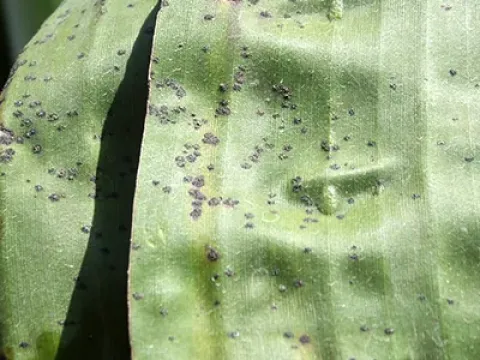
The fungus produces pycnidia—small, flask-shaped reproductive structures—that appear as characteristic black dots on the surface of infected tissues. These structures release spores that are the primary means of disease dispersal within a plantation.
The pathogen thrives by colonizing the epidermal layer of leaves and fruit, causing localized cell death and necrosis. Its lifecycle is finely tuned to the climatic conditions of humid tropical and subtropical regions.
Guignardia musae can survive for extended periods in fallen banana leaves and other plant debris, acting as a constant reservoir for infection. The resilience of the fungal spores allows them to persist until favorable environmental conditions reappear.
Understanding the molecular biology and strain variations of this pathogen is essential for developing effective diagnostic tools. Scientists monitor the pathogen's spread to manage and prevent outbreaks in commercial banana production areas.
The most visible symptom of banana freckle is the appearance of tiny, dark-colored spots on both leaves and fruit, which resemble freckles. These spots are often circular and can vary in density across the plant's surface.
As the infection progresses, these individual spots tend to coalesce, forming larger, darker patches of necrotic tissue. On the fruit, this condition leads to a rough, sandpaper-like texture that significantly lowers its commercial value.
The leaves of severely infected plants may show extensive chlorosis and necrosis, which negatively impacts the plant's photosynthetic efficiency. This leads to reduced vitality and can cause premature leaf senescence.
Inspection often reveals small, black, pin-head-sized dots within the lesions; these are the fruiting bodies of the fungus. In high humidity, the lesions might exhibit a velvety or darkened appearance due to the mass production of spores.
- Appearance of small, reddish-brown to black spots.
- Rough, gritty texture on banana fruit skin.
- Coalescence of lesions into large necrotic blotches.
- Premature yellowing and death of banana leaves.
- Visible fungal pycnidia embedded in lesions.
High relative humidity and frequent rainfall are the primary environmental drivers for the development of banana freckle. The disease is most severe in tropical climates where moisture is abundant and persistent.
The presence of free water on plant surfaces—such as dew, fog, or rain—is necessary for the germination of fungal spores. Moisture allows the spores to effectively infect the host tissue through stomata or mechanical injuries.
Poor plantation management, specifically high-density planting without proper canopy management, creates stagnant air conditions. This lack of airflow prevents leaves from drying, keeping them vulnerable to fungal infection for longer periods.
Wind and splashing raindrops are the main vectors for spreading the spores between healthy plants. Work crews moving through the field during wet weather can inadvertently transport spores on clothing and equipment.
The pathogen stays active year-round in areas with consistent temperature and moisture. Consequently, untreated plantations remain a perpetual source of the fungus, threatening both new growth and nearby healthy plants.
The primary economic impact of banana freckle is the downgrading of fruit quality. Fruit affected by the disease is often rejected by export markets, causing significant financial losses for commercial producers.
By damaging the photosynthetic area of the leaves, the disease directly stunts plant growth and reduces the weight of the fruit bunches. This physiological stress makes the plant less productive over its lifespan.
The increased cost of fungicide application adds significantly to the production overheads. Intensive spray programs are often required to maintain acceptable levels of disease control in high-risk areas.
Weakened plants are often more susceptible to secondary infections from other pathogens, further complicating plantation management. Over time, heavy infestation can lead to a shorter productive lifespan for the banana mat.
In regions where the disease is not controlled, it can lead to a total loss of commercial viability for susceptible banana varieties. Maintaining healthy foliage is critical for the overall success of the agricultural operation.
Sanitation is a vital component of control; the regular removal and proper disposal of heavily infected leaves can significantly reduce the amount of inoculum available to spread the disease.
Optimizing planting distance and implementing regular pruning and de-leafing improve canopy ventilation. Ensuring that the foliage dries quickly after rain is a simple but effective cultural control measure.
Fungicide programs are often necessary in high-disease-pressure environments. Rotating different classes of fungicides is essential to prevent the development of resistant fungal populations within the plantation.
Choosing resistant or tolerant banana cultivars is the most sustainable approach to long-term disease management. Breeding programs continue to look for genotypes that can withstand Guignardia musae pressure.
Strict quarantine measures should be enforced to prevent the movement of contaminated planting material into disease-free regions. Monitoring and early detection remain the first line of defense against the spread of the pathogen.