
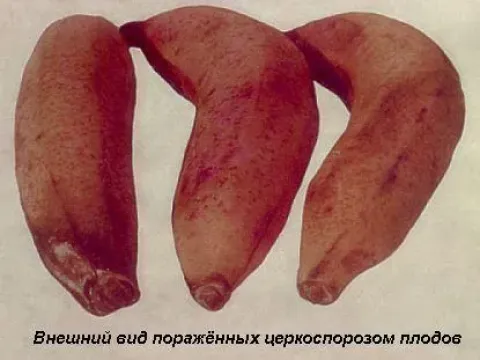
Banana Cercospora leaf spot
Cercospora hayi
The disease is caused by the fungus Cercospora hayi, a microscopic pathogen that specifically targets the foliage of banana plants in tropical and subtropical regions.
What the section contains
Banana Cercospora leaf spot
The fungus reproduces through conidia, which are easily dispersed by wind, splashing rain, or even human activities within the plantation.
Cercospora hayi establishes itself by penetrating the leaf tissue, where it develops a mycelial network that draws nutrients away from the host plant.
This pathogen is persistent and can survive in dead or decaying banana leaves, creating a recurring source of inoculum if field sanitation is neglected.
Understanding the life cycle of this fungus is crucial, as it relies on specific humidity and temperature levels to initiate the infection of healthy leaf tissues.
Early symptoms appear as small, chlorotic spots on the leaves, which gradually darken to brown or grey as the necrotic process progresses.
A distinctive yellow or light-green halo often surrounds each spot, representing the area where fungal toxins have killed or damaged the plant cells.
As the infection worsens, individual spots coalesce to form large, dead patches on the leaves, severely reducing the plant's ability to undergo photosynthesis.
Under humid conditions, the underside of the leaves may develop a fuzzy, olive-colored fungal growth, which is a mass of spores ready to spread the disease.
Damage typically starts from the lower, older leaves and moves upwards, creating a visible gradient of leaf necrosis across the plant.
The growth and spread of Cercospora hayi are highly favored by prolonged periods of high relative humidity and temperatures between 24 and 28 degrees Celsius.
Frequent rainfall or heavy dew provides the necessary water film on the leaf surface, which is essential for the germination of fungal spores.
Overcrowded plantations with poor air circulation create stagnant microclimates where humidity remains high, making the plants highly susceptible to infection.
Insufficient drainage and weed growth around the base of the plants contribute to higher localized humidity, promoting the spread of the pathogen.
Stress factors such as nutrient deficiencies can make banana plants more vulnerable to Cercospora hayi, as their immune response is compromised.
The primary economic impact of this disease is the significant reduction in leaf area, which directly correlates to decreased banana fruit weight and quality.
Premature ripening and the overall weakening of the plant structure can lead to substantial yield losses in commercial production settings.
By compromising the plant's photosynthetic capacity, the fungus prevents the accumulation of energy reserves, affecting the growth of the fruit bunch.
Severe infestations require frequent chemical intervention, significantly increasing production costs and potentially impacting the profitability of the banana farm.
In addition to yield loss, persistent infection can shorten the lifespan of the plantation, necessitating earlier replanting than would otherwise be required.
Effective management requires a multi-faceted approach, starting with strict field sanitation to minimize the initial inoculum in the plantation.
Managing plant spacing is vital to ensure adequate air circulation, which helps keep leaves dry and reduces the window for fungal infection.
Fungicides should be applied based on local disease monitoring and weather forecasting to target the most vulnerable stages of the fungal life cycle.
Selecting and breeding for resistant banana varieties provides a long-term solution for controlling the spread and impact of Cercospora hayi.
- Frequent removal and destruction of infected leaf material.
- Maintaining optimal plant density for better airflow.
- Scheduled fungicide rotations to prevent fungal resistance.
- Implementing good drainage practices to manage humidity.
- Using certified clean planting material to avoid new infections.