
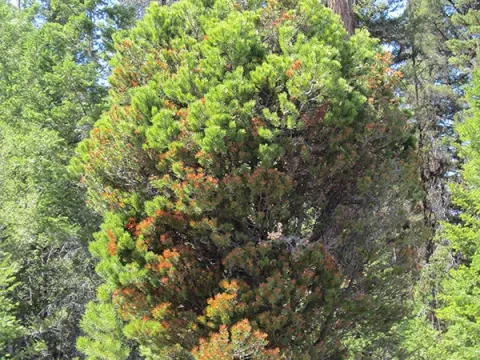
Elytroderma needle cast
Elytroderma
The causal agent of this disease is the ascomycete fungus Elytroderma deformans. It is a specialized pathogen that primarily infects various species of pine trees within the Pinus genus.
What the section contains
Elytroderma needle cast
The fungus has a unique life cycle characterized by systemic infection. Once the fungus enters the pine tissues, it develops a perennial mycelium that can persist within the needles and twigs for many years.
Reproduction occurs through the formation of hysterothecia, which are dark, linear fruiting bodies that develop on the surface of infected needles. From these structures, ascospores are released into the air during moist conditions.
Unlike some other needle cast fungi that only infect needles, Elytroderma can invade the twigs and branches. This allows the fungus to remain active in the tree long after the original needles have been shed.
The pathogen is particularly well-adapted to cool, humid climates where moisture lingers on the foliage. This environmental preference dictates the geographical distribution of the disease in forest ecosystems.
The most distinctive symptoms include premature yellowing and browning of the needles. Initially, the needles may appear chlorotic, eventually turning a reddish-brown color as they die.
Small, black, elongated fruiting bodies (hysterothecia) appear on the surface of the infected, dead needles. These are key diagnostic structures used to identify the presence of the pathogen in the field.
Severe infections lead to the deformation of shoots. Infected branches often become curved, and the growth of dense, stunted foliage clusters, commonly referred to as "witches' brooms," is a classic sign of the disease.
Chronic infestation results in significant thinning of the crown. Because the fungus infects the needles throughout the tree, the overall foliage density decreases, leaving only the current year's needles intact.
- Yellowing and browning of pine needles.
- Presence of black fruiting bodies on dead needles.
- Curved and distorted young branches.
- Witches' broom formation in the crown.
- Significant premature needle drop.
The disease thrives in conditions where humidity remains high for extended periods. Moist weather during the spring and summer is essential for the dispersal and germination of fungal spores.
Dense forest stands create a stagnant microclimate within the canopy. Lack of adequate airflow slows down the drying of foliage, providing the fungus with ample time to penetrate the plant tissues.
Tree health plays a critical role in disease susceptibility. Pines stressed by drought, poor soil quality, or competition for resources are much more likely to develop severe symptoms than healthy individuals.
The proximity of heavily infected mature trees provides a constant source of inoculum for younger trees. Wind-blown spores can travel significant distances to initiate new outbreaks in nearby areas.
The duration of foliage wetness is a primary limiting factor for the infection. Any condition that keeps the needles damp—such as frequent fog or canopy density—increases the risk of disease spread.
Elytroderma needle cast causes substantial economic losses in forestry. By reducing the number of healthy needles, the tree’s photosynthetic capacity is severely diminished, leading to reduced wood growth.
The long-term impact involves the weakening of the tree's overall vigor. Once a pine is systemically infected, it becomes highly susceptible to secondary attacks from bark beetles and other wood-boring insects.
In terms of timber quality, severe shoot deformation can result in structural defects in the wood, rendering it less valuable for construction or other industrial purposes.
For conservation and recreation, the visual degradation of forest landscapes is a significant concern. Infected pines lose their aesthetic value, which affects the ecological health of forest parks.
Young pine stands are at a higher risk of total mortality if infected early. This forces forest managers to invest in costly replanting and disease control efforts to restore the health of the site.
Sanitation is the most effective control measure. Removing and destroying infected branches or entire trees that serve as severe sources of inoculum helps slow the disease progression.
Proper forest management, such as thinning, is essential. Reducing stand density improves air circulation, which helps foliage dry out faster and lowers the likelihood of successful spore germination.
In nurseries, fungicidal applications are a standard procedure to protect young seedlings. These preventative measures ensure that the nursery stock remains healthy before being planted in the field.
Regular forest health monitoring and early detection of symptoms are crucial. Proactive management can contain localized outbreaks and prevent the disease from becoming a widespread epidemic.
Selecting disease-resistant pine varieties and ensuring the right species are planted in suitable climatic zones provides the best long-term defense against Elytroderma infestations.