
Emericella nidulans
Emericella nidulans
Description
Symptoms
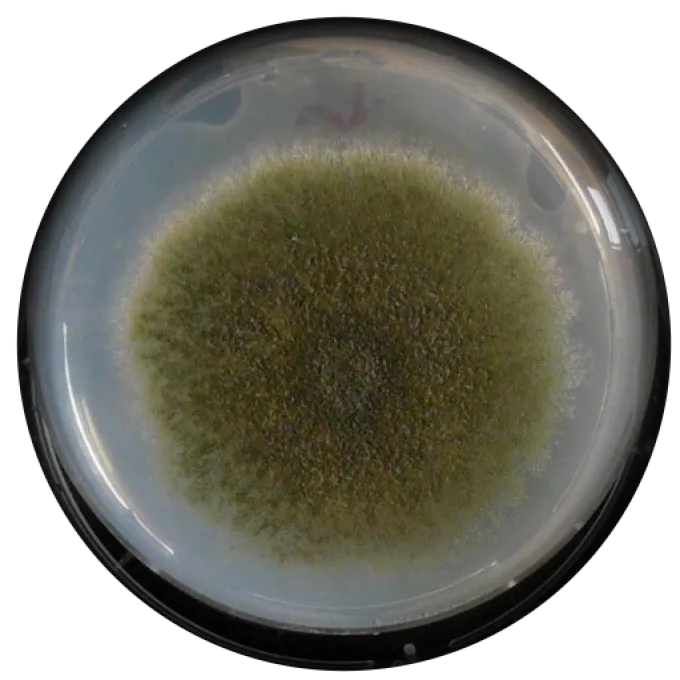
The visual symptoms of an Emericella nidulans infection are often characterized by the appearance of a dusty, greenish-yellow to brownish mold on the surface of affected plant parts, representing the fungal sporulation.
Root system damage is a major sign of the disease. Infected roots turn dark, soften, and begin to rot, which hinders the plant’s ability to take up nutrients and moisture, eventually leading to stunted growth and wilting.
Leaf infection manifests as necrotic spots that enlarge over time. If humidity levels are high, these lesions may become covered in fungal growth, which spreads quickly to adjacent healthy tissues on the plant.
When seeds are infected during storage, the fungus invades the embryo and endosperm. This results in the complete loss of seed viability and vigor, making the grain unusable for planting or processing.
Because the symptoms can be similar to those caused by other common mold species, accurate identification of Emericella nidulans often requires laboratory analysis or microscopic examination of the fungal structures.
Pathogen
Emericella nidulans (commonly known by its asexual stage, Aspergillus nidulans) is a widespread soil-borne fungus and a significant plant pathogen. It is classified as a facultative parasite that opportunistically infects stressed plant tissues.
The fungus belongs to the Aspergillaceae family. It is known for its ability to produce cleistothecia, which are resilient fruiting bodies that allow the pathogen to survive harsh environmental conditions for extended periods within the soil.
Biologically, this fungus produces a robust array of enzymes that enable it to decompose organic matter efficiently. This characteristic makes it a threat not only to growing crops but also to harvested produce stored under high humidity.
Infection typically begins when conidia are dispersed via wind or water droplets, landing on host tissues. Once environmental conditions become favorable, the conidia germinate and begin to colonize the plant’s surface and internal tissues.
While frequently used as a genetic research model, in agricultural environments, Emericella nidulans often acts as a secondary invader, worsening the condition of crops already weakened by primary diseases or environmental stress.
Conditions for development
The growth of Emericella nidulans is highly sensitive to temperature. It thrives in warm environments, with optimal mycelial growth occurring between +25°C and +37°C, making it particularly active during hot summer months.
High relative humidity is the second critical factor. The pathogen requires a moisture level above 70-80% to germinate effectively and spread its hyphae throughout the plant tissue, which is common in poorly ventilated crop stands.
Cultural practices that lead to waterlogged soils or excessive humidity around the plant base significantly increase the risk of infection, as these conditions favor fungal proliferation and stress the plants.
Physical injuries to the plant, whether from mechanical cultivation or insect damage, act as entry points for the fungus, facilitating its transition from the soil into the plant's vascular and parenchymal tissues.
Storage conditions that lack proper air circulation and moisture control create a microclimate that allows the fungus to spread rapidly through stored grains and agricultural commodities.
Why it matters
The primary economic impact is the reduction of total crop yield. Because the fungus attacks roots and internal tissues, affected plants show decreased productivity, reduced size, and lower overall quality.
There is a significant risk of mycotoxin accumulation in infected plant materials. These secondary metabolites can render produce unsafe for human consumption or animal feed, posing health risks and economic losses.
Infected seeds often suffer from poor germination rates. If planted, these seeds lead to sparse and unhealthy stands, requiring costly re-sowing and management interventions to restore crop density.
Storage losses are severe, as the fungus can rapidly colonize stored goods. Without proper intervention, large quantities of harvest can be rendered completely spoiled in a very short period due to fungal rotting.
The pathogen is highly adaptable and can persist in the soil for long durations, creating a lasting disease reservoir that complicates future crop production cycles in infested fields.
Protection
Crop rotation is a fundamental management strategy. By rotating to non-host crops, farmers can reduce the density of fungal inoculum in the soil and break the cycle of infection over time.
Seed treatment with professional-grade fungicides is essential. These systemic chemicals provide a protective barrier around the seed, preventing early colonization by soil-borne fungal pathogens.
Good agricultural practices, such as optimizing soil drainage, managing fertilization to avoid over-concentration of nitrogen, and aggressive weed control, help minimize plant stress and reduce infection pressure.
In storage facilities, rigorous control of temperature and humidity is required. Constant ventilation and monitoring for moisture condensation are necessary to keep the fungal population in check.
Biological control, including the application of beneficial fungi like Trichoderma species, offers an environmentally friendly way to suppress Emericella nidulans populations by competing for nutrients and space in the soil.
Discussion
No discussions yet — be the first.