
Dinobryon
Dinobryon
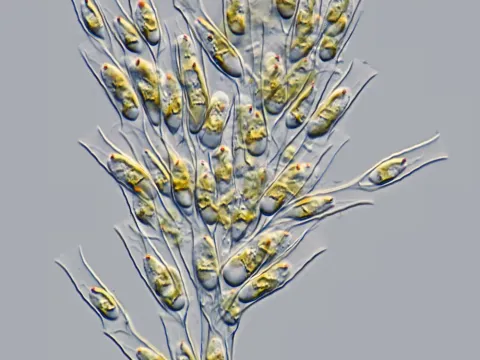
Dinobryon is a genus of golden-brown algae (Chrysophyceae) that typically forms branching, tree-like colonies in freshwater habitats.
What the section contains
Dinobryon
While not a plant disease in the agricultural crop sense, it is a significant microorganism in aquatic environments that interacts with cultivated species.
The organisms reside in protective structures known as loricae, which are composed of cellulose and are often joined together by the stalks of the individual cells.
They are capable of both photosynthesis and heterotrophic nutrition, allowing them to thrive in varied environmental conditions.
Their biological structure makes them a key part of the aquatic food web, though they can become problematic when their population density spikes.
A primary visual sign of a Dinobryon presence is the discoloration of the water, which often takes on a brownish or golden hue during bloom events.
Microscopic examination reveals the distinctive branched, vase-like colonial structures that are characteristic of this genus.
In highly infested ponds, a light, dust-like particulate matter may be visible on the water surface or accumulating on submerged surfaces.
Increased density of these algae often leads to a noticeable change in the odor of the water, which can become musty or fishy.
Laboratory testing of water samples is the most reliable method for identifying the specific population density of Dinobryon colonies.
Dinobryon prefers standing or slow-moving freshwater systems, particularly those that are slightly acidic to neutral in pH.
The availability of phosphorus and nitrogen is the most important limiting factor; high levels of these nutrients promote rapid colonial growth.
These algae often thrive in cool to moderate water temperatures, making them common in spring and late autumn seasons.
Adequate light penetration is necessary for their primary production phase, leading to higher concentrations in the upper euphotic zone.
Lack of water turbulence or stratification in small, sheltered ponds provides the stability required for large colony development.
The primary harm caused by Dinobryon occurs during bloom declines, where massive decomposition leads to significant dissolved oxygen depletion.
This oxygen stress poses a major threat to fish populations and can lead to sudden fish kills in intensive aquaculture systems.
Metabolic byproducts released by the algae can degrade water quality, imparting unpleasant tastes and odors to the surrounding aquatic environment.
High densities of these algae can outcompete and displace desirable phytoplankton species, disrupting the pond's natural food chain.
In industrial water settings, these colonies can foul intake screens and filtration systems, leading to operational maintenance challenges.
Effective management begins with nutrient load reduction, particularly by preventing fertilizer runoff from adjacent agricultural lands into the pond.
Artificial aeration systems are highly recommended to prevent oxygen stratification and keep water circulation active during bloom periods.
Stocking ponds with species that consume phytoplankton can provide a natural biological control mechanism to manage algae biomass.
Chemical control using algaecides should be treated as a last resort, as sudden mass die-offs can cause toxic shock and further oxygen loss.
Regular water quality monitoring allows operators to detect early signs of Dinobryon blooms and implement preventative measures accordingly.