
Desarmillaria ectypa
Desarmillaria ectypa
Desarmillaria ectypa is a specialized fungal species belonging to the family Physalacriaceae. Often referred to by its common name, the marsh honey fungus, it exhibits a distinct preference for high-moisture environments, such as wetlands, peat bogs, and poorly drained forest soils.
What the section contains
Desarmillaria ectypa
The pathogen functions primarily as a facultative parasite. While it is highly efficient at decomposing dead organic matter like wood debris, it can also invade the living roots and root collars of weakened plants, eventually leading to their decline.
A key biological feature of Desarmillaria ectypa is its ability to produce rhizomorphs—hardened, cord-like structures made of dense mycelium. These rhizomorphs grow through the soil, allowing the fungus to bridge the gap between decaying organic matter and the healthy root systems of nearby hosts.
Unlike some of its aggressive relatives in the Armillaria genus that cause large-scale forest mortality, this species is typically localized. Its lifecycle is tightly coupled with the availability of wet woody substrates, making it a niche pathogen rather than a widespread agricultural plague.
The fungus reproduces through spores released from mushroom-like fruiting bodies. These spores can travel on the wind, establishing new colonies on fallen logs or submerged roots when environmental conditions are sufficiently damp and acidic.
The initial signs of infection are often non-specific, presenting as general vigor loss in the host plant. Leaves may show signs of chlorosis, the canopy may appear sparse, and the plant may exhibit premature wilting during dry periods due to impaired water transport.
A closer inspection of the root collar reveals the presence of white, fan-shaped mycelial mats under the bark. This is a characteristic symptom of infection by species in the Armillaria complex, including Desarmillaria ectypa.
Rhizomorphs, appearing as dark brown to black strings, are often found clinging to the root surfaces or spreading through the soil surrounding the root zone. These structures are instrumental in identifying the presence of the pathogen before external symptoms become severe.
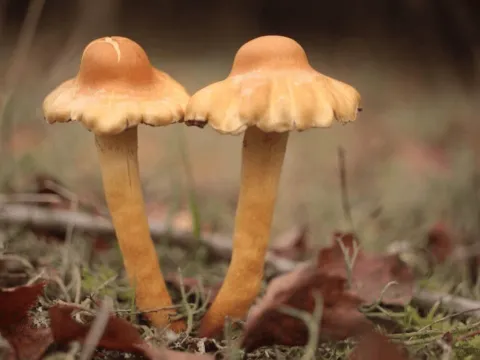
In moist conditions, fruiting bodies—small, scaly mushrooms—may emerge from the base of the infected plant or directly from the infested woody debris. These mushrooms serve as the most visible indicator that the pathogen has reached a reproductive stage.
As the disease progresses, the root tissues undergo decay, becoming soft, brittle, and often emitting a distinct fungal odor. In advanced stages, the structural integrity of the roots is lost, causing the plant to lean or topple over completely.
The primary factor facilitating the development of Desarmillaria ectypa is waterlogged soil. Environments with high water tables or inadequate drainage provide the perfect moisture levels for rhizomorph growth and mycelial colonization.
The pathogen thrives in acidic soil conditions common in bogs and marshy habitats. The presence of buried wood, such as leftover stumps, logs, or thick roots from previous vegetation, provides an essential fuel source that sustains the fungus in the soil for years.
Plant stress serves as a gateway for infection. Plants that are not suited to wet sites, or those suffering from improper fertilization or mechanical root damage, are significantly more susceptible than those grown in well-aerated, optimal soil conditions.
Temperature plays a role in the metabolic rate of the fungus. Moderate, mild temperatures alongside consistent moisture maximize the rate of spread. While freezing or extreme heat may slow down development, the fungus remains dormant and viable in the soil.
Anthropogenic activities can exacerbate the spread. Moving contaminated soil, using unclean tools from infected areas, or tilling soil during the wet season can facilitate the distribution of mycelial fragments and spores to previously healthy parts of the landscape.
The economic impact of this fungus is most significant in forestry, nurseries, and ornamental gardening in wet, low-lying areas. It can lead to the loss of valuable specimens and the need to abandon or heavily remediate entire planting sites.
Because the fungus is capable of surviving for long periods in the soil as a saprophyte, once it is established, it poses a recurring threat. The "spotty" nature of the infection makes it difficult to manage without removing all potential woody hosts from the infected area.
The disease effectively stunts growth and reduces the quality of nursery stock. In professional settings, this can lead to quarantine measures and substantial financial losses due to the destruction of plants that cannot be treated effectively.
Furthermore, weakened plants are more susceptible to secondary attacks by wood-boring insects. The combination of root rot and insect infestation creates a lethal synergy that accelerates the collapse of the plant population.
Soil quality degradation is a hidden harm. The presence of such a robust root pathogen makes the land less suitable for future agricultural or horticultural use, requiring intensive soil management practices to restore health.
The most effective strategy is the improvement of site drainage. Ensuring that water moves away from root zones prevents the establishment of the high-moisture conditions that Desarmillaria ectypa requires to thrive.
Sanitation is critical. All stumps, large roots, and woody debris should be removed from the site before planting to eliminate the primary food sources for the fungus. This physical removal is the most reliable way to prevent long-term soil infestation.
Choosing plant species adapted to wet soils can reduce the incidence of infection by ensuring that the host plants maintain their natural vigor and resistance. Proper spacing also helps improve airflow and soil aeration around the root zone.
If an infection is detected, quarantine the area by excavating a trench around the affected zone to sever any underground rhizomorph connections. Remove the infected plants along with the surrounding root ball to minimize the inoculum in the soil.
- Improve soil drainage and aeration.
- Complete stump and root removal.
- Select resistant or moisture-tolerant plant varieties.
- Monitor soil health and pH levels periodically.