
Dematophora root rot
Dematophora bunodes
The disease is caused by the fungus Dematophora bunodes (synonym Rosellinia bunodes). This soil-borne pathogen belongs to the Ascomycota and is known for its ability to persist in organic substrates for long periods.
What the section contains
Dematophora root rot
The fungus spreads primarily through rhizomorphs — dense mycelial cords that grow through the soil, allowing it to migrate from infected roots to healthy neighboring plants.
It has a very broad host range, affecting various woody plants, including coffee, citrus, cocoa, and diverse fruit trees, particularly in tropical and subtropical climates.
The pathogen produces enzymes that degrade the bark and wood of the root collar, effectively destroying the plant's vascular system and stopping nutrient and water transport.
Sclerotia, which are dormant fungal structures, allow the pathogen to survive in the soil even without a living host for several years, making eradication extremely challenging.
The first symptoms are often non-specific, including stunted growth, leaf chlorosis, and premature leaf drop. Gradual dieback of branches, starting from the crown, is common as the root system fails.
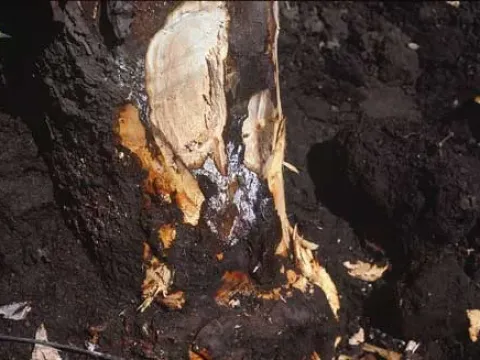
A detailed examination of the root collar reveals white or greyish fungal mycelium that wraps around the bark. Over time, these threads coalesce into dark, hardened cords known as rhizomorphs.
The bark of infected roots becomes soft, discolored, and easily peels away from the wood. Upon peeling, a characteristic white mycelial fan or mat is usually visible on the wood surface.
As the disease progresses, the roots lose their structural integrity and become brittle. The plant eventually collapses or dies, often with the foliage still attached to the dying branches.
A distinct, musty odor of decay is often present near the infected root zone, caused by the colonization of the weakened tissue by various secondary saprophytic microorganisms.
High soil moisture and poor drainage are the most critical factors for the rapid spread of the fungus. Excessive water creates the perfect environment for rhizomorph development.
The disease frequently appears in soils rich in undecomposed organic matter, such as old stumps, root debris, or heavy mulch, which serve as a primary energy source for the pathogen.
Optimal development occurs at temperatures between 20–28 degrees Celsius. This temperature range makes the disease highly active in tropical and subtropical orchard systems.
Mechanical injuries to the root system during cultivation or by soil-dwelling pests facilitate the entry of the fungus into the plant tissue, significantly increasing infection rates.
High-density planting increases the risk of disease spread, as overlapping root systems provide a direct pathway for the fungus to move from tree to tree without difficulty.
Dematophora root rot is highly destructive, typically resulting in the total loss of the infected tree. Because it is difficult to detect early, infection often leads to severe crop losses.
The economic impact involves not just the loss of yield, but also the costs associated with the removal of dead trees and the necessary quarantine or soil treatment required before replanting.
The loss of trees creates gaps in the plantation, which complicates mechanical operations and reduces the overall efficiency and productivity of the entire agricultural area.
Long-term infestation of the soil forces farmers to abandon certain crops or switch to resistant varieties, which may not always be as profitable or marketable as the original crop.
The persistence of the pathogen in the soil means that previously infected fields remain "sick" for years, significantly limiting land use and requiring strict long-term management.
The primary control method is strict sanitation: the prompt removal and destruction of infected trees, including as much of the root system as possible to eliminate inoculum.
Creating isolation trenches around the infected site can help contain the spread of rhizomorphs, preventing the disease from moving toward healthy trees in the vicinity.
Effective water management is crucial. Installing proper drainage systems to prevent waterlogging significantly reduces the suitability of the soil for the fungus.
Biological control using antagonistic fungi like Trichoderma species has shown promise in suppressing Dematophora and reducing the severity of root infection in soil.
Integrating resistant rootstocks and maintaining proper spacing between trees are vital preventive strategies to ensure the long-term health and survival of the orchard.