
Dendrobium cercospora
Pseudocercospora dendrobii
Description
Symptoms
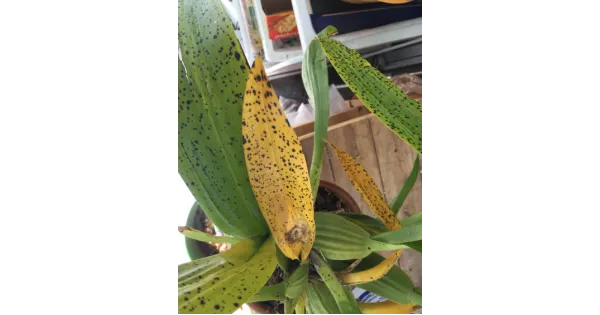
Early symptoms include tiny yellowish spots that eventually darken to brown, purple, or black. A light chlorotic halo often surrounds these spots, helping to distinguish them from other issues.
A definitive diagnostic feature is the appearance of gray or olive-colored fungal growth on the underside of the leaves, which represents the sporulation of the fungus during humid weather.
As the infection progresses, individual spots coalesce to form large necrotic patches. This eventually causes the leaf to yellow prematurely and drop, resulting in significant foliage loss.
In severe cases, the infection can spread to pseudobulbs, manifesting as sunken black spots. This disrupts the plant's ability to store nutrients and water, impacting long-term health.
The spots often exhibit an angular appearance as they are limited by the leaf veins, which is a key characteristic to observe when inspecting your orchids for signs of disease.
Pathogen
The causative agent of this disease is the fungus Pseudocercospora dendrobii. It is a specialized fungal parasite that primarily affects the genus Dendrobium, targeting the foliage and occasionally pseudobulbs.
Classified as a fungal leaf spot disease, this pathogen survives in necrotic plant tissues and debris. It is a serious threat in greenhouses where high-density planting facilitates its spread.
The fungal mycelium invades the leaf epidermis, triggering local necrosis. Spores are easily disseminated via water splashing or air currents, leading to rapid contamination of neighboring plants.
The life cycle of the pathogen is heavily dependent on moisture. Once a spore lands on a susceptible surface, it requires a period of leaf wetness to germinate and penetrate the orchid's tissues.
This fungus is considered a persistent pathogen that can survive for long periods in the growing medium if sanitation is poor, making it difficult to eradicate once established in a collection.
Conditions for development
The primary driver for Pseudocercospora dendrobii development is high relative humidity (above 70-80%). The fungus thrives when surfaces remain wet for extended periods.
Temperatures ranging from 20°C to 28°C (68°F to 82°F) are optimal for mycelial growth. Fluctuating temperatures that lead to condensation on leaves also promote active infection.
Poor ventilation and overcrowded growing conditions prevent leaves from drying out quickly, creating the perfect microclimate for the spores to germinate and colonize the orchid tissue.
Plants stressed by inadequate light or poor cultural practices are significantly more susceptible. Over-fertilization, especially with nitrogen, can also lead to softer tissues that are easier for the fungus to penetrate.
Inadequate hygiene in the greenhouse, such as leaving fallen leaves in the pot or failing to disinfect tools, ensures the survival of the pathogen throughout the year.
Why it matters
The primary harm caused by this disease is the reduction in photosynthetic capacity. Excessive leaf drop forces the plant to deplete stored energy in the pseudobulbs to survive.
Orchids infected with Dendrobium cercospora often fail to bloom. If they do flower, the overall vigor of the plant is so low that the blossoms are usually smaller and of poor quality.
Commercial growers face severe economic losses due to the unsightliness of the infected foliage, which makes the plants unsellable and requires intensive chemical intervention.
Secondary infections, such as bacterial soft rots, frequently follow the primary fungal damage. The broken skin of the leaf provides an easy entry point for opportunistic pathogens.
If not addressed, the infection can eventually lead to the death of entire pseudobulbs and, in terminal cases, the death of the entire orchid plant due to total metabolic collapse.
Protection
Sanitation is the cornerstone of control. Immediately prune and dispose of any symptomatic leaves to reduce the source of secondary inoculum within your collection.
Ensure adequate airflow and avoid overhead watering that keeps leaves wet for long periods. Watering in the morning is essential to ensure leaves are dry by nightfall.
Systemic fungicides, particularly those containing triazoles or copper-based compounds (used cautiously), are effective for treating established infections if applied regularly.
- Isolate all symptomatic plants immediately.
- Disinfect cutting tools with alcohol between every cut.
- Improve air circulation using fans to promote leaf drying.
- Apply preventive bio-fungicides like Bacillus subtilis regularly.
Monitoring is crucial. Frequent inspection of the undersides of leaves during humid weather allows for early detection, which makes the disease much easier to manage before it becomes systemic.
Discussion
No discussions yet — be the first.