
Cotton Alternaria leaf spot
Alternaria gossypina
Description
Symptoms
Initial symptoms appear as small brown or gray spots on cotyledons and true leaves. Over time, these spots expand, often showing concentric zonation, which is a key diagnostic feature of this specific disease.
As the disease progresses, necrotic areas may dry out and fall away, creating a "shot-hole" appearance. Under high humidity, an olive-black velvety fungal growth may be visible on the surface of the lesions.
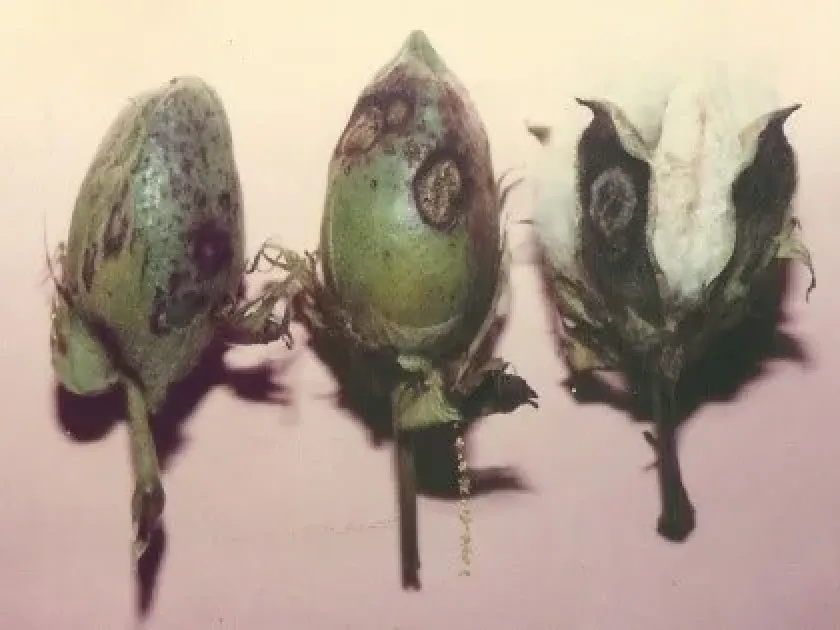
The disease affects not only the foliage but also reproductive structures, including buds and bolls. On bolls, sunken brown spots may develop, leading to premature opening and fiber degradation.
Stem infections manifest as elongated dark-brown necroses, which can girdle the stem in severe cases, leading to wilting and the death of the upper plant parts.
Massive infection of the leaf canopy results in premature chlorosis and leaf drop. This reduces the plant's photosynthetic capacity, directly impacting the final yield formation.
Pathogen
The causative agent of this disease is the imperfect fungus Alternaria gossypina (synonym Alternaria macrospora). This pathogen specializes in infecting cotton at various stages of plant development, entering through stomata or mechanical injuries.
The fungus develops mycelium within plant tissues, gradually destroying cell structures. The pathogen survives in soil, on plant debris, and on seeds, making it highly resilient and persistent in crop rotation systems with poor hygiene.
The life cycle involves the formation of conidia, which are easily dispersed by wind, rain splashes, and insects over significant distances, ensuring rapid spread of the infection throughout the field.
Biologically, the fungus is a hemibiotroph; it initially feeds on living cells before transitioning to a necrotrophic phase. This strategy allows it to rapidly form large necrotic lesions on leaves and stems.
The incubation period of the disease is highly dependent on environmental factors, particularly temperature and humidity. Under optimal conditions, spores germinate within hours, starting the colonization cycle.
Conditions for development
High humidity and moisture are the primary triggers for the widespread development of Alternaria leaf spot. Outbreaks are most common following periods of heavy rain followed by warm, sunny weather.
The optimal temperature range for Alternaria gossypina development is between 22 and 28 degrees Celsius. These conditions significantly accelerate spore production and infection rates.
Nutritional deficiencies, particularly potassium deficiency, significantly lower the natural resistance of cotton to the pathogen. Stressed or weak plants are colonized much faster than healthy ones.
High plant density creates a microclimate with poor air circulation and retained moisture on leaves, which acts as a catalyst for spore germination and colonization.
Inadequate management of previous crop debris serves as the primary reservoir for the infection, making early-season control difficult if sanitation protocols are ignored.
Why it matters
The primary impact of the disease is the loss of photosynthetic leaf area, leading to a significant reduction in cotton lint yield and overall plant biomass.
Fiber quality is severely degraded; it becomes brittle, shorter, and immature. Bolls infected by the fungus often rot, rendering them unsuitable for harvest.
Seeds harvested from infected plants often carry the fungus. Using such seeds in subsequent seasons can result in poor germination rates and the development of seedling root rot.
Infected tissues can become gateways for secondary bacterial infections, such as bacterial blight, complicating the disease profile and management.
In epidemic years, yield losses can reach 20–40%, severely threatening the economic viability of the cotton operation.
Protection
The core of disease management is strict crop rotation, allowing a gap of at least 3 years before replanting cotton in the same field to reduce the initial spore load.
Thorough deep plowing (tillage) is essential to bury crop residues deeply, promoting their decomposition and destroying the pathogen's primary overwintering sites.
Using high-quality, fungicide-treated seeds is mandatory to protect seedlings during the initial development phase and prevent seed-borne infections.
During the growing season, systemic fungicide applications should be employed at the first sign of symptoms to halt the spread of the fungus across the field.
- Ensure balanced mineral fertilization, specifically potassium.
- Control weeds that may act as alternative hosts.
- Maintain optimal plant spacing for better aeration.
- Promptly remove and destroy infected plant debris.
Discussion
No discussions yet — be the first.