
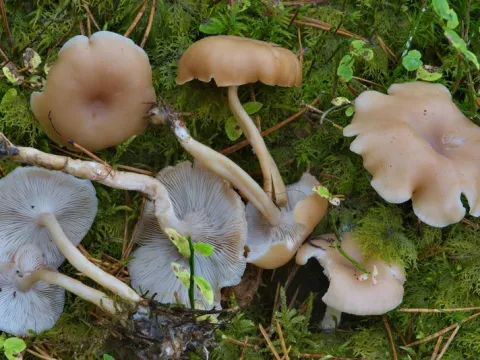
Fragrant funnel
Clitocybe fragrans
The Fragrant funnel (Clitocybe fragrans) is a species of saprotrophic fungus belonging to the Tricholomataceae family. It is strictly a decomposer and does not act as a plant pathogen.
What the section contains
Fragrant funnel
This fungus survives by consuming decaying organic matter in the soil, such as leaf litter and woody debris, rather than attacking living plant tissues.
From an agronomic perspective, it is not considered a pest or a disease, as it causes no economic damage to crops, fruit trees, or vegetable patches.
It plays a beneficial role in the soil ecosystem by recycling nutrients and enhancing the decomposition process of dead plant materials.
As a saprotroph, it is an indicator of soil health and organic matter accumulation, meaning its presence is ecologically positive rather than harmful.
The fruiting bodies of the Fragrant funnel are relatively small, characterized by caps ranging from 1 to 4 centimeters in diameter with a pale watery-grey color.
A key diagnostic feature is the presence of decurrent gills that run down the stem, which is common for many species within the Clitocybe genus.
The stem is slender, fibrous, and matches the color of the cap, often becoming hollow as the mushroom matures in the field.
The flesh is thin and exudes a distinct and strong scent of anise, which is the most reliable identification trait for this specific fungus.
- Cap diameter: 1–4 cm.
- Color: watery-grey to pale buff.
- Odor: strong, sweet anise-like.
- Gills: decurrent (running down the stem).
The fungus thrives in cool, moist environments, typically favoring damp forest floors with abundant leaf litter or organic mulch layers.
Development is highly dependent on humidity levels; fruiting bodies appear most frequently during wet autumn months following significant rainfall.
It prefers shady areas where the soil remains cool and damp, avoiding direct sunlight which can cause the delicate fruiting bodies to dry out quickly.
Spore dispersal relies on wind currents, enabling the fungus to colonize new areas that provide the necessary moisture and organic substrates for growth.
In managed landscapes, this fungus may appear in garden beds heavily covered with organic mulch, confirming that the soil has high moisture and decomposition activity.