
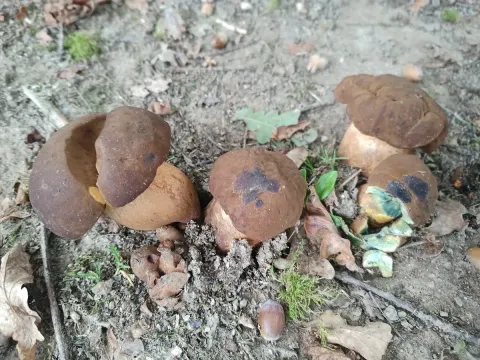
Fragrant bolete
Boletus fragrans
The Fragrant bolete (Boletus fragrans) is a mushroom species belonging to the Boletaceae family. It is important to note that this fungus is not a plant pathogen and does not cause diseases in crops or trees.
What the section contains
Fragrant bolete
As a basidiomycete fungus, it plays a vital role in forest ecology. It lives primarily in a symbiotic relationship with hardwood trees through its extensive mycelial network.
The mycelium functions by forming mycorrhiza, which assists the host plants in absorbing water and essential soil minerals. This symbiotic connection enhances the overall health and vigor of forest ecosystems.
Its biological cycle revolves around decomposing organic matter and nutrient cycling in the forest floor. This contributes to soil fertility and the general biodiversity of the ecosystem.
Because it is not a parasite, no protective measures or chemical treatments are required. It serves as a beneficial organism that indicates a well-balanced and healthy woodland environment.
The physical appearance of the Fragrant bolete is marked by a broad cap, often brownish or tan, which feels slightly velvety to the touch.
The flesh is typically pale and does not undergo significant color changes upon bruising, which is a key diagnostic feature for field identification.
The defining characteristic of this species is its pleasant, distinctively fruity or spicy aroma, which is reflected in its scientific name.
Its stem is robust and often displays a fine reticulated pattern, typical of many bolete species, providing structural support to the fruiting body.
The pore surface on the underside of the cap starts as a light yellow and transitions to an olive-yellow hue as the spores mature.
This species is found in deciduous forests, where it associates with host trees such as oaks and beeches to form stable mycorrhizal networks.
Fruiting bodies development is highly dependent on humidity levels, requiring consistent rainfall during the late summer and autumn months.
It favors well-drained, nutrient-rich soils with deep leaf litter layers that protect the delicate mycelium from extreme weather fluctuations.
The species thrives in moderate temperatures, typically between 15°C and 22°C, which encourages the optimal rate of mycelial growth and fruit production.
Shaded environments within forests provide the necessary microclimate stability, protecting the fruiting bodies from excessive solar radiation and moisture loss.