
Juniper rust
Gymnosporangium shiraianum
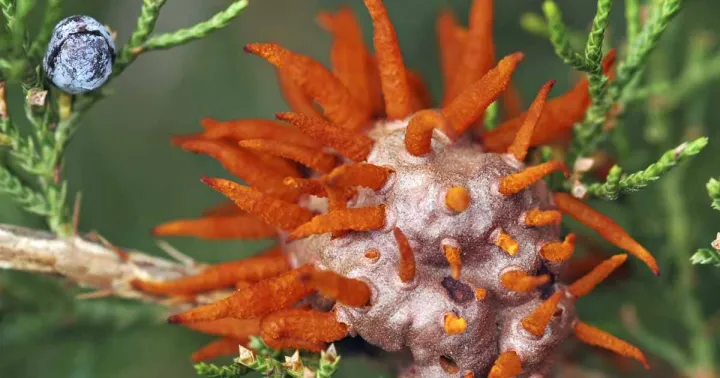
Description
Symptoms
The most recognizable symptom of juniper rust is the formation of galls, swellings, or irregular growths on the branches of the infected plant. The bark in these areas often cracks and turns a woody, brownish color.
During wet spring weather, these galls erupt with bright orange, jelly-like masses. This gelatinous stage is characteristic of Gymnosporangium infections and makes the presence of the disease very obvious.
As the infection progresses, the tissues inside the affected branches die, leading to the yellowing and eventual browning of the needles. If the fungus infects the main trunk, it can cause the entire plant to decline and wilt.
On alternate hosts like pears, the infection appears as bright orange or yellow spots on the upper leaf surface, followed by the development of small, cup-like structures on the underside of the leaves.
Infected junipers often look unhealthy, with thinning foliage and a lack of new growth. Over time, the structural integrity of the plant is compromised, leading to premature needle drop and disfigurement.
Pathogen
The causative agent of this disease is a specialized basidiomycete fungus from the genus Gymnosporangium, specifically Gymnosporangium shiraianum. This pathogen is a biotroph that requires two distinct hosts to complete its life cycle.
It is a heteroecious fungus, meaning it alternates between two unrelated plant species. The primary host is various species of juniper, while the alternate hosts are members of the Rosaceae family, such as pears, quinces, or apples.
The fungus survives within the tissues of the juniper as a perennial mycelium. During the spring, it produces spore-forming bodies that are released into the air and dispersed by wind to infect nearby alternate hosts.
The spores that land on the leaves of the alternate hosts germinate and cause typical rust symptoms. Later in the season, a different type of spore is produced on the deciduous hosts, which then travels back to re-infect the juniper.
The fungus is highly adapted to these two hosts, making it a persistent threat in regions where both juniper and susceptible fruit trees are grown in close proximity to each other.
Conditions for development
The development of juniper rust is highly dependent on environmental conditions, particularly moisture. High humidity and rainfall during the spring months are critical for the formation and discharge of spores.
A climate that remains cool and wet in the spring significantly increases the risk of infection. These conditions provide the necessary moisture for the gelatinous spore masses to emerge and expand.
The distance between the juniper and the alternate host plays a major role in the spread of the disease. If susceptible Rosaceae trees are located within a few hundred meters, the risk of cross-infection is extremely high.
Poor cultural practices, such as overcrowding and poor air circulation within the canopy, create a microclimate that traps moisture and favors the development of the fungal mycelium.
Plants that are already stressed due to poor soil quality, lack of nutrients, or improper irrigation are generally more susceptible to successful colonization by the fungal pathogen.
Why it matters
The damage caused by juniper rust is both aesthetic and physiological. By feeding on the host plant, the fungus depletes the plant's nutrient reserves, leading to stunted growth and reduced vigor.
The death of affected branches leads to a permanent loss of foliage, which is particularly damaging for ornamental junipers intended for landscaping. It ruins the aesthetic appeal and the planned shape of the plant.
In severe cases, if the fungus girdles the trunk or the primary branches, the entire plant can perish. This necessitates removal and replacement of the juniper, which can be costly in mature gardens.
The presence of the disease serves as a constant reservoir for infection, spreading the fungus to fruit-bearing trees nearby. This impacts the productivity and health of orchard trees, causing leaf lesions and reducing fruit yields.
Managing the disease requires frequent labor, including pruning and chemical application, adding to the long-term maintenance costs of the garden.
Protection
The most effective strategy for managing juniper rust is the spatial separation of host plants. Avoiding the plantation of junipers near susceptible Rosaceae trees effectively breaks the disease life cycle.
Regular sanitation is essential. All branches showing signs of galls or swelling should be pruned immediately, ensuring that the cut is made well below the infected area, and the debris must be burned.
Fungicide applications are recommended for disease management. Preventive treatments should start in early spring and continue at recommended intervals to protect the plant during the critical infection period.
Maintain plant health through appropriate irrigation, fertilization, and regular inspection. A strong, well-nourished juniper is better equipped to resist and recover from stress-related infections.
Commonly used control measures include:
- Pruning and destruction of infected branches
- Application of copper-based fungicides
- Use of systemic fungicides containing triazoles
Discussion
No discussions yet — be the first.