
Juniper needle cast
Lophodermium juniperinum
Description
Symptoms
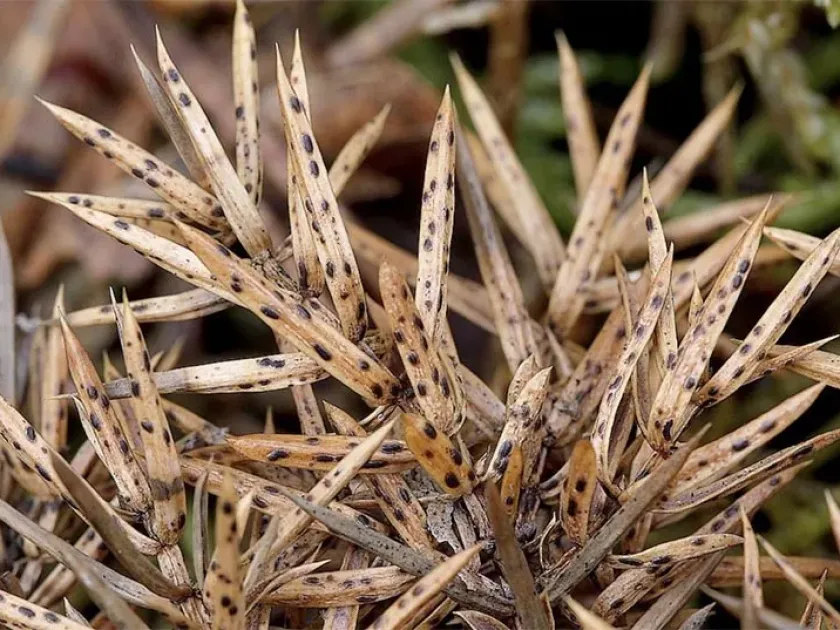
The first visible sign of infection is a discoloration of the needles, which fade from their normal green to a dull brown or reddish-brown hue.
Unlike normal seasonal needle shedding, the infected needles often remain attached to the twigs for an extended period, giving the bush a patchy appearance.
Small, dark, oval-shaped fruiting bodies of the fungus emerge on the surface of the needles, usually arranged in distinct rows as the infection progresses.
In high-humidity conditions, a fine fungal mycelium may become visible on the needles, leading to further decay and eventual browning of the branchlets.
- Browning or yellowing of needles in late spring and summer.
- Presence of small, black, glossy spots on dead needles.
- Premature shedding of needles after they have withered.
- Dieback of twigs and small branches if the infection is persistent.
Pathogen
The causative agent of this disease is the ascomycete fungus Lophodermium juniperinum, a specific pathogen that targets various species of juniper.
The fungus completes its life cycle by forming fruiting bodies, known as apothecia, which typically develop on dead or infected needles of the host plant.
This pathogen is considered an obligate parasite, capable of surviving in plant debris throughout the winter, providing a source of inoculum for the next season.
During the growing season, the fungus produces spores that are easily disseminated by wind or rain splash to healthy parts of the tree or neighboring plants.
Once the spores land on susceptible needles, the mycelium penetrates the tissues, gradually breaking down the cellular structure and causing the needles to die.
Conditions for development
High humidity and prolonged periods of wet weather are the primary environmental drivers that favor the germination and spread of Lophodermium juniperinum spores.
Dense plantings or poor airflow through the canopy prevent the foliage from drying out, creating a perfect microclimate for the fungus to thrive.
Plants that are stressed due to poor soil conditions, drought, or inadequate nutrient supply are significantly more susceptible to needle cast infections.
Springtime weather patterns, specifically mild temperatures and rainfall, facilitate the release of spores and the primary infection of new, young growth.
Accumulation of fallen needles beneath the juniper bush serves as the main reservoir for the disease, ensuring its survival and spread to new growth each spring.
Why it matters
The main impact of juniper needle cast is the severe degradation of the plant’s aesthetic value, which is particularly critical for landscape and ornamental use.
Extensive needle loss reduces the photosynthetic capacity of the juniper, weakening the plant and making it vulnerable to secondary pests and environmental stress.
In cases of severe infection, persistent needle cast can lead to the death of entire branches, potentially distorting the plant's shape and reducing its overall health.
The disease can spread rapidly through entire hedges or ornamental collections, turning healthy greenery into unsightly, brown, and dying vegetation.
Economic losses are often associated with the costs of chemical control, pruning labor, and the potential need to replace entire plants if the damage is irreversible.
Protection
Sanitation is the most effective management strategy; this involves pruning out infected branches and carefully collecting and disposing of all fallen needles.
Proper plant spacing and regular thinning of branches are essential to improve air circulation, allowing the foliage to dry quickly and reducing fungal pressure.
Fungicides containing copper or systemic active ingredients should be applied during the growing season to protect healthy foliage, especially in damp springs.
Maintaining plant vigor through balanced fertilization and appropriate irrigation helps the juniper resist the pathogen and recover from minor infections.
Regular monitoring of the garden in early spring allows for the early detection of infection, enabling timely intervention before the disease becomes widespread.
Discussion
No discussions yet — be the first.