
Cenococcum graniforme
Cenococcum graniforme
Cenococcum graniforme is a widespread soil-borne fungus best known for forming ectomycorrhizal associations with the roots of many plant species, particularly trees. It is characterized by its distinct jet-black mycelium and the formation of tiny, sclerotia-like structures.
What the section contains
Cenococcum graniforme
Unlike many other fungi, Cenococcum graniforme does not produce traditional fruit bodies. Instead, it relies on the formation of small, hard, black structures called sclerotia to survive in the soil for extended periods, even under harsh environmental conditions.
This fungus is essentially a symbiont that colonizes the root tips. While it can enhance nutrient uptake, its role in managed agricultural settings is often viewed with caution due to its potential to alter root development.
It acts as a cosmopolitan organism, found in various soil types globally, from temperate forests to managed horticultural substrates, where it actively interacts with plant root systems.
The fungus is highly resilient, and its ability to withstand extreme dryness and temperature fluctuations makes it a persistent inhabitant of the rhizosphere in many ecosystems.
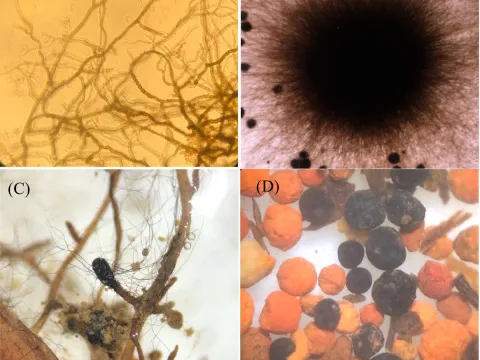
The primary symptom of colonization is the presence of dense, black, felt-like fungal mats covering the fine root tips. This effectively masks the natural color and structure of the roots.
Close inspection reveals that the typical white or light-colored root hairs are replaced or suppressed by the thick fungal hyphae. This is often described as the blackening of root extremities.
One of the most diagnostic features is the appearance of small, granular, coal-black sclerotia attached to the mycelial network around the root surface.
Affected plants may show signs of stunted growth, especially in the early stages of development, as the fungus creates a physical barrier on the root surface that can interfere with nutrient absorption.
In container-grown plants, the surface of the growing medium may show dark patches, and when washed, the roots will appear distinctly black and brittle compared to healthy, flexible roots.
Cenococcum graniforme thrives in acidic, nutrient-poor soils. It is particularly prevalent in environments with high organic matter content, such as forest litter layers.
The fungus is highly tolerant to drought. Its development is often favored during periods when soil moisture is limited, as it outcompetes other microorganisms that are more sensitive to water stress.
Soil pH plays a critical role in its activity. It is most active in acidic substrates, and its presence significantly declines as the pH shifts toward neutral or alkaline levels.
Temperature range is quite broad, allowing it to colonize roots in both cooler and warmer climates, provided that moisture availability remains within its tolerance limits.
Anthropogenic disturbance, including excessive nitrogen fertilization, generally inhibits the development of the fungal association, as plants become less dependent on mycorrhizal symbiosis for nutrient uptake.
In nursery settings, excessive colonization can be detrimental. The fungus may become a strong competitor for carbohydrates produced by the plant, slowing down the overall growth rate of young saplings.
The physical barrier formed by the thick fungal mantle can restrict the root's ability to explore the soil, potentially leading to nutrient deficiencies despite ample fertilization.
Increased susceptibility to secondary pathogens can occur, as the colonization alters the chemical and physical environment of the rhizosphere, making the plant less resilient to external stresses.
Severe infestations can lead to the mortality of root tips, which compromises the root system's ability to maintain hydration during hot or dry spells.
The persistence of sclerotia in the soil creates a long-term problem for growers, as these structures can survive for years and re-infect subsequent batches of plants.
Management starts with soil modification. Adjusting the pH to neutral levels through liming is often an effective way to discourage the fungus from colonizing new roots.
Chemical control using broad-spectrum soil fungicides can be employed in greenhouses or nurseries where the fungus poses a significant threat to production yields.
Improving drainage and managing soil moisture levels are crucial preventive measures, as they help maintain the balance of the rhizosphere and prevent the fungus from dominating.
Maintaining balanced nutrition ensures that plants do not rely too heavily on mycorrhizal associations, which in turn reduces the intensity of fungal colonization.
- Use sterile potting mixes for nursery propagation.
- Regular monitoring of root health in young plants.
- Strategic liming to manage soil pH levels.
- Avoidance of over-fertilization with nitrates to maintain balance.