
Cephalosporium stripe
Cephalosporiopsis
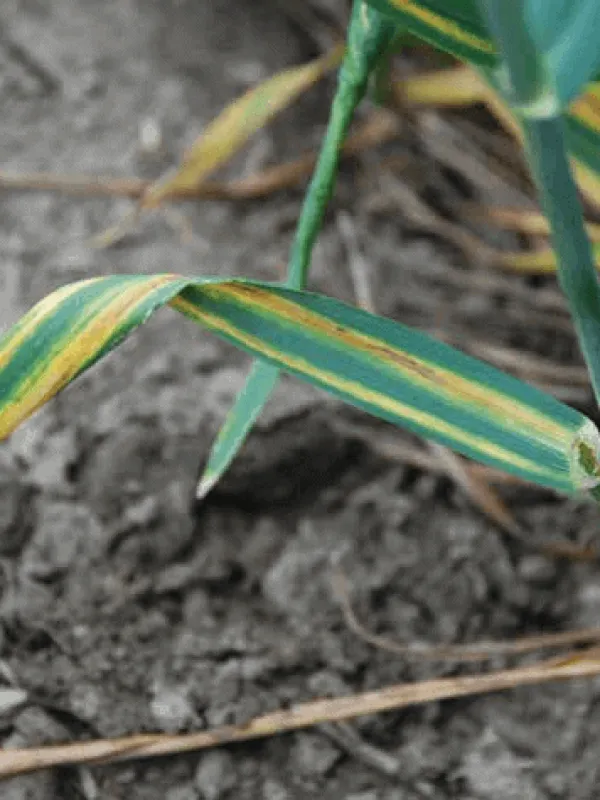
Description
Symptoms
Initial symptoms are characterized by narrow, yellow stripes extending along the leaf blades and sheaths.
As the disease progresses, these stripes often turn brown and necrotic, leading to the yellowing and wilting of the entire leaf.
Inside the stems, the vascular bundles show a distinct dark coloration, which is a diagnostic feature of the infection.
A typical symptom in later stages is the development of whiteheads, where the heads become bleached and fail to develop grain.
The affected plants exhibit stunted growth and may lodge or die prematurely, resulting in uneven maturation of the field.
Pathogen
The causal agent of Cephalosporium stripe is the fungus Cephalosporium gramineum, also known as Hymenula cerealis.
This soil-borne pathogen survives in infested crop debris and can remain viable in the soil for several years.
The fungus infects the vascular system (xylem) of the plant, producing toxins that clog the water-conducting tissues.
Conidia are spread through water splashes and movement of soil, initiating new infections on neighboring plants during the growing season.
The pathogen is highly specialized, primarily affecting winter wheat, barley, and other small-grain cereals in temperate regions.
Conditions for development
The development of the disease is highly favored by frequent freeze-thaw cycles in late winter and early spring.
Cool, wet conditions in the soil facilitate the movement of the fungus and its infection of the crown roots.
Fields with poor drainage or compacted soil profiles are more prone to severe outbreaks due to moisture retention.
Continuous cropping of winter wheat is the most significant factor that promotes the build-up of the pathogen in the soil.
Injuries to the root system, caused by insects, frost, or mechanical work, act as entry points for the fungal mycelium.
Why it matters
Cephalosporium stripe can cause substantial yield reductions, sometimes exceeding 50% in heavily infested fields.
The disease reduces the number of kernels per head and significantly lowers the overall test weight of the grain.
Severely infected fields often experience lodging, which increases harvest difficulty and total field losses.
Grain quality is negatively impacted, making it less suitable for milling and commercial seed production.
The cumulative effect of reduced plant vigor makes the crop more susceptible to secondary environmental stresses and pests.
Protection
Crop rotation is the most effective management strategy; a break of at least 3 years between susceptible cereals is recommended.
Proper tillage practices that bury crop residue help accelerate the decomposition of infected straw and reduce inoculum.
Selecting resistant or tolerant cultivars is a crucial decision for farmers in regions with high historical disease pressure.
Improved field drainage reduces soil saturation, thereby lowering the risk of infection during the critical early spring period.
Although no systemic fungicides provide full control, high-quality seed treatment can assist in protecting seedlings during emergence.
Discussion
No discussions yet — be the first.