
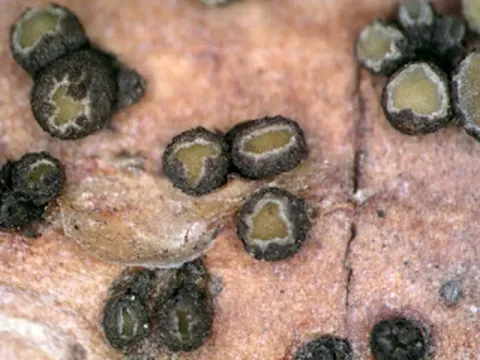
Cenangium dieback
Cenangiaceae
The disease is caused by the ascomycete fungus Cenangium ferruginosum, a member of the Cenangiaceae family. It is widely distributed and typically behaves as a semi-parasite on stressed trees.
What the section contains
Cenangium dieback
The fungus infects woody plants through mechanical wounds, frost cracks, or sites weakened by insect damage. It is particularly adept at colonizing tissues in conifers.
Its life cycle includes both conidial and apothecial stages. Spores are primarily disseminated by wind, rain splashes, and movement of infested wood or insect vectors.
The fungus remains viable in infected branches and dead wood for extended periods, serving as a persistent inoculum source within the stand.
Mycelium growth occurs within the phloem and cambium layers, eventually girdling the affected branches or stems and disrupting nutrient translocation.
Initial symptoms include the chlorosis and subsequent browning of needles on affected branches. This leads to premature needle drop, giving the crown a sparse appearance.
Necrotic lesions develop on the bark of infected branches. These areas often appear sunken, dark, and may be accompanied by longitudinal cracks in the bark.
Under humid conditions, small, cup-shaped fruit bodies (apothecia) of the fungus erupt through the bark. They appear as brown or black clusters.
Upon removing the outer bark in affected areas, one can observe dead cambium and discolored, often reddish-brown or dark wood tissues.
If the infection girdles the main stem, it leads to rapid crown decline and tree mortality, particularly in younger or stressed individuals.
Cenangium dieback is strongly associated with environmental stress. Drought, frost injury, and waterlogging significantly predispose trees to infection.
Stands with high density and poor air circulation maintain microclimates with high relative humidity, which are ideal for spore germination and fungal growth.
The pathogen thrives during cool and wet spring periods. Temperature fluctuations that weaken host immunity also facilitate the spread of the disease.
Trees damaged by secondary pests, such as bark beetles, are more prone to infection as these insects often introduce or create entry points for the fungus.
Lack of proper forest hygiene, such as leaving dead and diseased wood on the forest floor, encourages the buildup of fungal spores in the area.
The disease causes significant economic loss in forestry by reducing timber quality and leading to the mortality of young plantation trees.
Cenangium dieback severely affects the aesthetic value of pine trees in urban landscapes, parks, and residential areas, leading to tree removal.
Persistent infections can lead to the decline of entire forest stands, reducing ecological diversity and impacting natural regeneration.
In nurseries, the fungus can cause significant loss of seedlings, disrupting the production cycle of conifer saplings.
The presence of the disease makes stands more susceptible to further damage by other pests, creating a cycle of decline and forest degradation.
The primary control measure is strict sanitation. All infected branches and dead trees should be removed and destroyed by burning or chipping.
Promoting tree health is crucial. This includes proper irrigation, balanced fertilization, and monitoring for insect infestations to minimize stress.
In high-value ornamental trees, fungicide applications during the early spring can help protect against new infections if the disease is caught early.
Thinning dense stands helps improve air circulation, effectively lowering the humidity around the canopy and reducing the risk of fungal proliferation.
- Monitor tree health and inspect bark for lesions regularly.
- Ensure pruning tools are sanitized to prevent cross-contamination.
- Select resistant species or provenances for reforestation efforts.