
Cacao swollen-shoot virus
Cacao swollen-shoot
The causative agent of this disease is the Cacao swollen-shoot virus (CSSV), which is a member of the genus Badnavirus.
What the section contains
Cacao swollen-shoot virus
The virus specifically infects cocoa trees (Theobroma cacao) and other related species within the Malvaceae family.
It is transmitted by various species of mealybugs (Pseudococcidae), which ingest the virus while feeding on the phloem sap of infected trees.
The virus exists in several different strains, which exhibit varying levels of virulence and symptoms, making its management extremely challenging.
Once inside the plant, the virus spreads systemically, causing major physiological disruptions that lead to the eventual decline of the tree.
The most distinctive symptom is the swelling of stems and branches, which results from the hyperplasia of the bark and vascular tissues.
Leaves often exhibit chlorotic patterns, including mosaic, mottling, and red banding, which are visible particularly on young flushes.
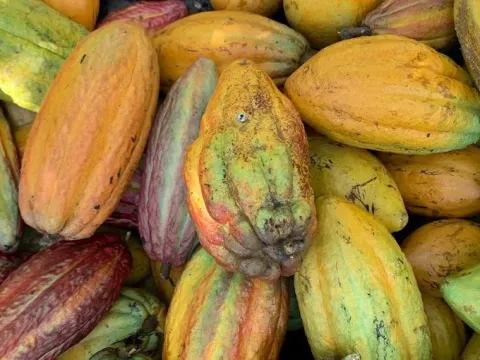
Infected trees show a significant reduction in pod size, often leading to rounded or misshapen pods containing fewer and smaller beans.
Dieback of the canopy and premature leaf drop are common as the disease progresses and the overall vigor of the tree diminishes.
- Swollen stems and branches.
- Chlorotic leaf patterns and mosaic.
- Severe pod deformation.
- Gradual canopy dieback and tree death.
The transmission of the virus is highly dependent on the movement and density of the mealybug population within a plantation.
Environmental conditions that favor the proliferation of mealybugs, such as warm temperatures and high humidity, indirectly facilitate the spread of CSSV.
The virus can persist in alternative wild hosts near cocoa farms, serving as a constant source of inoculum for the primary crop.
Human activity, including the movement of contaminated pruning tools or infected nursery seedlings, plays a significant role in spreading the virus over long distances.
Lenticular and latent phases of the infection mean that many trees may remain asymptomatic while actively serving as sources of the virus for vectors.
Cacao swollen-shoot virus is considered the most devastating disease affecting cocoa production, particularly in West Africa.
The disease causes a progressive decline in yield, rendering plantations economically unviable within a few years of infection.
Cumulative losses from this virus amount to millions of tons of cocoa production, impacting global cocoa markets and local rural economies.
Infected trees are unlikely to recover, necessitating their removal to prevent the virus from spreading to neighboring healthy trees.
The need for large-scale eradication programs creates long-term financial burdens for farmers who must wait several years for newly planted trees to mature.
The primary control strategy involves the aggressive removal and destruction of all infected trees to create an isolation zone around the outbreak.
Strict quarantine regulations are enforced to prevent the trade and transport of cocoa planting material from infected areas to unaffected regions.
While chemical control of mealybugs is theoretically possible, it is rarely cost-effective or sustainable due to the cryptic nature of the insects.
Long-term research focuses on breeding cocoa varieties that are genetically resistant or tolerant to CSSV to minimize the impact of the disease.
Regular surveillance and community-based monitoring programs are essential to detect early infections and manage the disease before it becomes uncontrollable.