
Description
Symptoms
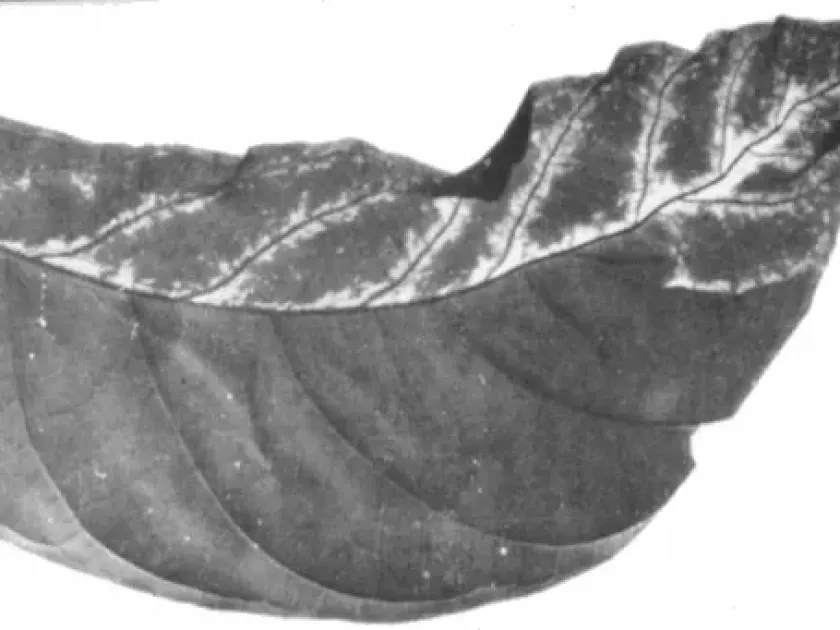
The primary symptom of Cacao necrosis is the emergence of distinctive necrotic lesions on leaves, often characterized by ring-spot patterns or irregular chlorotic lines. Over time, these areas necrotize and may lead to leaf distortion.
Infected trees typically display generalized chlorosis and yellowing of the leaf veins. This eventually leads to premature defoliation and severe thinning of the canopy, exposing the skeletal branches of the tree.
In mature trees, bark lesions and cracks can appear on the trunk and primary branches. These fissures are often entry points for secondary decay-causing organisms, further weakening the structural integrity of the tree.
Yield production is severely impacted, with pods often becoming stunted, deformed, and of poor quality. The beans inside such pods lack the necessary weight and characteristics for high-quality chocolate production.
If left unmanaged, the disease leads to the progressive dieback of the tree starting from the top. Careful monitoring of both the canopy and the roots is required to confirm the presence of the virus.
Pathogen
The causal agent of this disease is the Cacao necrosis virus (CNV), which is classified under the genus Nepovirus. It is a virus that systematically infects the vascular tissue, disrupting the transport of essential nutrients and water within the plant.
Unlike many other viral diseases of cocoa that are transmitted by insects, this virus is primarily soil-borne. Its main vectors are nematodes from the Xiphinema genus, which acquire the virus while feeding on the roots of infected trees.
The virus can persist in the soil for significant periods, remaining viable in the root fragments of dead trees. This longevity makes it a persistent threat that can affect subsequent plantings in the same location.
Mechanical transmission is also a major concern, as the virus can easily enter the vascular system through wounds caused by tools or during cultivation practices that damage the root system.
Diagnosis requires laboratory techniques, including serological assays or molecular methods like PCR. Accurate identification is essential to distinguish it from nutrient deficiencies or other fungal pathogens.
Conditions for development
The development of the disease is highly correlated with soil moisture and physical structure. Heavy, poorly drained soils provide the ideal habitat for Xiphinema nematodes to thrive and transmit the virus effectively.
High temperatures typical of tropical regions accelerate the viral replication process. This climate allows the virus to move rapidly through the host plant, resulting in a swift decline of the overall tree health.
Intensive plantation management without proper crop rotation leads to high pathogen pressure in the soil. Once a field is infested, the risk to new, susceptible seedlings becomes extremely high.
Agricultural practices that frequently damage roots, such as deep hoeing or weeding, facilitate the spread of the virus. The closer the spacing of the trees, the more easily the virus moves through root contact.
Environmental stress, such as drought, often exacerbates the visible impact of the virus. While the virus may be present under favorable conditions, it often expresses more aggressive symptoms after the trees have been weakened by climate fluctuations.
Why it matters
Cacao necrosis poses a significant threat to the profitability of cocoa farms. It results in reduced yields and, in severe cases, the complete loss of tree productivity, necessitating the removal of entire sections of a plantation.
The economic impact is twofold: the immediate loss of marketable beans and the long-term cost associated with eradicating infected trees and preparing the land for replanting with resistant varieties.
The disease reduces the vigor of the tree, making it susceptible to other biotic and abiotic stressors. This leads to a decline in the tree's lifespan and its ability to recover from environmental damage.
The loss of high-quality cocoa beans hurts the producer's reputation and financial stability. Consistent outbreaks can force growers to abandon land that is no longer viable for cocoa production.
Furthermore, the spread of the virus threatens the diversity of cocoa cultivars. Many high-yielding, premium varieties are often the most sensitive to Cacao necrosis virus, limiting the options for farmers.
Protection
The primary strategy for management is the use of healthy, virus-free planting material. Growers must ensure that their nursery stock is sourced from certified suppliers to prevent introducing the pathogen to new land.
Strict phytosanitary measures are essential, including the removal and destruction of infected trees. When a diseased tree is identified, it should be uprooted, including as much of the root system as possible, to remove the viral reservoir.
Management of the nematode vector is crucial. This involves the application of nematicides where appropriate and the implementation of crop rotation cycles to lower the population of Xiphinema in the soil.
Rigorous sanitation of farm tools between different parts of the plantation is vital. Ensuring that equipment is disinfected prevents the mechanical transfer of the virus from infected zones to healthy ones.
Promoting overall tree vigor through balanced fertilization and good water management helps the trees build natural resilience. A strong, well-nourished tree is better equipped to limit the systemic spread of the virus.
Pathogens and affected parts
Affects crops · 1
Discussion
No discussions yet — be the first.