
Caesar's mushroom
Amanita caesarea
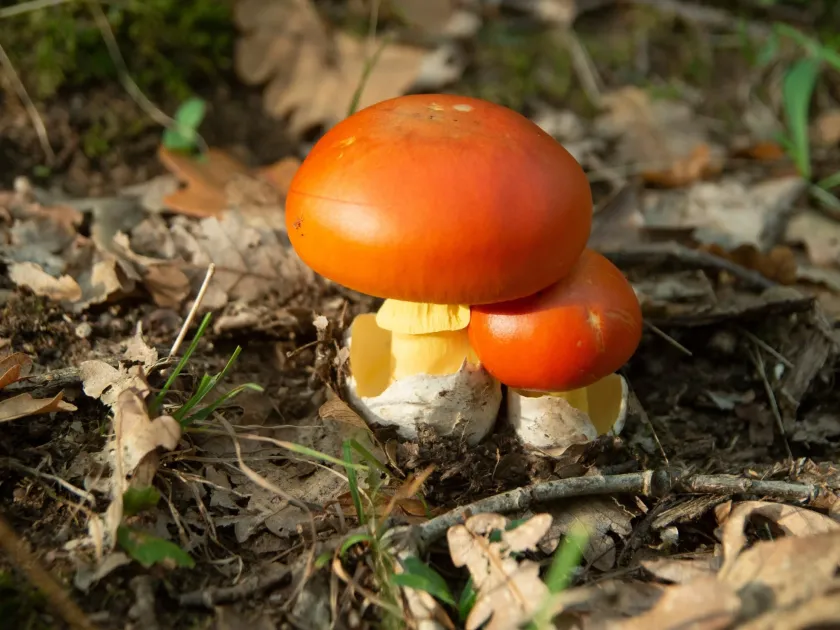
Description
Pathogen
It is scientifically important to clarify that Amanita caesarea is not a plant disease pathogen.
This species is a well-known mycorrhizal fungus that forms symbiotic relationships with various broad-leaved trees, such as oak and chestnut.
The fungus obtains sugars from the host plant while providing essential nutrients and water from the soil in return.
There are no recorded instances of this fungus attacking living plant tissues or causing necrosis in trees or agricultural crops.
Classifying this organism as a disease agent is factually incorrect and contradicts established mycological and botanical data.
Conditions for development
The development of Amanita caesarea depends heavily on the presence of specific tree species to establish mycorrhizal symbiosis.
Preferred habitats include warm, well-drained soils with a high content of organic forest litter, commonly found in Mediterranean regions.
The fungus thrives in climates with moderate rainfall during the growing season, which is crucial for the development of the fruiting body.
Temperature plays a vital role, as the mycelium requires consistent warmth to successfully colonize the soil layer around tree roots.
Environmental stability, including the absence of intensive soil cultivation or chemical pollution, supports the growth of this fungus.
Why it matters
The impact of Caesar's mushroom on flora is purely beneficial or neutral, as it supports soil health and nutrient cycling.
There is absolutely no damage associated with this fungus for any crops, horticultural plants, or forest trees.
The presence of this fungus is often interpreted as a sign of a healthy, ecologically balanced forest environment.
No protective measures are required against this organism, as it does not compete with plants for survival or cause systemic damage.
Treating this fungus as a crop disease would be an incorrect agricultural practice, as it provides ecological services rather than harm.
Discussion
No discussions yet — be the first.