
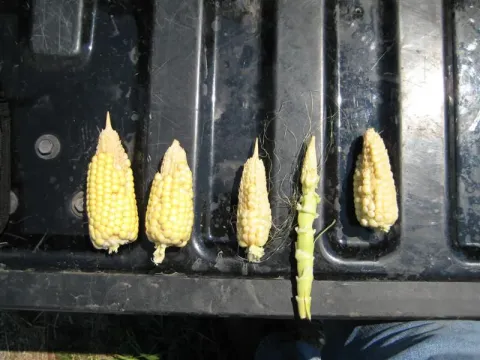
Barrenness in corn
Low fertility
The primary symptom of corn barrenness is the complete failure of the plant to produce a functional ear, despite vigorous vegetative growth.
What the section contains
Barrenness in corn
Affected plants often display signs of stress, such as stunted height, chlorotic leaves, or abnormal development of the internodes.
During the flowering stage, these plants lack silks, as the female inflorescence inside the husks has failed to initiate or develop properly.
Upon inspecting the husks, growers typically find either a totally empty space or a thread-like, non-productive structure instead of a developing cob.
The root system of barren plants is often less developed compared to productive plants, hindering proper nutrient uptake throughout the season.
Corn barrenness is classified as a physiological disorder, meaning it is not caused by living pathogens like fungi, bacteria, or viruses.
It represents a breakdown in the plant's metabolic or hormonal pathways rather than an infection spread by external agents.
The disorder typically originates from severe environmental or nutrient stress occurring during the early stages of ear primordia development.
Genetic factors may predispose specific hybrids to this condition if the plant fails to transition successfully from a vegetative to a reproductive phase.
This failure is often linked to the plant's internal signaling mechanisms that govern the division of resources between stalk and ear growth.
Extreme temperature fluctuations, particularly during the critical period of ear differentiation, often trigger the development of barren stalks.
Severe drought stress at the V5 to V7 growth stages is one of the most common factors that stunts the formation of reproductive organs.
Overcrowding in the field leads to intense competition for sunlight, water, and soil nutrients, which can force the plant to abort ear development.
A deficiency in key micronutrients, such as zinc and boron, can disrupt the hormonal balance required for successful ear fertilization and grain set.
Imbalanced nitrogen fertilization, especially when paired with low potassium or phosphorus levels, disrupts the plant's developmental maturity.
The main impact of barrenness is a significant reduction in grain yield, as affected plants become entirely sterile and produce zero harvestable ears.
When this condition affects a large portion of the field, it causes a direct economic loss by failing to convert inputs into grain weight.
Barren stalks still consume water and essential soil nutrients, effectively acting as weeds that compete with the remaining healthy plants.
A high rate of barrenness lowers the overall plant population efficiency and complicates harvesting, leading to lower profitability per hectare.
Additionally, plants that remain barren may become more susceptible to stalk rot, potentially leading to lodging and further yield quality issues.
Effective management begins with selecting high-quality hybrids that have shown resilience against environmental stress in local trials.
Adhering to recommended plant density and spacing guidelines helps minimize competition and reduces the stress that causes barrenness.
Applying balanced fertilizer programs based on soil testing ensures that the plant has access to essential micronutrients at critical growth stages.
Weed control and pest management in the early stages of growth prevent unnecessary stress that can derail the plant's reproductive timeline.
- Monitor soil moisture levels closely.
- Utilize foliar micronutrient applications if deficiencies are identified.
- Ensure adequate crop rotation to maintain soil health.