
Austroafricana
Austroafricana
The causative agent of the disease is a fungal pathogen from the genus Austroafricana, which belongs to specialized plant mycoses. In scientific classification, this microorganism is considered an obligate or facultative parasite capable of infecting the vascular system and parenchyma of the host plant.
What the section contains
Austroafricana
The biology of the pathogen is characterized by several life cycle phases, including sporulation and mycelial growth. Microscopic examinations reveal the formation of characteristic conidia, which are dispersed by wind or water droplets over significant distances.
The aggressiveness of the pathogen is driven by the secretion of enzymes that break down plant cell walls. This allows the fungus to rapidly colonize intercellular spaces and suppress the plant's immune response.
Infection often occurs through natural openings in the epidermis or wounds caused by insect pests. Once in a favorable environment, the mycelium begins active growth, penetrating deep into the tissues of the host plant.
The fungus maintains viability in plant debris, making it a primary reservoir for infection during the off-season. The stability of its spores against adverse environmental factors complicates efforts to control this pathogen.
Primary signs of infection appear as chlorotic spots on the leaf blade, which gradually darken. As the disease progresses, the tissues at the infection sites undergo necrosis, forming characteristic bordered ulcers.
A second symptom involves the disruption of the plant's water balance, manifested by the wilting of terminal shoots even under sufficient irrigation. Affected stems may deform and acquire an abnormal curve.
Under high humidity, a thin fungal coating appears on the surface of the infected plant parts. This coating represents sporulating structures ready to spread the infection to neighboring plants.
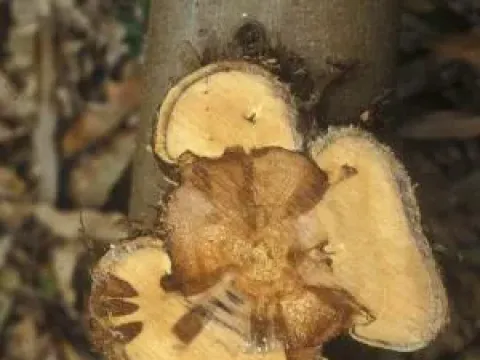
When the vascular system is infected, a browning of the conductive bundles inside the stem is observed, which is clearly visible upon cross-sectioning. Such a state inevitably leads to the cessation of nutrient supply and the death of the plant.
- Yellowing and curling of leaf margins.
- Dark spots with a necrotic center.
- Stunted growth and development of reproductive organs.
- Premature dropping of leaves or fruits.
The development of the disease is closely linked to temperature conditions, with the most intense infection occurring in the range of +18 to +25 degrees Celsius. High air humidity is a key factor stimulating spore activity.
Dense crop stands create a microclimate ideal for pathogen spread, as air circulation is restricted. Under such conditions, dew persists longer on leaves, providing a water film for conidia germination.
Imbalanced application of nitrogen fertilizers, leading to excessive vegetative growth, also promotes susceptibility. Soft, watery tissues become easier targets for hyphal penetration.
Periodic rainfall combined with moderate warmth creates epiphytotic risks for most agricultural crops. In such cases, the disease can spread across an entire field within a matter of weeks.
Reduced light penetration in the lower canopy also contributes to the longer persistence of the inoculum. Agronomic monitoring during these periods is essential to prevent large-scale losses.
The damage caused by Austroafricana lies in the critical reduction of the plant's photosynthetic activity. The loss of green surface area leads to a decrease in biomass and poor quality characteristics of the crop.
Vascular damage disrupts the transport of nutrients and water, making normal fruit or seed filling impossible. As a result, the produce loses its market value and flavor qualities.
Severe infection can lead to the total death of crops, especially if the infection affects young seedlings. Economic losses include the costs of fungicides and reduced harvest yield.
The disease negatively impacts seeds, reducing their germination and vigor. The use of infected seeds in the next season automatically restarts the disease cycle from the beginning.
Furthermore, damaged plant tissues become entry points for secondary bacterial and fungal infections. This complicates diagnosis and requires integrated approaches to crop treatment.
Effective protection starts with the use of resistant varieties and hybrids capable of withstanding pathogen penetration. Genetic resistance remains the most reliable tool in modern agronomy.
Adherence to crop rotation is a mandatory element, as it breaks the fungal life cycle. Returning a susceptible crop to the same field is not recommended for at least three years.
Chemical methods include the application of systemic fungicides capable of blocking mycelial growth inside the plant. Treatments should begin at the first signs of the disease, following established application protocols.
Agronomic measures, such as the destruction of crop residues and deep plowing, significantly lower the infection background. Timely removal of diseased plants from infection pockets also hinders the spread of the fungus.
Maintaining optimal planting densities and regular ventilation of greenhouses reduce the likelihood of disease outbreaks. An integrated approach, combining chemical treatments and proper agronomy, provides the best results in combating the disease.