
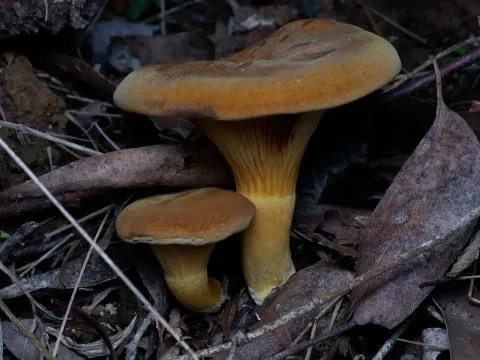
Austropaxillus
Austropaxillus
The genus Austropaxillus belongs to the family Paxillaceae and is not a plant pathogen; it does not cause diseases in agricultural crops.
What the section contains
Austropaxillus
These fungi are identified as ectomycorrhizal, meaning they form a mutually beneficial symbiotic relationship with the root systems of specific tree species.
The biological interaction involves the exchange of sugars from the plant for essential minerals and water absorbed by the fungal mycelium.
Unlike parasitic fungi, Austropaxillus helps improve the overall health and stress tolerance of the host trees by extending the reach of their root systems.
Identifying this fungus in a forest environment signifies a functional symbiotic association rather than a pathological condition needing eradication.
The development of Austropaxillus is strictly dependent on the presence of compatible host tree species, often found in temperate forest ecosystems.
Moisture levels within the soil profile are essential for the active growth of the fungal mycelium and the emergence of fruiting bodies.
Optimal conditions often include a thick layer of organic matter, which provides the necessary carbon sources for non-symbiotic fungal stages.
The fungi thrive in environments where the root zones of trees are not heavily disturbed by industrial or intensive agricultural practices.
Temperature fluctuations, particularly the cooling periods, are often required to trigger the reproductive stage of the fungus in the field.