
Atropellis canker
Atropellis tingens
The disease is caused by the ascomycete fungus Atropellis tingens, which belongs to the order Helotiales. This pathogen specializes in parasitizing the living bark and cambium layers of pine trees.
What the section contains
Atropellis canker
The life cycle involves the development of stromatic bodies within the host's bark, which produce apothecia. These fruiting bodies are responsible for the dispersal of fungal spores into the surrounding environment.
Spore dissemination is primarily facilitated by wind and rain splashes, which transport the inoculum to the stem or branches of healthy or susceptible host trees.
The fungus can persist in infected deadwood for extended periods, serving as a reservoir for new infections once environmental conditions become favorable for growth.
By penetrating the bark, the mycelium disrupts the phloem and cambium functions, eventually causing the tree to lose its ability to transport nutrients, leading to progressive decline.
The most prominent symptom of Atropellis canker is the development of localized bark necrosis, often accompanied by resinous exudations that harden on the surface of the stem.
Affected bark typically becomes shriveled and sunken, often exhibiting deep cracks that expose the underlying wood, which may show a characteristic dark blue-black staining.
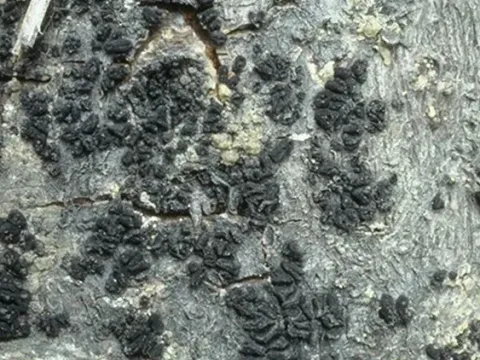
During the sporulation stage, small, dark, saucer-shaped apothecia appear on the surface of the infected bark, often clustered in groups or scattered along the edges of the cankers.
Trees severely affected by the pathogen show signs of crown dieback, with needles turning yellow and then brown, leading to overall thinning and loss of foliage.
- Stem deformation due to long-term canker activity.
- Excessive resin flow on the trunk.
- Reduced annual growth rates.
- Dark discoloration of the wood beneath the canker.
High humidity and consistent rainfall are crucial environmental factors that promote the germination of Atropellis tingens spores on the bark of susceptible hosts.
Dense forest stands with poor airflow tend to hold moisture longer, creating a microclimate that is highly conducive to the rapid spread of the fungal infection between trees.
Trees that are already under stress due to drought, physical wounding, or insect infestations are significantly more vulnerable to successful colonization by the fungus.
Temperate conditions are generally optimal for fungal development, making spring and autumn critical periods for new infections when moisture availability is high.
The presence of infected slash or deadwood in the forest creates a constant source of inoculum, increasing the likelihood of widespread infection in nearby healthy trees.
Atropellis canker causes substantial economic losses by degrading timber quality. The presence of resinous cankers makes the wood unsuitable for high-value lumber production.
Continuous infection leads to the premature mortality of individual trees, which disrupts forest stand structure and can eventually lead to the loss of entire plantation sections.
Weakened trees frequently become targets for secondary pests, such as bark beetles, which accelerate the tree's death and complicate management efforts.
The disease hampers the growth and productivity of pine plantations, reducing the overall volume and economic return of the forest over long-term rotation cycles.
In forest nurseries, the disease can be devastating, as it can kill young saplings rapidly, preventing successful reforestation efforts in the affected area.
The primary management strategy involves implementing sanitation harvesting, which requires the identification and removal of infected trees to eliminate the source of spores.
It is essential to clear forest residues and deadwood immediately after harvesting, as these materials harbor the fungus and allow it to spread to healthy stands.
Maintaining appropriate stand density through thinning operations improves airflow, reduces moisture levels on the bark, and enhances the overall vigor of the forest.
Prevention includes avoiding physical injury to tree trunks during logging or maintenance activities, as these wounds provide easy access points for the fungus.
While chemical control is generally impractical for large-scale forest stands, silvicultural management focused on forest health and the selection of resistant genotypes remains the most effective long-term solution.