
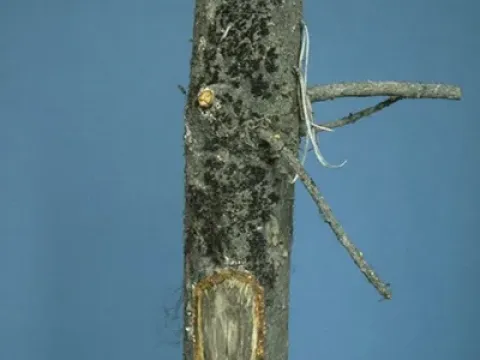
Atropellis canker
Atropellis apiculata
The disease is caused by the ascomycetous fungus Atropellis apiculata. This pathogen primarily colonizes the bark and cambium of various pine species, leading to localized necrotic lesions.
What the section contains
Atropellis canker
The fungus produces small, dark, cup-shaped apothecia on the bark of infected branches or trunks. These fruiting bodies are the source of inoculum for further disease spread.
Mycelium penetrates the wood tissues, causing severe damage to the phloem and xylem, which disrupts the transport of water and nutrients throughout the host tree.
Dissemination occurs via airborne spores, which are released and spread mainly during periods of high humidity and rainfall, making environmental factors critical for infection.
The pathogen is known for its ability to persist in wood tissues, making infected trees a long-term reservoir for the disease within a forest stand.
Early symptoms include flattened areas on the bark, which eventually develop into distinct, sunken cankers. Heavy resin flow is often observed around the infection sites.
As the disease progresses, the bark becomes darkened, brittle, and cracked. In the affected areas, one may notice the characteristic small black fruiting bodies of the fungus.
Cross-sections of infected wood typically show dark blue or black staining of the wood tissue, which is a clear indicator of the fungal colonization of the inner layers.
Foliage on affected branches may turn yellow and wither prematurely. Over time, the affected sections of the crown die back, significantly reducing the tree's photosynthetic capacity.
Trees often exhibit abnormal swelling or irregular growth patterns around the margins of the cankers as they attempt to compartmentalize the fungal infection.
Atropellis apiculata thrives in cool, moist environments. High humidity levels are essential for the production of spores and their successful germination on tree bark.
Stressed trees, particularly those weakened by drought, poor soil conditions, or other pathogens, are significantly more susceptible to successful infection by this fungus.
Dense, poorly managed forest stands create a stagnant microclimate that prevents bark from drying quickly after rainfall, thereby facilitating the development of the pathogen.
Physical injuries to the trunk or branches serve as direct entry points for the fungal spores. Damage caused by insects or machinery is frequently associated with new canker sites.
In regions with high disease incidence, the fungus can spread rapidly through plantations if sanitation measures are not effectively implemented to reduce the inoculum load.
The primary economic impact is the severe degradation of timber quality. Cankers cause wood discoloration and structural weakness, rendering the wood unfit for lumber.
Infected trees suffer from reduced growth rates due to the impairment of conducting tissues, leading to significant volume losses over the lifespan of the stand.
The disease weakens the host tree, predisposing it to secondary infestations by bark beetles and other wood-boring insects, which can accelerate the tree's decline.
In young plantations, the disease can lead to high mortality rates, necessitating expensive replanting and restoration efforts to maintain the forest cover.
The presence of the disease disrupts the ecological balance of the forest, impacting its ability to provide ecosystem services and maintain biodiversity.
Sanitation cutting is the most effective management strategy. Removing and destroying infected trees helps reduce the local spore population significantly.
Maintaining optimal stand density through appropriate thinning promotes better airflow and light penetration, creating conditions less favorable for fungal growth.
Silvicultural practices should prioritize minimizing wounding of residual trees during thinning or other operations to prevent the entry of the fungus.
Selecting and planting disease-resistant pine species or provenances is a long-term strategy to reduce the risk of widespread outbreaks in future forest generations.
Rigorous monitoring of nurseries and young stands is crucial to ensure early detection and prevent the movement of infected plant material into healthy areas.