
Atropellis canker
Atropellis
The disease is caused by fungi of the genus Atropellis, primarily Atropellis piniphila and Atropellis tingens. These are ascomycete fungi that specialize in colonizing the phloem and cambium of coniferous trees.
What the section contains
Atropellis canker
The pathogen functions as a necrotrophic parasite, invading the host tissue and causing the formation of typical cankers. The fungal mycelium spreads slowly through the wood, eventually girdling the stem or branches.
Life cycle dynamics involve the production of small, black, apothecia-like fruiting bodies. These structures develop on the bark of infected areas and release spores during wet, warm conditions.
The fungus is highly resilient, capable of persisting in infected wood for many years. It survives as both an active pathogen and a latent colonizer, continuing its development long after the initial infection.
Dissemination of the pathogen relies heavily on splash-dispersal via rainwater and wind-blown spores, which transport the fungus to new, healthy trees within the stand.
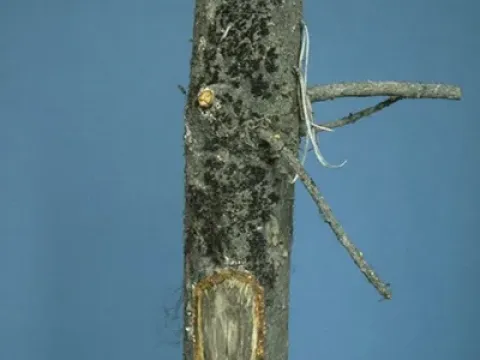
The most characteristic sign of Atropellis canker is the presence of localized sunken lesions on the bark of trunks and branches. These lesions often show signs of resinosis, as trees attempt to defend themselves.
Infected areas are frequently marked by cracked, dead, or peeling bark. When the affected wood is sliced, it reveals a distinct dark-brown or black staining, caused by deep resin penetration and mycelial activity.
Over time, the host forms callus tissue around the canker. This leads to characteristic stem deformation, often resulting in flattened, swollen, or twisted trunk sections at the site of the infection.
Small, dark-colored fruiting bodies may appear on the dead bark surface, especially following periods of high humidity. These are crucial diagnostic features for confirming the presence of the pathogen.
Crown symptoms, such as chlorosis, thinning needles, or dieback of individual branches, indicate that the vascular system is being compromised, preventing the transport of nutrients to the upper parts of the tree.
High planting densities in conifer stands significantly contribute to the development of the disease. Crowding limits airflow, maintaining a humid microclimate that favors spore germination.
Environmental stress, such as drought, frost injury, or prior infestation by boring insects, creates favorable entry points for the pathogen and weakens the tree's natural resistance mechanisms.
Prolonged wet weather is essential for the active dispersal and infection process. Frequent rainfall helps to spread spores from the apothecia to new infection sites on the stem.
Old, stagnant stands with accumulation of woody debris and untreated dead trees provide an ideal environment for the buildup of the fungal inoculum, increasing the risk for surrounding younger trees.
Mechanical damage caused by forest management equipment or wildlife activity is a major factor in the disease cycle, as it provides direct access for fungal spores to the nutrient-rich cambium layer.
Atropellis canker causes significant economic damage to the timber industry. The deep resin penetration into the wood drastically lowers its quality, rendering it unsuitable for high-grade construction or manufacturing.
Growth rate reduction is a common consequence of the infection. As the tree diverts energy to isolate the pathogen through callus formation, its overall biomass production and diameter growth decline.
In severe cases, the disease leads to total stand decline. The loss of tree vigor makes the forest more prone to secondary mortality factors, including windthrow, snow breakage, and pest outbreaks.
The presence of this disease necessitates increased expenditure for silvicultural management, including premature harvest and sanitation cuttings to prevent further spread across the forest landscape.
Beyond commercial losses, the ecological impact includes the degradation of forest health, which can lead to shifts in species composition and loss of ecosystem services provided by healthy conifer stands.
The primary control strategy involves strict forest sanitation. Prompt removal and proper disposal of infected trees are essential to reduce the inoculum level and prevent the disease from spreading.
Silvicultural practices should focus on maintaining healthy, vigorous stands through appropriate thinning and preventing overcrowding, which helps to mitigate the spread of fungal pathogens.
Avoiding mechanical damage during thinning operations is a crucial preventive measure. Careful handling of trees protects the bark and prevents the creation of infection courts.
Regular monitoring of forest stands is recommended, especially in high-risk areas. Early detection of canker symptoms allows for targeted management actions before the disease reaches an epidemic stage.
In nurseries and highly managed ornamental landscapes, the use of protective copper-based fungicides can be effective in reducing primary infections on seedlings and young stock.