
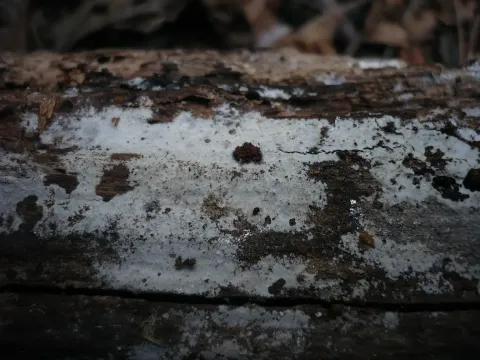
Athelia decipiens
Athelia decipiens
Athelia decipiens is a basidiomycetous fungus known for its role as a soil-borne plant pathogen that primarily attacks the lower stems and root systems of various crops.
What the section contains
Athelia decipiens
This fungus exhibits a wide host range, often transitioning between a saprotrophic life phase, where it decomposes organic matter, and a pathogenic phase.
The mycelium of Athelia decipiens is typically characterized by a thin, white-to-cream-colored felted appearance that develops around the base of the plant stem.
It survives in the soil through vegetative mycelium and can persist for extended periods in crop residues, making it a challenging pathogen to eradicate once established.
Microscopic analysis reveals a structure typical of the Atheliaceae family, with hyphae that can penetrate host tissue, disrupting normal physiological functions.
The primary symptom observed in the field is a gradual wilting of the plant, which often appears during the hottest parts of the day and may recover during the night.
Upon closer inspection, a white, mycelial mat can be seen covering the stem at the soil line, often extending onto the lower leaf petioles.
Affected plants often display chlorosis, starting from the lower leaves and progressing upwards as the root system loses its ability to transport nutrients and water.
The roots of infected plants exhibit signs of decay, appearing brown or darkened, and in severe cases, the entire root cortex can become soft and necrotic.
- wilting and stunting;
- white fungal mat at the stem base;
- root browning and softening;
- premature leaf drop;
- delayed development.
High soil moisture levels are the most critical factor for the development and spread of this disease, as it favors the rapid growth of fungal hyphae.
Moderate temperatures ranging from 18°C to 25°C create the perfect environment for the pathogen to thrive and infect new plant hosts.
Poor soil drainage and low oxygen levels in the root zone weaken the plant's natural defense mechanisms, making it significantly more susceptible to infection.
Increased planting density reduces air circulation at the soil surface, resulting in higher humidity levels that trigger sporulation and infection cycles.
Soil nutrient imbalances, particularly high nitrogen levels, can encourage lush, succulent growth that is more easily invaded by the fungal pathogens.
The damage caused by Athelia decipiens can be devastating, resulting in poor stand establishment if young seedlings are infected at an early stage.
In mature crops, the disruption of the vascular system prevents optimal fruit development, leading to reduced yields and inferior quality of harvested products.
Economic losses are compounded by the need for repeated fungicide applications and the potential for crop rotation restrictions on infested soil.
The pathogen can be easily spread through contaminated soil transported by machinery, irrigation runoff, or human activity within the field.
If left unmanaged, the pathogen population in the soil increases every year, making it difficult to produce susceptible crops without significant chemical intervention.
Effective management begins with rigorous crop rotation, avoiding the cultivation of susceptible species on infested ground for several years.
Improving soil aeration through proper tillage and drainage is a fundamental practice to minimize the humidity levels that favor the fungus.
Applying biological control agents, such as Trichoderma species, has shown promise in suppressing the pathogen population in the soil microbiome.
Sanitation practices, including the removal and destruction of crop residues, are crucial to reducing the primary inoculum source for subsequent seasons.
When chemical control is necessary, targeted soil drenches with appropriate fungicides can protect the root zone and suppress active infection outbreaks.