
Athelia
Athelia
Description
Symptoms
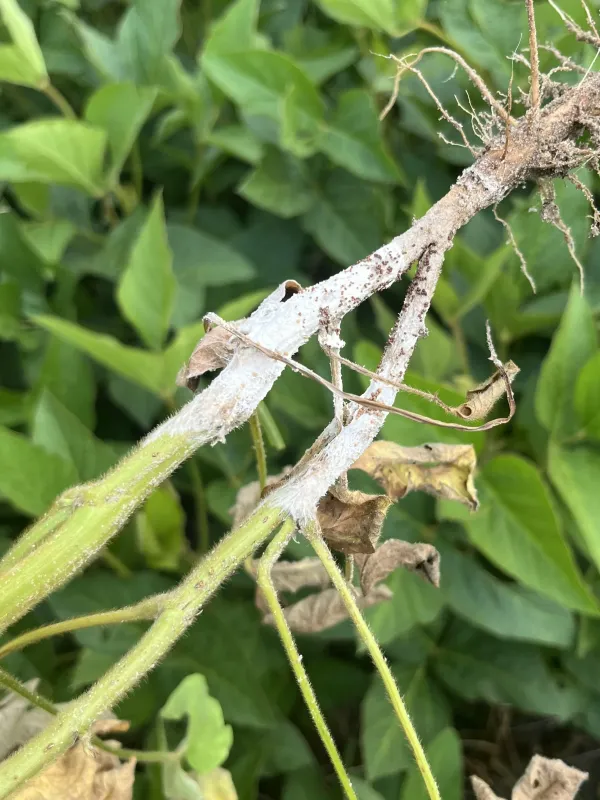
The most distinctive early sign of infection is the appearance of white, fan-like fungal mycelium spreading across the soil and onto the plant stem.
Tiny, spherical structures called sclerotia develop on the mycelial mat; initially white, they turn tan or deep brown as they mature over time.
Infected plants show rapid yellowing and wilting of the foliage, often starting from the lower leaves and progressing until the entire plant collapses.
Lesions appear at the stem base, often leading to a soft, watery rot that completely girdles the plant, preventing the transport of water and nutrients.
In affected fruits and tubers, the disease manifests as a wet, rapidly decaying rot that can destroy the entire harvest in a short period of time.
Pathogen
The disease is caused by fungi of the genus Athelia, with Athelia rolfsii (formerly Sclerotium rolfsii) being the most prominent and destructive plant pathogen.
This fungus is a facultative parasite that thrives primarily in the soil, utilizing its mycelium to expand rapidly across the surface and subsurface layers.
The pathogen forms sclerotia, which are small, round, mustard-seed-like structures that function as survival bodies, allowing the fungus to persist in soil for years.
Once conditions are favorable, these sclerotia germinate to produce extensive white, thread-like mycelium that attacks the base of host plants.
The fungus secretes enzymes, such as cellulases and pectinases, which enzymatically degrade plant cell walls, leading to tissue collapse and wilting.
Conditions for development
Athelia thrives in warm environments, with optimal development occurring at soil temperatures between 25°C and 35°C (77°F to 95°F).
High moisture levels in the soil or prolonged periods of humidity near the ground are essential for the rapid growth and spread of the pathogen.
Dense planting patterns that limit air circulation and allow for standing water around the plant base significantly increase the risk of an outbreak.
The presence of abundant decaying organic matter provides a food source that allows the pathogen to establish itself before infecting living plants.
Acidic soil conditions often favor the growth and pathogenicity of the fungus, making soil pH management a crucial factor in prevention.
Why it matters
The disease causes significant stand losses by killing seedlings shortly after emergence, leading to reduced overall crop density and yield potential.
In mature crops, infection leads to premature plant death, which directly reduces the marketable harvest and increases labor costs for removal and cleaning.
Fruits, vegetables, and tubers harvested from infected fields may harbor latent infections, leading to rapid decay during storage and transportation.
The long-term survival of sclerotia in the soil makes affected land difficult to use for susceptible crops for several subsequent seasons.
Economic damage is compounded by the difficulty of reaching the pathogen with traditional fungicides, as it is protected within the soil matrix.
Protection
Effective management begins with rigorous crop rotation, replacing susceptible hosts with resistant or non-host species like cereals or grasses for at least 3-4 years.
Deep plowing can help bury sclerotia deeper into the soil profile, reducing the likelihood of them contacting the stems of young plants.
Improving soil drainage is vital; raised beds or drip irrigation can help keep the plant base dry, effectively inhibiting fungal development.
Soil amendments that increase pH levels, such as lime, can make the environment less conducive to the growth of the pathogen.
- Sanitation by removing and destroying all infected plant materials.
- Avoiding excessive mulch that traps moisture near the stem.
- Weed management to eliminate alternative host plants.
- Strategic application of approved fungicides during high-risk conditions.
Discussion
No discussions yet — be the first.