
Atheliaceae fungi
Atheliaceae
The Atheliaceae family includes a group of basidiomycete fungi, some of which are significant plant pathogens. The most prominent species, often responsible for devastating agricultural losses, is Athelia rolfsii (anamorph Sclerotium rolfsii).
What the section contains
Atheliaceae fungi
This pathogen causes various forms of basal rot, root rot, and stem blight. It is highly polyphagous, meaning it attacks a wide range of host plants, including vegetables, legumes, and industrial crops, infecting them through the soil.
The fungus survives in the soil primarily as sclerotia—hardened, melanized mycelial masses. These structures are extremely resistant to environmental stress, allowing the pathogen to persist in fields for several years.
Infection spreads through contaminated soil, irrigation water, and the movement of infected plant debris. The fungus thrives on decaying organic matter, making it a persistent problem in intensive agricultural systems.
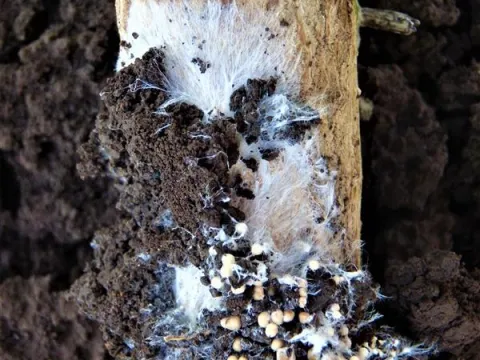
A biological hallmark of this pathogen is the rapid development of thick, white, fan-like mycelial growth on the soil surface and the lower stem of host plants when humidity levels are high.
The first symptom is usually sudden wilting of the plant, which remains persistent even after irrigation. Closer inspection of the base of the stem reveals necrotic tissue, often appearing tan to brown.
A distinctive white, thread-like mycelium often covers the base of the plant and the surrounding soil. This growth effectively chokes the transport systems of the plant, leading to rapid decline.
Sclerotia are the primary diagnostic sign. These small, mustard-seed-sized structures appear on the mycelial mat. They start white and transition to a dark brown or tan color as they mature.
In advanced stages, the infected stem tissue becomes soft and watery, leading to total collapse of the plant. Outbreaks typically manifest as patches in the field that gradually expand outward.
For vegetable crops like tomatoes, the infection often manifests as a girdle-like lesion around the stem at the soil line, which quickly destroys the vascular connection.
Atheliaceae development is strongly correlated with temperature. The fungi prefer warm climates, with optimal growth occurring at temperatures ranging from +25°C to +35°C.
Soil moisture is the most critical factor for infection. High moisture levels, particularly when combined with high temperatures, provide the perfect environment for the germination of sclerotia.
Crowded plant spacing and weed infestations create a humid microclimate near the soil surface, significantly increasing the risk of infection. Poor soil aeration also exacerbates the rot process.
Inadequate crop rotation is a major driver of outbreaks. Repeatedly planting susceptible crops in the same area allows the sclerotia population in the soil to reach destructive levels.
Excessive use of nitrogenous fertilizers can lead to succulent, dense plant canopies that reduce airflow at the ground level, favoring the pathogen's spread.
The primary threat is the sudden and often total death of plants at various developmental stages, leading to significant stand reduction. This is especially damaging in field crops where replanting is costly.
Once established in the soil, the pathogen is extremely difficult to eradicate. It can remain dormant for years, limiting the farmer's choice of future crops and potentially ruining the value of the land.
The pathogen causes massive economic damage, particularly in high-value vegetable crops. When the vascular system is severed at the base, fruit quality and yield drop to zero within a very short timeframe.
In greenhouse environments, the disease can spread rapidly through shared irrigation systems or contaminated tools, potentially destroying an entire production cycle in a matter of weeks.
Control measures are expensive and often yield only partial success, making prevention the only truly reliable method of management for these pathogens.
The cornerstone of management is long-term crop rotation. Rotating with non-host crops, such as grasses or cereals, for at least 3–5 years can help reduce the sclerotia population in the soil.
Cultural practices are essential. Deep plowing helps bury sclerotia to depths where they are less likely to germinate. Regular weeding is necessary to remove potential host reservoirs.
Water management is critical. Switching to drip irrigation keeps the base of the stems dry and reduces the environment favorable for fungal mycelium growth.
Chemical control involves treating seeds or soil with fungicides, though efficacy is often limited by the depth of the infection. Biological control using Trichoderma species has shown promise.
- Promptly remove and destroy infected plants and surrounding soil.
- Improve soil drainage to prevent moisture buildup near stems.
- Maintain balanced soil nutrition to improve host plant vigor.
- Use certified disease-free seeds or transplants for new plantings.