
Heterobasidion root rot
Spiniger meineckellum
The disease is caused by the fungus Heterobasidion annosum, historically identified in its anamorph form as Spiniger meineckellum, a basidiomycete responsible for severe root and butt rot.
What the section contains
Heterobasidion root rot
This pathogen functions as a destructive parasite, infecting trees through root injuries, stem wounds, or contact between healthy roots and colonized root systems.
The lifecycle involves the production of airborne basidiospores that colonize freshly cut stumps, which serve as primary infection points in forest stands.
Once established, the fungal mycelium colonizes the woody tissue, degrading lignin and cellulose, which leads to structural instability of the host tree.
The pathogen is exceptionally resilient, capable of persisting in stumps and root fragments within the soil for several decades after the tree has died.
Early symptoms include crown thinning, needle discoloration, and a significant reduction in terminal growth, indicating root system dysfunction.
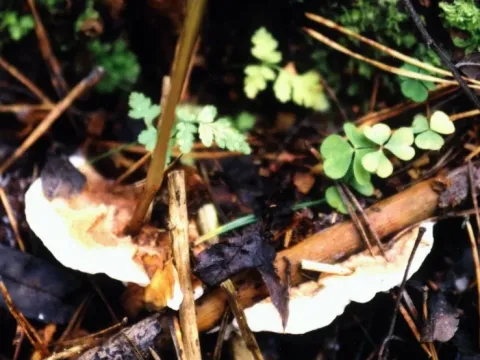
Fruiting bodies of the fungus may appear at the base of the tree, usually hidden under the litter layer or near the root collar, manifesting as brown, leathery structures.
Decayed wood typically displays a characteristic reddish-brown discoloration, which later transitions into a white, stringy rot with distinctive black zone lines.
Affected trees often show signs of instability, appearing loose in the soil and becoming prone to windthrow during moderate weather conditions.
In Douglas fir and other conifers, the disease progress culminates in the formation of infection centers, where trees die in expanding patches over several years.
Root rot development is favored by well-aerated, sandy or loamy soils, while heavily waterlogged conditions may inhibit the growth of the fungus.
Temperatures between 15°C and 25°C are optimal for spore germination and mycelial colonization, making the growing season a high-risk period for infection.
Stands planted on former agricultural land are particularly susceptible, as the fungal population can build up rapidly in the absence of biological competition.
Thinning operations conducted without preventative measures leave behind fresh stumps, providing a perfect substrate for spore landing and infestation.
Environmental stress, such as drought or inappropriate site selection for the species, weakens the trees' natural defenses and promotes fungal invasion.
Heterobasidion root rot is one of the most economically significant forest pathogens globally, causing substantial losses in timber yield and tree mortality.
The decay weakens the butt section of the trunk, rendering it useless for high-quality timber products and significantly lowering the stand's commercial value.
Large-scale mortality creates gaps in the canopy, leading to forest fragmentation and a reduction in the overall ecosystem services provided by the stand.
Forest nurseries face severe challenges, as the pathogen can infect young seedlings, leading to high failure rates in reforestation projects.
Repeated rotations of susceptible conifer species on infested sites can lead to a long-term decline in site productivity and severe management difficulties.
Silvicultural management, such as avoiding thinning during the peak spore release season, is a fundamental step in minimizing the spread of the disease.
The application of biological control agents, specifically the fungus Phlebiopsis gigantea on freshly cut stumps, effectively prevents colonization by the pathogen.
In cases of severe infestation, complete removal of stumps and roots during sanitary harvesting is recommended to limit the potential for root-to-root contact infection.
Diversifying stand composition by mixing conifers with resistant deciduous tree species helps create a biological barrier against the spread of root rot.
Ongoing monitoring and early detection of localized mortality patches allow for rapid management interventions before the infection becomes unmanageable.