
Heteroderosis
Heterodea
Description
Symptoms
The most characteristic sign of heteroderosis is the patchy appearance of the crop in the field, with areas showing stunted growth and chlorosis.
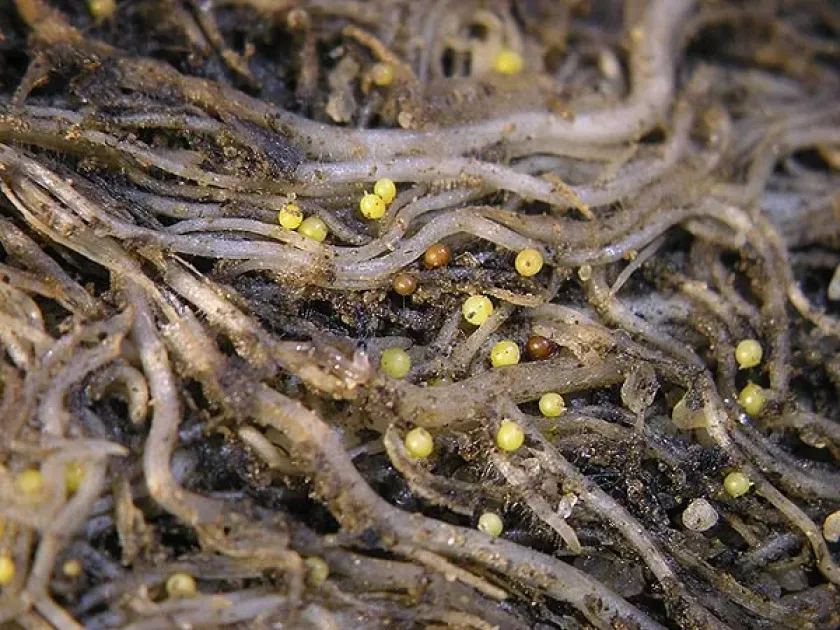
Upon careful examination of the root system, one may observe tiny, white, yellow, or brown cyst-like structures attached to the root surface.
Root systems often exhibit excessive branching, a condition known as a "bearded root" appearance, as the plant attempts to compensate for the damage.
Above-ground symptoms include yellowing of foliage, leaf curling, and overall wilting, especially under water stress or hot weather conditions.
Delayed maturity and reduced size of tubers or vegetables are common indicators that the plant is suffering from nematode infestation.
Pathogen
Heteroderosis is a plant disease caused by parasitic nematodes of the genus Heterodera, commonly known as cyst-forming nematodes.
The life cycle involves the formation of cysts, which are the hardened, protective bodies of dead females containing eggs and larvae, ensuring survival in soil.
Larvae emerge from the cysts in response to root exudates from host plants and penetrate the roots to initiate a parasitic relationship.
Once inside, the nematodes undergo physiological changes, causing the formation of specialized feeding sites within the plant vascular tissue.
This feeding behavior disrupts the plant's ability to transport water and nutrients, which is the primary cause of the systemic symptoms observed.
Conditions for development
The activity of cyst nematodes is highly temperature-dependent, with optimal emergence of larvae typically occurring at soil temperatures between 15°C and 20°C.
Adequate soil moisture is necessary for the migration of second-stage larvae to the roots, making spring and early summer high-risk periods.
Dissemination occurs through the movement of infested soil attached to farm equipment, tools, footwear, and even through water erosion.
Intensive monoculture practices provide a continuous supply of host plants, which allows the nematode population to reach high levels rapidly.
Cysts are extremely resilient, capable of surviving for years in the soil even in the absence of a host, which makes them difficult to eradicate.
Why it matters
The economic impact of heteroderosis is significant, as it leads to severe yield losses by hindering the plant's nutrient uptake capabilities.
In highly infested soils, crop yields can be reduced by more than 50 percent, significantly affecting the profitability of the entire production cycle.
Quality parameters are adversely affected, resulting in smaller produce, lower nutrient content, and diminished market value for consumers.
Root damage caused by these nematodes creates open pathways for secondary infections, such as root rot fungi and bacteria, further weakening the plant.
The persistence of cysts in the soil often necessitates long-term quarantine or restrictive crop rotation practices, limiting land use options.
Protection
Crop rotation is the fundamental management strategy; alternating host crops with non-host crops helps to starve the nematode population.
Planting resistant or tolerant cultivars is the most effective approach for maintaining yield levels in areas with a history of infestation.
Stringent sanitation protocols, such as cleaning machinery and tools before moving between fields, are essential to prevent the spread of the pathogen.
Biological control agents, including fungi and bacteria that parasitize nematodes, can be used to naturally manage and suppress the population.
- Use of nematicide treatments where permitted and economically viable.
- Rigorous monitoring and soil testing for cyst count before planting.
- Use of trap crops to stimulate larval emergence without allowing reproduction.
- Maintaining optimal plant nutrition to help crops withstand parasitic pressure.
Discussion
No discussions yet — be the first.