
Heterogastridiaceae
Heterogastridiaceae
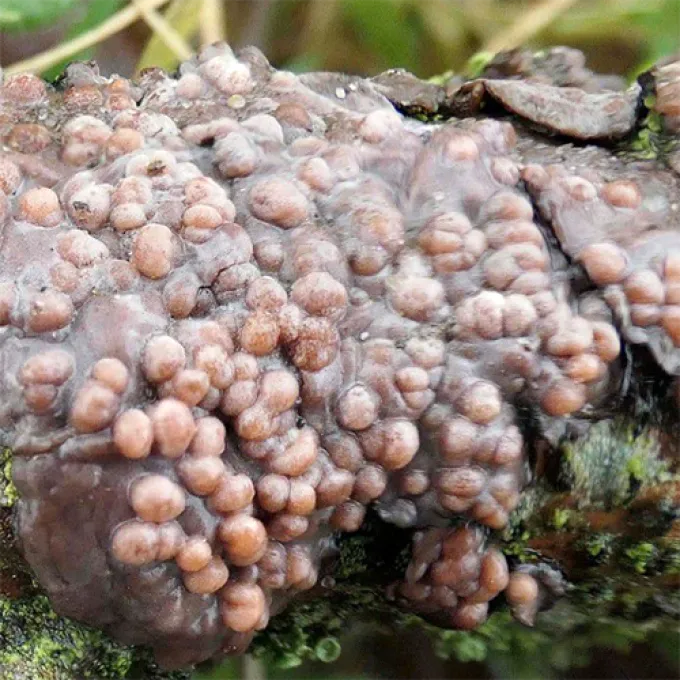
Description
Symptoms
Visual symptoms often present as atypical outgrowths or pustules appearing on leaves and stems. Often, the fungus establishes itself on tissues already weakened by other pathogens, which can mask the true cause of the observed plant distress.
Chlorotic spots that eventually transition into necrotic lesions are a common symptom. These areas can vary in shape and size, ultimately leading to the decay of plant organs and a significant reduction in the plant's overall photosynthetic capacity.
A characteristic fungal layer, representing a mass of spores, can often be detected on the surface of infected parts. The color of these sporulations may vary, providing an important clue for identifying the development stage of the infection.
Infection typically occurs in patches across the field. If left untreated, these spots tend to merge, covering larger areas of the plant, which often results in premature leaf drop and stunted growth during the critical development phases.
Agronomists must differentiate Heterogastridiaceae from other rust-like fungal diseases. Careful observation of the spore structure is vital for precise diagnosis, as it dictates the most effective treatment plan to manage the disease spread.
Pathogen
Heterogastridiaceae is a family of basidiomycete fungi belonging to the order Heterogastridiales. These microorganisms are often specialized parasites, and in many cases, they act as hyperparasites of other fungi, exhibiting complex biological strategies for survival.
The morphology of these fungi is characterized by septate basidia, which serves as a primary diagnostic feature. Understanding this structural complexity is essential for accurate identification of the pathogen within the plant tissues and the surrounding environment.
These fungi are capable of utilizing both saprotrophic and parasitic pathways, allowing them to adapt to different conditions in the agroecosystem. They use haustoria to penetrate plant cells and derive necessary nutrients, which directly impacts the host plant's vigor.
Reproduction is primarily achieved through basidiospores, which are easily dispersed by wind and water across wide areas. This efficient dispersal mechanism enables the pathogen to colonize new fields rapidly under favorable environmental conditions.
Current molecular research continues to refine the classification of the Heterogastridiaceae family. Ongoing studies aim to better understand the specific host-parasite interactions and the role these fungi play in various plant diseases worldwide.
Conditions for development
The development of Heterogastridiaceae fungi is strongly dependent on air humidity levels. Sustained high humidity or frequent rainfall periods create the ideal microclimate for the pathogen's growth and successful colonization of host plants.
Relative humidity levels exceeding 80% act as a catalyst for spore germination. In such conditions, the incubation period of the pathogen is minimized, leading to sudden and significant outbreaks of the disease in the field.
Liquid water on leaf surfaces, such as dew or fog, is critical for the infection process. Moisture allows the spores to adhere effectively to the epidermis and begin the penetration phase, ensuring the survival of the fungal colonies.
A temperature range between +18°C and +25°C is optimal for the metabolic activities of the fungus. Even when temperatures fluctuate, the mycelium remains resilient, often overwintering in plant debris and waiting for better conditions.
Agricultural practices such as over-planting and poor ventilation in canopy layers create stagnant microclimates that favor the pathogen. Proper field management is essential to reduce the humidity levels that support the life cycle of these fungi.
Why it matters
The primary harm caused by Heterogastridiaceae is the suppression of the host plant's immune system. By extracting vital nutrients from the plant, the fungus directly competes with crop yield formation, leading to lower overall productivity.
Heavy infestations reduce both the quality and quantity of the harvest. Farmers may face significant economic losses as the affected crops show stunted growth, lower grain or fruit mass, and reduced marketability for agricultural produce.
Infected plants exhibit increased susceptibility to secondary infections and abiotic stressors. This creates a cascade of problems, as growers are forced to implement more intensive and costly management strategies to protect their crops.
The persistence of the fungus in soil and crop residue serves as a source of infection for subsequent seasons. This complicates crop rotation planning and necessitates increased spending on soil treatments and field sanitation measures.
The cost of implementing additional fungicide applications and increased manual labor can significantly raise the production costs. Therefore, preventing the establishment of the disease is more economically sound than attempting to manage it once it spreads.
Protection
An integrated protection system is necessary to control Heterogastridiaceae. This includes strict adherence to crop rotation, which breaks the pathogen's life cycle and prevents the accumulation of infectious material in the soil over time.
Proper harvesting and deep incorporation or disposal of crop residues are mandatory to reduce overwintering sites. Thorough field sanitation helps minimize the initial inoculum load, preventing outbreaks in the following planting seasons.
Systemic fungicides are effective tools when used at the correct timing. Monitoring the crop and applying treatments at the first sign of the disease can significantly restrict its spread and mitigate the impact on total yield.
Selecting resistant cultivars or hybrids is the most sustainable approach to long-term disease management. Genetic resistance reduces the dependency on chemical interventions and helps maintain a healthier and more productive agroecosystem.
Regular phytosanitary inspections allow for early detection and rapid response. By controlling local outbreaks immediately, farmers can prevent the wide-scale dispersal of spores and save the bulk of their crops from devastating damage.
Discussion
No discussions yet — be the first.