
Heteroderosis
Heterodeaceae
Description
Symptoms
The first visible signs of heteroderosis are stunted plant growth, wilting, and premature yellowing of the foliage, even when irrigation is sufficient.
The root system of infected plants often appears stunted and bushy, lacking healthy lateral roots, which severely impairs the plant's nutrient and water uptake.
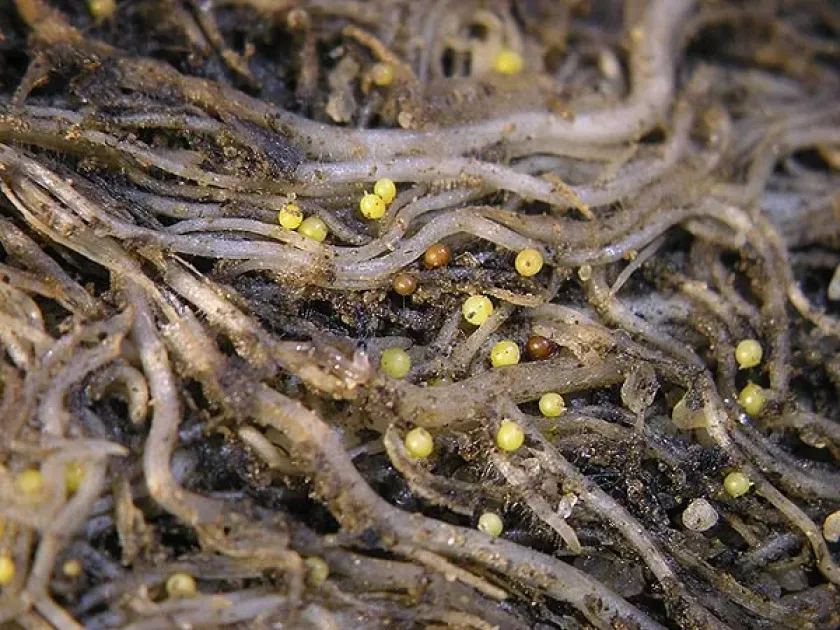
Upon closer inspection during the flowering stage, one can see tiny, barely visible cysts — appearing as white, yellow, or brown granules on the roots.
A classic field symptom is the appearance of patchy, uneven growth, where specific areas show significant depression compared to the rest of the field.
Severe infestations lead to a loss of cell turgor, causing the plants to wither rapidly due to the compromised vascular integrity of the root system.
Pathogen
The disease is caused by cyst-forming nematodes of the Heteroderidae family. These are microscopic parasitic worms that feed on the contents of plant root cells.
The most prominent representative is the potato cyst nematode (Heterodera rostochiensis). After fertilization, the females transform into dense brown cysts that protect eggs from harsh environmental conditions.
These cysts can remain viable in the soil for many years, making them one of the most persistent and difficult-to-control agricultural pests.
The parasite develops in the root zone, where second-stage larvae penetrate the roots and induce the formation of feeding sites known as syncytia.
The life cycle is closely synchronized with the host plant's phenology, allowing larvae to emerge exactly when the root system is actively growing.
Conditions for development
Heteroderosis thrives in light, sandy soils where larvae can move easily through the water film surrounding soil particles.
Optimal temperatures for larval emergence and root invasion range between 15–25°C, which aligns with the active growing season of most major crops.
While moisture is necessary for larval movement, excessive waterlogging may limit the oxygen availability required for the nematodes' metabolism.
The disease spreads primarily through contaminated soil, infected seed material, dirty farm machinery, or runoff water during heavy rains.
Continuous monocropping, especially with potatoes, creates the perfect environment for the rapid buildup of nematode populations in the soil.
Why it matters
The damage caused by nematodes involves both direct mechanical injury to roots and systemic metabolic disruption, leading to substantial yield losses.
High infestation levels can result in yield reductions of 60–90% for tuber crops, often making the agricultural activity economically unviable.
Infected plants are significantly more susceptible to secondary infections by soil-borne fungi and bacteria due to the compromised integrity of root tissues.
Product quality deteriorates drastically; tubers become small, misshapen, and suffer from poor shelf life, making them unsuitable for storage or sale.
As a quarantine pest, the presence of Heteroderidae leads to strict trade restrictions and regulatory oversight on affected agricultural properties.
Protection
The most effective strategy is the implementation of crop rotation using antagonist plants like white mustard, oilseed radish, or rapeseed, which suppress nematode populations.
Selecting and planting resistant or tolerant crop varieties remains the primary and most environmentally sound method for managing the pest.
- Strict sanitation and disinfection of all farm machinery.
- Cleaning equipment thoroughly after working in infested areas.
- Using only certified, nematode-free seed and planting material.
- Incorporating biological control agents, such as nematode-trapping fungi, into the soil.
In cases of severe infestation, chemical nematicides may be used, though their application is often restricted by environmental safety regulations.
Continuous monitoring and systematic soil testing are essential to identify hotspots early and prevent the further spread of the infestation.
Discussion
No discussions yet — be the first.