
Bacterial blight of dyer's woad
Xanthomonas dyei
The causative agent of this disease is the bacterium Xanthomonas dyei, a gram-negative phytopathogen that targets specific plant species.
What the section contains
Bacterial blight of dyer's woad
This pathogen specifically affects plants belonging to the Brassicaceae family, with Isatis tinctoria (dyer's woad) being a primary host.
The bacterium enters the plant tissues through natural openings such as stomata or via wounds caused by mechanical damage or insect activity.
Once inside, Xanthomonas dyei colonizes the xylem vessels, which eventually disrupts the transport of essential water and nutrients throughout the plant.
The pathogen is known for its high reproductive capacity in favorable environmental conditions, which can lead to rapid outbreaks in commercial fields.
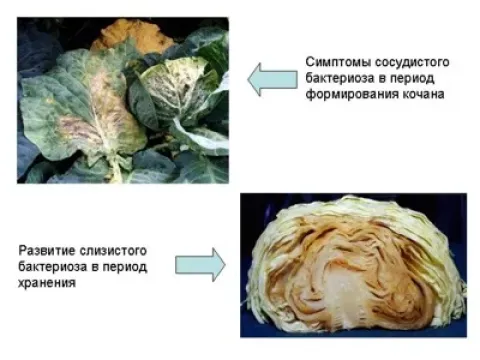
The first signs of infection appear as small, angular spots on the leaves, which initially have a pale green or yellowish color.
As the infection progresses, these spots darken and develop a water-soaked, oily appearance, eventually turning into necrotic brown lesions.
Plants affected by the pathogen show signs of wilting, particularly during the hottest parts of the day when transpiration demands are high.
In conditions of high humidity, a bacterial ooze (exudate) may be visible on the surface of stems and leaf petioles, containing dense bacterial masses.
Severe infection leads to the death of leaves and stems, resulting in significant plant stunting and, in advanced cases, total plant collapse.
High humidity and consistent rainfall are the primary environmental factors that promote the spread and colonization of the pathogen.
The bacterium thrives and spreads most effectively when temperatures remain within the range of +20°C to +28°C during the growing season.
Presence of surface moisture, such as dew or rain, is essential for the mobility of bacterial cells, allowing them to swim and reach new infection sites.
Dense planting patterns that limit air circulation create a conducive microclimate for the accumulation of the inoculum within the field.
Poor agricultural practices, such as continuous cropping of susceptible species, significantly increase the risk of soil-borne outbreaks.
Bacterial blight causes significant economic loss by reducing the total biomass and quality of the dyer's woad harvest.
The disruption of vascular tissues impairs plant metabolism, leading to a decrease in the production of valuable dye compounds in the leaves.
In favorable conditions for the disease, outbreaks can destroy a large portion of the crop, making the farming operation non-viable.
Weakened plants are highly susceptible to secondary infections by other opportunistic microorganisms, which accelerates the decomposition of the crop.
Product value is heavily impacted, as leaves infected with bacterial blight are often rejected during industrial processing due to poor quality.
Effective management begins with the use of clean, disease-free seed stock sourced from reliable producers.
Implementing a strict crop rotation cycle of at least 3-4 years is essential to reduce the survival of the pathogen in the soil.
Proactive pest management is crucial, as insects create wounds that serve as entry points for bacterial infiltration.
- Spatial isolation from other Brassicaceae family crops.
- Removal and destruction of crop residues post-harvest.
- Monitoring the field regularly for early signs of wilting or spotting.
Application of copper-based bactericides can help suppress the spread of the disease when symptoms are detected early.