

Disease · bacterial
Bacterial canker of stone fruits
Pseudomonas cerasi
Description
Symptoms
Early symptoms include the appearance of small, dark, water-soaked spots on leaves, which may later drop out to create a 'shot-hole' appearance.
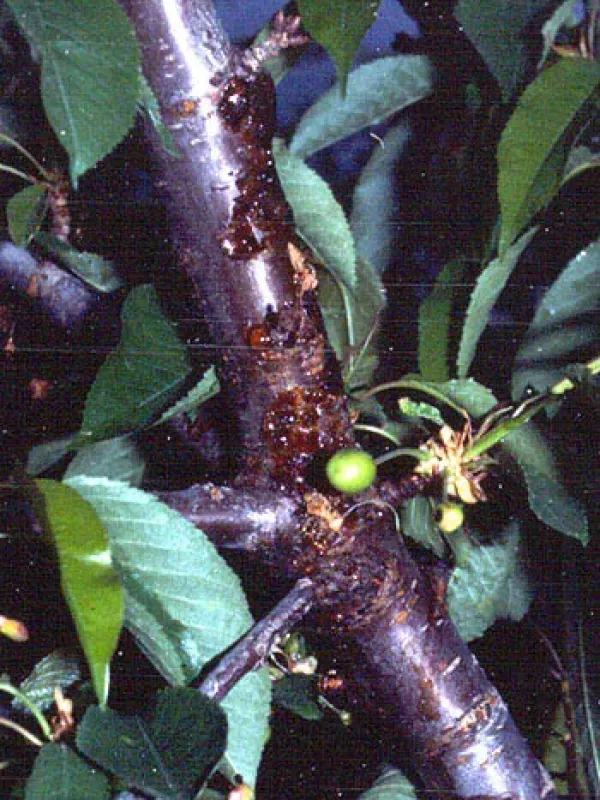
The most diagnostic sign is the formation of cankers on trunks and branches, often characterized by sunken, discolored bark and the oozing of amber-colored gum.
Trees may exhibit sudden wilting or 'flagging' of entire branches in late spring or summer, as the cankers girdle the stems and cut off nutrient supply.
On fruit, bacterial canker appears as small, circular, dark lesions that cause sunken spots and eventual decay of the fruit tissue.
Internal examination of affected branches reveals dark, necrotic wood tissue, indicating the movement of bacteria through the xylem vessels.
Pathogen
Bacterial canker is caused by the phytopathogenic bacteria Pseudomonas syringae pv. syringae, a highly destructive pathogen targeting various stone fruit species.
These bacteria survive in infected plant tissues, dormant buds, and as epiphytes on the surface of leaves and stems under favorable weather conditions.
The disease spreads through splashing rain, wind, contaminated pruning tools, and by using infected grafting wood or nursery stock for propagation.
Once inside the tree, the bacteria release toxins that destroy the cell structure, leading to vascular blockages and the death of surrounding plant tissues.
The pathogen thrives in cold, wet environments, making orchards in temperate climates particularly susceptible during late winter and early spring.
Conditions for development
The infection is highly correlated with cold and wet weather conditions, as moisture facilitates the movement of bacteria into plant wounds and buds.
Mechanical injuries caused by frost cracks, pruning wounds, or hail damage provide optimal entry points for the pathogen to colonize the tree.
Poor orchard site selection, such as planting in low-lying areas with poor air drainage, increases the duration of leaf wetness and disease risk.
High nitrogen levels stimulate excessive vegetative growth, resulting in tender tissues that are more susceptible to infection by the bacteria.
The lack of proper dormant season sanitation and failure to control insect pests that create surface wounds can exacerbate the spread of the disease.
Why it matters
The disease poses a severe threat to the productivity of stone fruit orchards, often resulting in the loss of whole branches or entire trees.
Severe infestations can lead to total orchard failure if sanitation practices are not strictly followed and infected trees are not promptly removed.
Bacterial canker significantly reduces the lifespan and vigor of trees, making them susceptible to other secondary infections and environmental stresses.
Fruit quality is drastically compromised, leading to economic losses due to market rejection of blemished or deformed produce.
In nurseries, the presence of the pathogen can lead to the destruction of entire batches of saplings, causing significant financial damage to growers.
Protection
Effective management begins with strict nursery hygiene and the use of certified disease-free rootstocks and scion wood for planting.
- Sanitize all pruning tools regularly with alcohol or bleach solutions to prevent transferring bacteria between trees.
- Prune during dry periods to prevent moisture from entering wounds and to allow cuts to heal faster before the bacteria become active.
- Apply copper-based fungicides during the dormant season and early spring to reduce the bacterial population on tree surfaces.
- Remove and burn all severely infected branches or entire trees to prevent the spread of the pathogen to neighboring healthy plants.
- Maintain tree health through balanced fertilization and protect trunks from winter sunscald to minimize the risk of bark cracking.
Cultural practices that promote good air circulation and soil drainage are essential for reducing the humidity levels required for bacterial proliferation.
Content graph
Connections · Bacterial canker of stone fruits
Most often together:
Marketplace
Products · 2

Community
Discussion
No discussions yet — be the first.