
Bacterial canker of poplar
Xanthomonas populina
Description
Symptoms
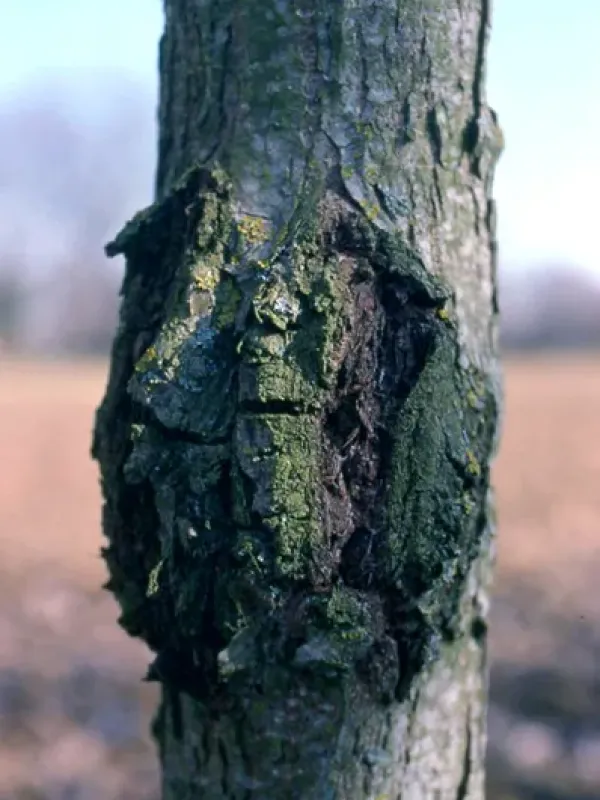
The first symptoms appear as small, slightly sunken spots on the bark, which eventually develop into distinct cankers. The bark in these affected areas frequently cracks, exposing the necrotic underlying wood.
A second characteristic sign is the oozing of bacterial exudate from the fissures and cankers. In dry weather, this liquid dries into a shiny coating or hard crust on the surface of the bark.
Leaves on infected branches may turn yellow and fall prematurely. As the disease progresses, the canopy becomes sparse, leading to dieback of the upper crown and eventual mortality of the affected branches.
When the bark is removed from an infected area, the underlying phloem and cambium show a distinct dark, reddish-brown, or brownish discoloration, indicating active tissue necrosis.
In advanced stages, deep cankers form that can girdle the branch or the main stem. This structural damage leads to the complete death of the part of the tree located above the lesion.
Pathogen
The causative agent of this disease is the bacterium Xanthomonas populina. This pathogen specializes in infecting the vascular tissues and cambium of various poplar species, effectively disrupting the flow of sap.
This disease is classified as a bacterial infection of woody plants. The pathogen can survive for long periods within the infected bark and wood tissue, ensuring a persistent infection source in the area.
Bacteria enter the tree through natural openings, such as lenticels, or through mechanical wounds caused by insects, hail, or maintenance activities in the forest or plantation.
Once inside, the pathogen multiplies rapidly, forming colonies that plug the conductive vessels. This blockage leads to the gradual dieback of specific tree sections and branches.
The life cycle of the bacterium is closely synchronized with the seasonal patterns of the host tree, allowing it to successfully overwinter within the tree structure.
Conditions for development
The development of bacterial canker is strongly favored by periods of high humidity and frequent rainfall. Moisture is essential for the bacteria to travel across the bark surface and penetrate the tissues.
Trees stressed by unfavorable environmental factors—such as drought, air pollution, or pest infestations—are significantly more susceptible to infection by Xanthomonas populina.
The spread of the infection is primarily facilitated by rain splash, wind currents, and contact with contaminated tools during pruning or timber harvesting operations.
Plantations with high planting density often exhibit poor aeration, which helps maintain moisture levels on the bark surface and creates an ideal microclimate for the pathogen to thrive.
Spring and autumn periods are critical times for disease development, as these are the times when the tree's vascular systems are most active, making them highly vulnerable to bacterial invasion.
Why it matters
Bacterial canker poses a significant threat to forest cultures, urban parks, and roadside tree lines. The disease severely reduces the aesthetic value of the trees, making them look unkempt.
In commercial forestry, the infection significantly decreases the quality and yield of the wood, as internal necrosis and rot render the trunks unsuitable for processing and industrial use.
The chronic nature of the disease inevitably exhausts the tree, lowers its immune defenses, and increases its susceptibility to secondary pests like wood-boring beetles.
Large-scale outbreaks can lead to the widespread death of plantations, necessitating massive sanitary cutting operations, which results in major economic losses for the forestry sector.
Furthermore, infected trees represent a safety hazard in public areas, as weakened branches and trunks are prone to sudden breakage under the pressure of wind or snow.
Protection
The primary control method is the timely implementation of sanitary measures, including the removal and destruction (burning) of infected trees to eliminate the source of inoculum.
It is essential to use only healthy, certified planting stock sourced from nurseries that maintain strict phytosanitary standards and are free from bacterial diseases.
All tools used for pruning or tree maintenance must be thoroughly disinfected with appropriate antiseptic solutions after each contact with an infected tree to prevent cross-contamination.
Good management practices, such as maintaining proper planting density and ensuring adequate air circulation, are vital to helping trees maintain their natural resistance to infections.
For high-value ornamental trees, localized treatment with bactericidal agents based on copper or other specialized products may be applied under the guidance of plant pathologists.
Discussion
No discussions yet — be the first.