
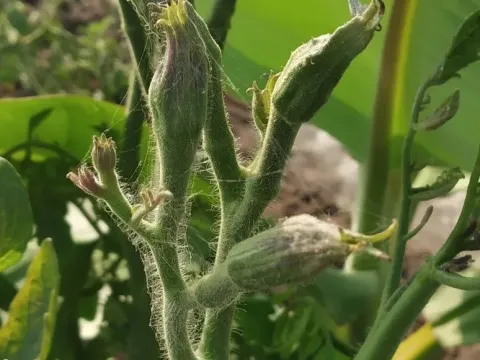
Tomato big bud
Tomato big
Tomato big bud is a serious plant disease caused by phytoplasmas (Candidatus Phytoplasma aurantifolia), which are specialized wall-less bacteria that inhabit the phloem tissue of infected plants.
What the section contains
Tomato big bud
The primary vectors for this pathogen are leafhoppers (Cicadellidae), which acquire the phytoplasma while feeding on the sap of infected plants. After an incubation period within the insect, the vector becomes capable of transmitting the disease to healthy plants during subsequent feeding.
The disease is systemic, meaning the pathogen spreads throughout the plant, colonizing roots, stems, and reproductive organs, which leads to profound physiological changes in the host.
Because phytoplasmas are fragile outside of a host or vector, the disease is not typically transmitted mechanically via pruning tools or handling; insect vectors are essential for its spread in agricultural environments.
The pathogen has a broad host range, including many weeds and vegetable crops, making it difficult to eradicate entirely from an area once it becomes established in the local vegetation.
The most distinctive symptom is the hypertrophy of the sepals, which become enlarged and coarse, giving the flower a characteristic "big bud" appearance that gives the disease its common name.
Infected tomato plants often show an abnormal growth pattern, including shortened internodes, a rosetted appearance of the terminal shoots, and leaves that are smaller than normal, often turning yellow or purple due to anthocyanin accumulation.
Flowers on infected plants are frequently sterile or produce deformed, hard, and stunted fruits that lack any commercial value, causing a significant reduction in marketable yield.
Severe infections lead to the degradation of the root system, which results in a loss of turgor and the eventual wilting of the entire plant, especially under water stress.
Symptoms can manifest differently depending on the stage of infection; plants infected early in development show stunted growth, while later infections may only manifest on specific branches.
The spread of tomato big bud is highly correlated with the activity levels of leafhopper vectors, which are favored by hot and dry weather conditions that stimulate their migration from wild plants to crops.
The presence of perennial weeds near fields serves as a primary reservoir for the phytoplasma, ensuring that the pathogen survives the winter and is ready to infest new plantings in the spring.
Plant stress, often caused by inadequate irrigation or poor soil health, can exacerbate symptom expression, making infected plants more susceptible to the lethal effects of the phytoplasma.
Environmental temperatures above 25–30 degrees Celsius increase the metabolic rate of the vectors, leading to more frequent feeding and faster dissemination of the pathogen across the field.
Agricultural practices that fail to control weeds or that neglect the monitoring of insect populations significantly increase the risk of an outbreak during the growing season.
The primary damage caused by tomato big bud is the near-total loss of the potential harvest, as the disease severely impairs both fruit set and development in the affected plants.
The hormonal imbalance induced by the phytoplasma disrupts the plant's natural growth cycle, resulting in reduced vigor, poor yield, and plants that are often rendered unproductive early in their lifespan.
Since there is no chemical cure for phytoplasmas once they have colonized the phloem, infected plants become permanent sources of inoculum for the rest of the crop.
In intensive cultivation systems, such as greenhouses, the disease can spread rapidly among plants, potentially leading to the loss of an entire batch if insect vectors are not managed strictly.
The lack of commercially available resistant tomato varieties forces farmers to rely heavily on expensive and labor-intensive preventive measures to keep the disease in check.
Effective control depends primarily on managing the leafhopper vector population through timely and repeated applications of systemic insecticides, especially during the early stages of plant development.
Sanitation is critical, requiring the systematic removal and destruction of infected plants and the thorough eradication of host weeds in and around the field to eliminate reservoirs of the pathogen.
Physical exclusion methods, such as insect-proof netting in greenhouses, are highly effective in preventing leafhoppers from accessing the plants and are a vital part of integrated pest management.
Regular scouting using yellow sticky traps helps in monitoring the influx of leafhoppers, allowing for targeted and efficient insecticide applications only when necessary.
- Regular use of systemic insecticides to control sap-sucking insects.
- Maintaining a weed-free zone around fields to reduce pathogen reservoirs.
- Using high-quality, certified disease-free seedlings for planting.