
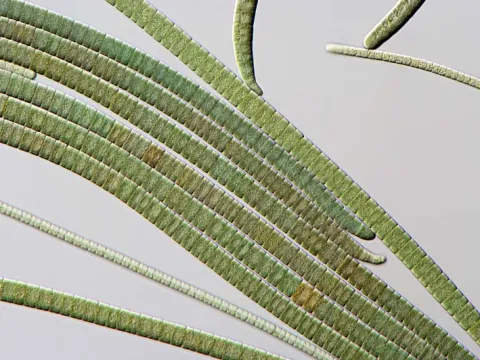
Tolypothrix tenuis
Tolypothrix tenuis
Tolypothrix tenuis is a species of filamentous cyanobacteria (blue-green algae) often found in aquatic agricultural environments like rice paddies.
What the section contains
Tolypothrix tenuis
This organism is known for its ability to fix atmospheric nitrogen, which characterizes it as a biologically significant component of the paddy field ecosystem.
The morphology of the organism consists of complex, false-branching filaments that tend to aggregate into dense, cohesive mats.
Unlike traditional fungal pathogens, this bacterium thrives in stagnant water and primarily affects the crop by modifying the aquatic environment.
Scientific interest in this species is also high due to its biochemical potential, although in professional agriculture, it is managed as a nuisance species.
The most visible sign of an infestation is the formation of thick, dark green or brownish-black mats floating on the surface of the paddy water.
When disturbed, these mats feel slimy and may trap air bubbles within their filamentous structure, causing them to float even more prominently.
Young rice seedlings may appear stunted or yellowed when they are covered by these cyanobacterial mats, which impede their access to light.
The water in the affected fields often develops a murky, opaque appearance, sometimes accompanied by a distinctive earthy or swampy odor.
Persistent presence of these filaments on the submerged stems of rice plants is a clear indicator of a high-density population of the bacterium.
The growth of Tolypothrix tenuis is heavily favored by stagnant water conditions typical of submerged rice cultivation.
High levels of nutrients, particularly phosphorus and nitrogen from fertilizers, act as primary catalysts for the rapid proliferation of this species.
Warm ambient temperatures (above 25°C) combined with high solar radiation provide the optimal energy source for photosynthesis and colony expansion.
Neutral or slightly alkaline pH levels in the paddy water create a stable chemical environment that supports the survival and growth of the cyanobacterial population.
Reduced water circulation in the field allows these mats to anchor themselves and spread over large surface areas without disruption.
The primary detrimental effect is the shading of submerged rice organs, which limits the photosynthetic capacity of the young plants during early growth stages.
These mats can create physical barriers that obstruct the exchange of gases between the water and the atmosphere, negatively impacting the root zone's oxygen levels.
Competition for fertilizers is a major concern, as the cyanobacteria rapidly assimilate phosphorus and nitrogen intended for the rice crop.
The accumulation of dead biomass after an algal bloom can lead to localized water pollution and the degradation of the paddy environment.
Increased humidity and organic debris near the water surface can create favorable conditions for other opportunistic pests and pathogens to thrive.
Effective management begins with proper water circulation, preventing stagnant conditions that support the development of algal mats.
Application of selective algaecides can be used to control high-density outbreaks, provided they are safe for the rice crop and the local environment.
Modifying fertilization practices to apply phosphorus in controlled doses helps limit the nutrient availability that drives cyanobacterial growth.
Mechanical removal or the use of light-blocking techniques can be utilized in specific areas to interrupt the lifecycle of the cyanobacteria.
Integrating crop rotation and maintaining good field hygiene are essential long-term strategies to reduce the prevalence of Tolypothrix tenuis.