
Soft rot
Erwinia caratovora
The causal agent of soft rot is the facultative anaerobic bacterium Erwinia carotovora, often referred to today as Pectobacterium carotovorum. This pathogen is known for its high destructive capacity.
What the section contains
Soft rot
The bacterium produces powerful pectolytic enzymes that break down the middle lamella of plant cell walls. This enzymatic process dissolves the cell structure, leading to rapid tissue disintegration.
This pathogen has a remarkably wide host range. It infects numerous vegetable crops, root vegetables, and can also cause significant damage to crops such as rice and cacao.
The bacterium survives in soil, on infected plant debris, and within storage facilities. It acts as an opportunistic pathogen that colonizes susceptible host tissues whenever environmental conditions are favorable.
Dissemination occurs via water droplets, contaminated tools, machinery, and various insect vectors. Once entry is gained through wounds or natural openings, the bacteria multiply exponentially.
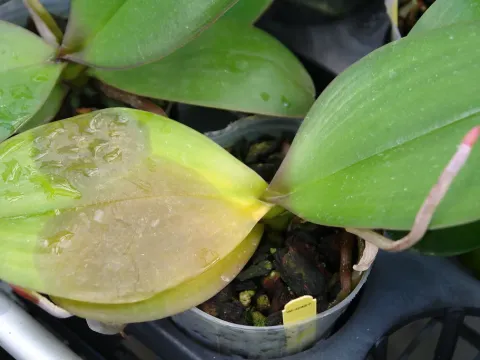
Initial symptoms include the appearance of small, water-soaked spots on the surface of plant parts. These spots expand rapidly as the internal tissues begin to liquefy.
A hallmark sign of Erwinia infection is a foul, pungent odor. This smell is produced by the byproduct of the breakdown of plant cells and secondary colonization by other microbes.
Root crops show deep, mushy, and darkened lesions that spread internally. Eventually, the entire interior of the vegetable may turn into a soft, watery, and pulpy mass.
In leafy greens and stems, the disease manifests as rapid wilting and collapse. The vascular system is frequently compromised, leading to the death of the above-ground portion of the plant.
Under conditions of high humidity, a slimy, milky-white or cream-colored bacterial ooze may emerge from the infected tissues, containing a high concentration of the pathogen.
Soft rot thrives in environments with high relative humidity, typically above 85%. Constant moisture is essential for the bacteria to spread through tissues and across surfaces.
The optimal temperature for the growth and enzymatic activity of Erwinia carotovora is between +20°C and +30°C. Development slows down significantly at temperatures below +10°C.
Poor ventilation in storage facilities is a major risk factor. When air circulation is restricted, moisture accumulates on the surface of produce, facilitating rapid bacterial colonization.
Fields with poor drainage or irrigation practices that leave standing water create perfect conditions for bacterial outbreaks, especially after periods of heavy rainfall.
Wounding is a critical prerequisite for infection. Mechanical injuries caused by harvesting equipment, pests, or hail provide direct entry points for the bacteria to enter the host.
The economic impact of soft rot is severe, as it causes massive losses during the post-harvest phase. Affected produce becomes completely unmarketable due to the rapid liquefaction.
The disease can destroy entire storage batches within a few days. Once one item becomes infected, the moisture and bacteria spread quickly to adjacent healthy units, leading to total loss.
In the field, soft rot causes plant mortality and reduced yields. For sensitive crops like cacao and rice, the pathogen affects key growth tissues, weakening the plant's overall viability.
Significant expenses arise from the need to sort and discard spoiled produce. Furthermore, the presence of the pathogen imposes limitations on export and trade, as contaminated shipments are often rejected.
The persistence of Erwinia in the soil complicates agricultural planning, often requiring long intervals between susceptible crops to lower the pathogen population levels.
Integrated management is essential for controlling soft rot. The foundation is using clean, disease-free seed and maintaining general hygiene in the growing environment.
During and after harvest, minimize mechanical injury to plant tissues. Gentle handling significantly reduces the number of entry points for the bacteria.
- Implement proper drying of produce immediately after harvesting.
- Maintain strictly controlled, dry, and well-ventilated storage environments.
- Sanitize all containers, equipment, and storage areas regularly.
- Control pests that damage plant tissues to prevent secondary bacterial infections.
- Practice effective crop rotation to prevent the buildup of soil-borne inoculum.
Ventilation is the most effective post-harvest tool. By keeping surfaces dry, you inhibit the ability of the bacteria to multiply and invade the produce tissues.
Chemical control options are limited and generally preventative. Copper-based sprays may help in field conditions, but they cannot eradicate an infection once the soft rot process has started.