
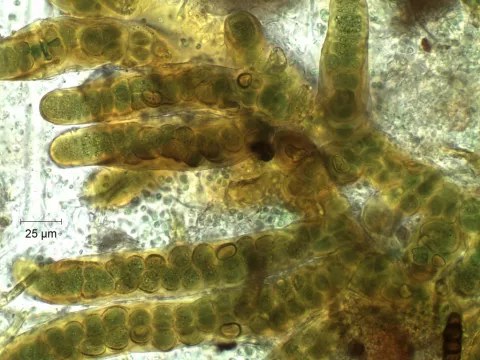
Stigonema
Stigonema
Stigonema is a genus of filamentous cyanobacteria, commonly known as blue-green algae. Unlike typical fungal pathogens, these are photosynthetic organisms capable of atmospheric nitrogen fixation.
What the section contains
Stigonema
They possess a complex morphology characterized by true branching filaments. In agriculture, their presence usually indicates a disruption in the microbial balance on the surface of growing media or plant bark.
Although Stigonema rarely acts as an aggressive parasite, it serves as an indicator of excessive moisture. Biologically, they are autotrophs that colonize weakened or damp surfaces.
Propagation occurs vegetatively through filament fragmentation (hormogonia). These fragments are easily transported by water, wind, or agricultural tools to new locations.
In soil and on plant surfaces, they form dense biofilms that can hinder normal gas exchange and impede plant tissue health.
Affected areas exhibit dark green, brown, or nearly black velvety coatings. These are most commonly found on tree trunks, greenhouse surfaces, or moist soil beds.
When dry, the coating becomes hard and brittle, often resembling a crust. On tree bark, it is frequently mistaken for lichen, though Stigonema has a more slimy consistency when wet.
In seedling trays under greenhouse conditions, these algae can form a thick film on the soil surface, blocking oxygen intake to roots and delaying seed germination.
On the leaves of ornamental plants, the growth appears as dark spots, which impair aesthetic value and physically interfere with photosynthetic processes.
- dense dark velvety coating;
- slimy film on damp soil;
- growth inhibition in seedlings;
- distinctive musty odor.
The primary factor for Stigonema proliferation is consistently high humidity in both air and substrate. Without excessive moisture, colony expansion is drastically restricted.
Light intensity plays a vital role as these are photosynthetic organisms. Bright light combined with high humidity creates an optimal environment for rapid growth.
High levels of available phosphorus and nitrogen in soil or irrigation water trigger blooms, particularly in greenhouses where intensive fertilization is common.
Poor air circulation contributes to moisture stagnation, allowing Stigonema to cover large surface areas quickly. In poorly ventilated spaces, the risk of infestation increases significantly.
Neutral to slightly alkaline pH levels favor colonization, whereas acidic conditions can limit the survival and spread of many species within this genus.
The primary damage arises from the physical barrier created on the plant's surface, which impedes transpiration and respiration, leading to weakened plant immunity.
Stigonema biofilms can act as a reservoir for minor pests like springtails or fungus gnats, which subsequently cause damage to the root system.
When developing on the soil surface, algae compete with crops for essential nutrients, particularly nitrogen, which they actively absorb from the growth medium.
Ornamental plants lose marketability due to the dark, unsightly coating, which is extremely difficult to remove without damaging leaf tissues.
Long-term presence of a dense film on soil disrupts its structure and water regime, negatively impacting the overall vitality of the cultivated plants.
The first line of defense is optimizing irrigation and ventilation. Reducing ambient humidity to levels unfavorable for algae survival is essential for effective control.
Mechanical cultivation or loosening of the topsoil layer is highly effective, as it disrupts the integrity of the colonies and denies them necessary light exposure.
The use of copper-based products, such as copper sulfate or Bordeaux mixture, can effectively eliminate Stigonema buildup on infrastructure and tree bark.
It is crucial to manage fertilizer dosages, avoiding excess nitrogen, especially during periods of low light when plants cannot fully assimilate nutrients.
Applying a layer of dry sand or fine gravel as mulch helps isolate the moist soil surface from light, effectively preventing the development of cyanobacterial colonies.