
Strawberry witches broom
Strawberry witches
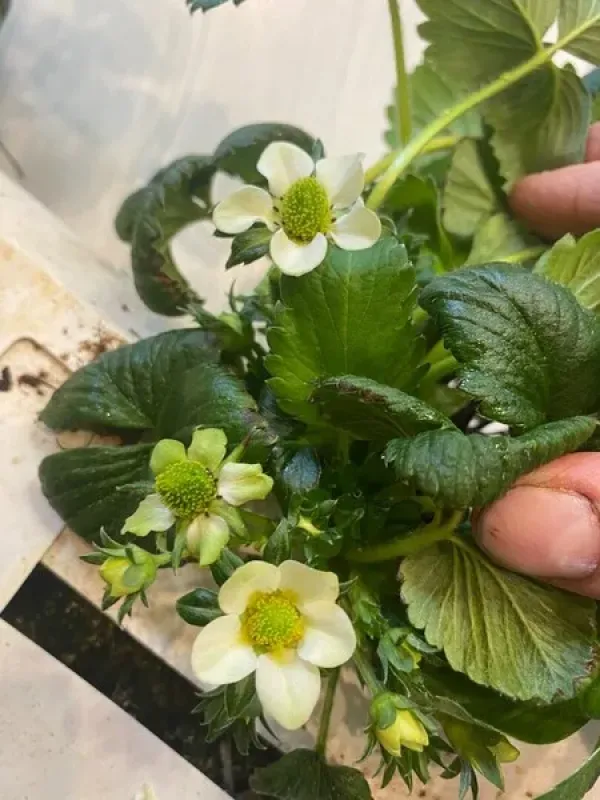
Description
Symptoms
The most distinctive symptom is the proliferation of shoots, resulting in a dense, brush-like growth of the crown. This malformation is the namesake of the disease and is clearly visible during the growing season.
Leaves on infected plants are often significantly smaller than normal, exhibiting chlorosis or reddish hues. The petioles become shortened and fragile, contributing to the stunted appearance of the plant's center.
Flower development is severely impacted, with flower stalks (peduncles) being unusually short and thickened. Flowers may appear deformed or exhibit phyllody, where floral parts develop into leaf-like structures.
Fruit production is drastically reduced or entirely absent. If fruits do form, they are typically undersized, deformed, and of poor quality, rendering them unsuitable for commercial harvest or consumption.
The overall vigor of the plant declines rapidly. As the disease progresses, the root system weakens, leading to the premature senescence of the plant, which often becomes obvious when the plant fails to thrive alongside healthy specimens.
Pathogen
Strawberry witches broom is caused by phytoplasmas, which are specialized bacteria that lack a cell wall. These pathogens inhabit the plant's phloem, disrupting the translocation of nutrients and causing severe physiological abnormalities within the strawberry plant.
As systemic pathogens, phytoplasmas spread throughout the entire vascular system of the host. Once a plant is infected, the pathogen persists permanently, meaning there is no cure for an infected strawberry plant.
The transmission of this disease is primarily facilitated by insect vectors, most notably leafhoppers. These insects ingest the phytoplasma while feeding on an infected plant and subsequently transmit it to healthy strawberry plants during their feeding process.
The pathogen multiplies within the insect vector, and once acquired, the vector remains capable of transmitting the disease for the rest of its lifespan. This highlights the importance of managing insect populations in and around strawberry fields.
Additionally, the disease is transmitted through vegetative propagation. Taking runners from infected mother plants ensures the spread of the phytoplasma to new beds, making nursery management critical for disease prevention.
Why it matters
The disease poses a severe threat to strawberry production, as infected plants become economically non-viable. Once a plant shows symptoms, it is incapable of returning to a healthy, productive state.
Beyond individual plant loss, the infection acts as a reservoir, posing a high risk to neighboring healthy plants. This can lead to rapid field-wide infestation if infected plants are not promptly removed.
Strawberry witches broom causes significant financial losses due to the need for total crop replacement. When a high percentage of a field is infected, the entire plantation must be destroyed to prevent further spread.
Infected plants are also more susceptible to environmental stressors and secondary fungal pathogens. This weakens the entire crop, making standard maintenance and care less effective over time.
The inability to treat this disease with conventional chemical pesticides underscores its danger. Once established in a region, the disease necessitates strict cultural and sanitary practices to mitigate losses.
Protection
The primary control measure is the prompt roguing of infected plants. Any plant showing symptoms must be dug out entirely, including the root system, and destroyed by burning to eliminate the inoculum source.
Starting with certified virus-free planting stock is essential for preventing the introduction of the disease. Propagation material should only be sourced from reputable nurseries that utilize tissue culture methods.
Implementing an effective insecticide program to control insect vectors like leafhoppers is crucial. Regular monitoring of vector populations during the peak growing season helps reduce the transmission of the pathogen.
Maintaining a weed-free environment is vital, as many common weeds serve as alternative hosts for phytoplasmas. Managing the surroundings of the field helps minimize the reservoir of the disease.
- Regular inspections of strawberry beds for early symptom detection.
- Using row covers in early development to prevent insect vector access.
- Proper disposal of all plant debris following the removal of infected plants.
Discussion
No discussions yet — be the first.