
Frankia
Frankiaceae
Frankia is a genus of filamentous, nitrogen-fixing bacteria that form a mutually beneficial symbiosis with the roots of certain plants.
What the section contains
Frankia
These microorganisms are frequently confused with pathogens because they induce the formation of distinct nodules on the host roots.
Unlike disease agents, Frankia bacteria provide essential nitrogen to the plant, significantly enhancing its growth and development.
The infection process is a highly regulated biological event involving chemical signaling between the host plant and the bacteria.
Inside the plant roots, the bacteria differentiate into specialized vesicles that protect nitrogenase from oxygen while converting atmospheric nitrogen.
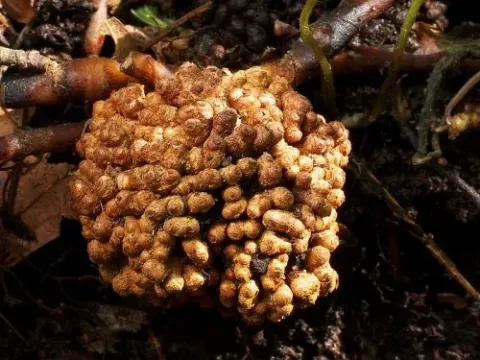
The primary sign of Frankia presence is the development of actinorhizal nodules on the root system of host plants.
These nodules appear as branched, woody, and coral-like structures that can become quite large as the plant matures.
They are usually located near the surface of the soil and have a texture ranging from smooth to rough depending on the species.
Nodule color typically ranges from pale white or light brown to dark reddish-brown due to the accumulation of pigments.
The appearance of these structures is a hallmark of healthy nitrogen-fixing activity in plants like alders, sea buckthorn, and casuarinas.
Successful Frankia activity depends on the presence of specific actinorhizal plants that serve as hosts for the bacteria.
Well-aerated soils are crucial because the bacteria require oxygen for their metabolic processes, although nitrogenase itself is sensitive to it.
Soil moisture levels must be consistent; extreme drought or waterlogging can inhibit the formation and function of root nodules.
The pH balance of the soil significantly influences the distribution and survival of different Frankia strains in the rhizosphere.
Nutrient availability, specifically phosphorus and trace metals like iron, is vital for the optimal function of the symbiotic apparatus.
Frankia is not a plant pathogen and does not cause diseases, harm, or economic loss to crops or forest trees.
In fact, plants associated with Frankia are often more resilient and productive, especially in nitrogen-poor or degraded soils.
The symbiosis acts as a natural fertilizer, reducing the need for chemical nitrogen inputs and promoting sustainable forestry practices.
There are no negative symptoms associated with these bacteria, and their presence should be encouraged in agricultural and silvicultural systems.
Attempts to eradicate these beneficial bacteria would be counterproductive and harmful to the health of the host plants.
There is no need for control measures against Frankia as it is an essential symbiotic partner for many ecological species.
Instead of control, land managers and foresters focus on promoting the presence of these bacteria through soil inoculation.
Inoculation techniques involve transferring soil from healthy established stands to new plantations to jump-start the symbiosis.
Reducing the application of synthetic nitrogen fertilizers can help plants maintain their symbiotic relationship with Frankia.
General soil conservation practices, such as maintaining organic matter and avoiding heavy metal contamination, support the bacterial population.