
Frankia
Frankia
Frankia is a genus of filamentous, gram-positive bacteria belonging to the actinomycetes group. It is crucial to note that this microorganism is not a plant pathogen and does not cause plant diseases.
What the section contains
Frankia
Unlike disease-causing agents, Frankia engages in a mutualistic symbiosis with the root systems of various woody plants and shrubs, forming specialized structures known as actinorhizae.
These microorganisms are capable of effectively fixing molecular nitrogen from the atmosphere and converting it into a form available to the plant, which is vital for nutrition in nutrient-poor soils.
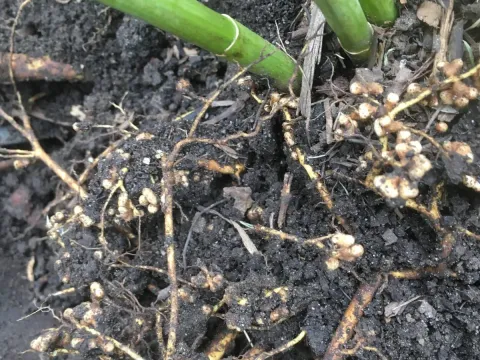
The bacteria colonize root tissues to form characteristic swellings that externally resemble small, multi-branched, often coral-shaped nodules.
This biological feature makes Frankia a valuable component in forestry and land reclamation, rather than a harmful entity requiring chemical suppression.
The primary sign of Frankia presence on roots is the development of branched nodular structures, which can reach several centimeters in diameter.
The surface of these nodules is typically smooth or slightly bumpy, often colored in light, brownish, or reddish tones, depending on the host plant species.
The presence of these structures indicates a healthy and active symbiosis, providing the plant with necessary nitrogen nutrition in nutrient-limited environments.
Unlike galls or pathological outgrowths caused by nematodes or crown gall bacteria, Frankia nodules are structurally organized and do not damage root tissues.
The interior of healthy nodules often displays a pink or reddish hue due to the presence of leghemoglobin, which regulates oxygen levels for the nitrogenase enzyme to function.
Successful development and root colonization require specific host plants belonging to actinorhizal groups, such as alder, sea buckthorn, and casuarina.
Frankia prefers moderately moist soils with sufficient oxygen access, as the nitrogen fixation process is energy-intensive and sensitive to aeration levels.
Optimal dispersal of the microorganism occurs through soil particles and water, especially in the natural habitats of woody species capable of symbiosis.
Soil temperature plays a significant role: the activity of these symbionts increases during the warmer seasons when root system metabolism intensifies.
Levels of available nitrogen in the soil can affect colonization intensity: an excess of mineral fertilizers may lead the plant to suppress the formation of new nodules.
Frankia does not harm plants or reduce their productivity; on the contrary, it acts as a beneficial symbiont that enhances the overall resilience of the ecosystem.
In agronomic practice, the presence of Frankia in the soil is viewed as a positive factor that promotes fertility improvement without the need for nitrogen mineral fertilizers.
The only case of "harmfulness" could be a potential disruption to crop rotation plans if the absence of specific host plant species is required on a particular plot.
The process is often misidentified as a disease only due to the visual similarity of the nodules to pathological growths on roots, which inexperienced gardeners often confuse.
Thus, the biology of Frankia is focused on preserving and supporting plant vitality rather than suppressing it or destroying plant tissues.
Given the complete safety and high utility of Frankia, control measures or protective treatments against this microorganism are neither conducted nor required.
Conversely, in forestry, when raising alder or sea buckthorn seedlings, soil inoculation with specifically cultured Frankia strains is used to accelerate plant growth.
If the presence of root nodules is undesirable for decorative purposes, it is sufficient simply to exclude actinorhizal-forming plant species from that specific crop rotation.
Prophylaxis against this "disease" is unnecessary, as the natural soil microflora in habitats of symbiotic species is normal and vital for their health.
- Soil inoculation for improved growth.
- Natural soil nitrogen enrichment.
- No pesticides required.