
Apple scab
Venturia inaequalis
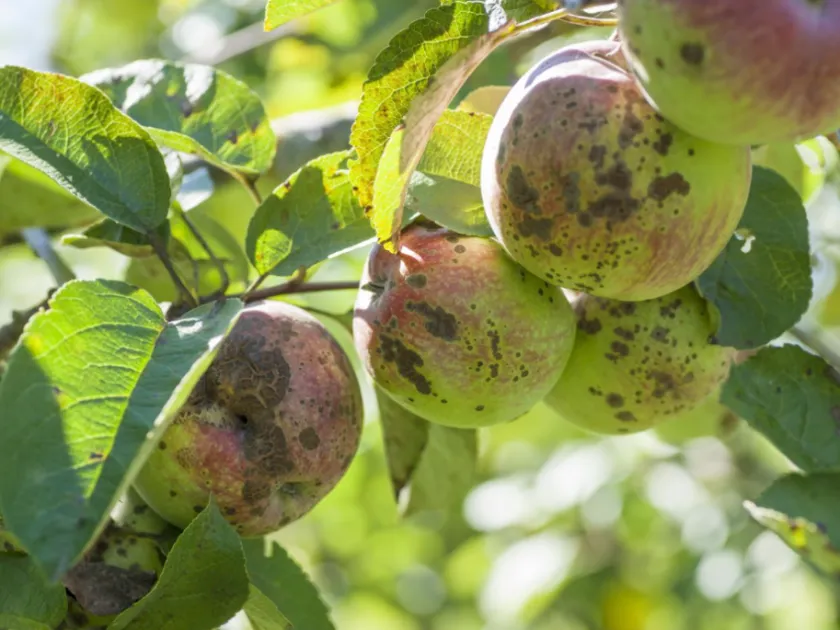
Description
Symptoms
Early symptoms appear as olive-green to brown velvety spots on the undersides of leaves, which eventually darken to black.
On fruit, the infection manifests as distinct, corky, dark brown or black scabby lesions that often cause the fruit to deform and crack.
Severe infections can cause early defoliation, where leaves turn yellow and drop off prematurely, significantly reducing tree vigor.
Infected blossoms and young fruitlets may shrivel and die, directly impacting the potential harvest volume.
Lesions can also appear on young shoots, appearing as blisters that crack open, providing a habitat for the fungus to persist.
Pathogen
Apple scab is caused by the ascomycete fungus Venturia inaequalis, which is a major pathogen affecting apple trees worldwide.
The fungus overwinters in infected fallen leaves on the orchard floor, where it produces sexual spores called ascospores in spring.
Primary infection occurs when these spores are ejected and spread by wind or water splash onto young leaves and emerging flower buds.
Once established, the fungus produces secondary spores known as conidia, which spread throughout the growing season under humid conditions.
The disease cycle is highly dependent on environmental factors, particularly moisture and temperature, which dictate the severity of the infection.
Conditions for development
Development of apple scab is heavily favored by prolonged periods of cool, wet weather, particularly during the early spring months.
High relative humidity and surface moisture on leaves are essential for spore germination and successful fungal colonization.
Poor orchard sanitation, such as failing to remove leaf litter, significantly increases the amount of primary inoculum for the next season.
Dense tree canopies that lack airflow create a microclimate that remains moist for longer, ideal for rapid fungal reproduction.
Orchards located in low-lying areas with poor drainage are more susceptible to severe outbreaks due to persistent damp conditions.
Why it matters
The primary damage is economic, as scabby fruit is considered unmarketable and has very low appeal for fresh consumption.
Infected fruit is highly prone to secondary storage rots, making it impossible to store for extended periods.
Chronic scab infection reduces the photosynthetic capacity of the tree, leading to stunted growth and lower fruit quality.
Loss of vigor from repeated infections makes trees more susceptible to environmental stress and other secondary pests or pathogens.
In high-pressure years, if left unmanaged, the disease can cause total crop failure, impacting orchard profitability significantly.
Protection
Orchard sanitation is critical; raking and destroying fallen leaves removes the main source of the primary spring infection.
Selecting scab-resistant apple cultivars is the most effective long-term strategy for managing the disease in home orchards.
Proper pruning techniques are essential to open up the canopy, promoting better air circulation and faster drying of leaves.
Fungicide applications, when timed correctly based on disease models, are necessary to protect new growth during critical infection periods.
- Regular monitoring of weather data to predict infection periods.
- Rotation of different classes of fungicides to prevent the development of resistant fungal strains.
- Balanced fertilization to maintain strong and healthy growth.
Discussion
No discussions yet — be the first.