

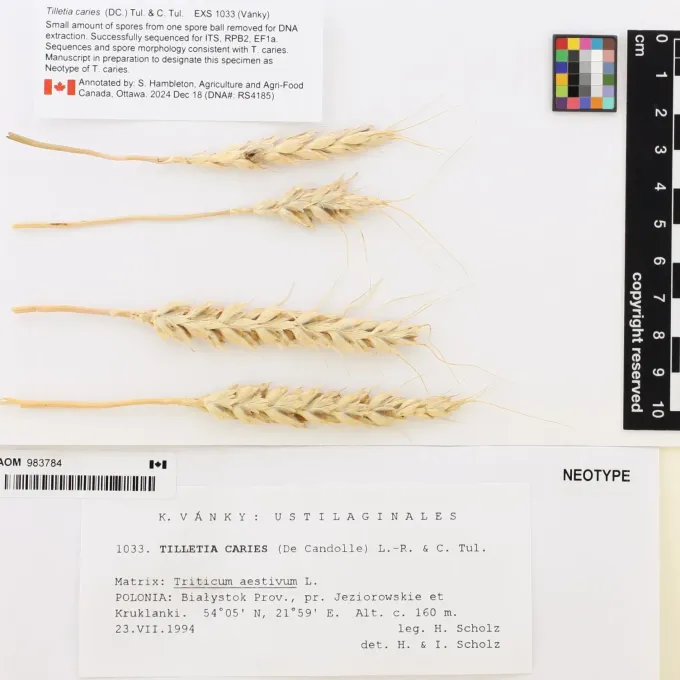
Description
Pathogen
The causal agent of this disease is the basidiomycete fungus Tilletia caries (also known as Tilletia tritici). It is a specialized, obligate parasite that exclusively infects wheat and related cereal crops.
The pathogen survives as teliospores on the seed coat or within the soil. During wheat germination, the spores germinate simultaneously, producing basidiospores that penetrate the young seedling before it emerges from the soil.
Once inside, the fungus grows systemically, following the apical meristem to the developing head. It siphons nutrients from the host, diverting energy away from grain production.
Within the florets, the mycelium replaces the grain tissue and produces a mass of black teliospores. The outer bran layer of the grain remains intact, creating what is known as a "bunt ball."
A hallmark of this infection is the release of trimethylamine, which gives the infected grain a distinct, unpleasant, fishy odor.
##signs##Symptoms are typically not visible until the heading stage, when infected plants reveal signs that differentiate them from healthy ones.
Infected heads often appear darker green than healthy ones. Due to the lack of grain weight, the heads remain erect instead of drooping as they mature, and the glumes tend to spread open more widely.
When the bunt balls are examined, they are found to be filled with a dark, oily, powdery mass of spores rather than the normal starchy endosperm of a wheat kernel.
During harvest, these bunt balls are easily broken by threshing machinery, causing the spores to disperse and contaminate healthy grain and soil.
In cases of severe infection, plants may exhibit stunted growth, reduced tillering, and an overall lack of vigor compared to healthy counterparts.
##conditions##The development of common bunt is strongly influenced by soil conditions during the planting window. The pathogen favors cool, moist soil for successful infection.
Optimal temperatures for infection occur between 5°C and 12°C. These conditions allow the fungal spores to germinate at the same rate as the wheat seeds.
Long, cold autumns extend the period during which the wheat coleoptile is susceptible to penetration by the fungal hyphae.
Deep planting in cold soil slows down seedling emergence, providing the pathogen with a longer time window to successfully infect the young plant tissues.
The primary source of inoculum is the presence of fungal spores on the surface of seeds, which underscores the necessity of preventive measures before sowing.
##harm##The economic impact of common bunt is significant, involving both quantitative yield loss and severe quality degradation of the harvested grain.
Infected grains have no commercial value as they do not contain starch or protein, significantly reducing the overall weight and profit of the harvest.
Contaminated flour exhibits a dark color and a foul odor, rendering it unacceptable for human consumption and baking processes.
High levels of spore contamination can cause health issues for grain handlers, including respiratory irritation and potential allergic reactions.
The massive release of spores during combine harvesting leads to long-term soil contamination, creating a recurring infection risk for subsequent wheat crops planted in the same field.
##control##The most effective and widely used control measure is the systematic seed treatment with specialized fungicides before planting.
Utilizing resistant or tolerant wheat varieties is a key strategic approach to minimize the impact of the disease even in favorable environmental conditions.
Adjusting sowing dates to avoid soil temperatures optimal for spore germination can significantly decrease the incidence of the disease.
Implementing crop rotation is essential, as it allows for the natural decay of spores in the soil while the field is occupied by non-host crops.
- Proper sanitation of farm equipment to prevent the spread of spores between fields.
- Using clean, certified seed lots that have been screened for the presence of bunt balls.
Content graph
Connections · Common bunt of wheat
Most often together:
Marketplace
Products · 1
Community
Discussion
No discussions yet — be the first.