
Description
Symptoms
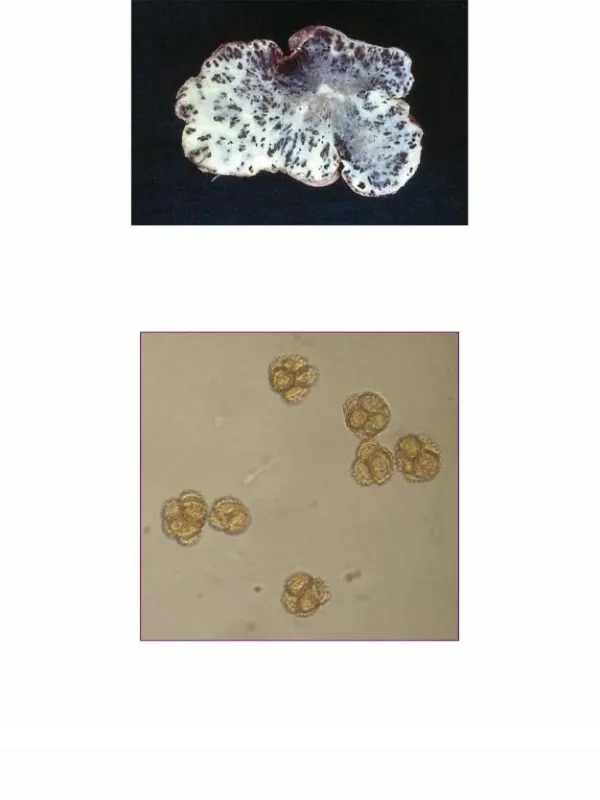
The hallmark symptoms of potato smut appear on the tubers, which become malformed and develop distinct, irregular galls or swellings on the surface.
When an infected tuber is cut open, the internal tissues are largely replaced by a dark, powdery mass of fungal spores, leaving little to no healthy starch tissue behind.
These spore masses are usually olive-brown to black in color. As the disease progresses, the pressure from the spore mass may cause the tuber skin to rupture.
Plants affected by severe infections may show stunted growth and poor vigor, though the most diagnostic signs remain the internal destruction of the potato tubers themselves.
Harvested potatoes from infested fields often appear unsightly and are unfit for consumption, as the fungal spores are released upon cutting or breaking the tuber.
Pathogen
The causal agent of potato smut is the soil-borne fungus Angiosorus solani. This pathogen belongs to the smut fungi and is highly specialized in infecting potato plants.
The fungus survives in the soil primarily as chlamydospores, which are extremely resilient to adverse environmental conditions and can remain viable for many years.
Infection usually occurs during the early stages of tuber development, when the mycelium penetrates the tissues. The pathogen then continues to colonize the tuber internally.
Transmission occurs through infested soil, contaminated equipment, and, most critically, the planting of infected tubers that harbor the pathogen in a latent state.
Due to its potential to cause devastating economic losses and its ability to persist in the environment, Angiosorus solani is strictly regulated as a quarantine pest.
Conditions for development
The development of potato smut is strongly influenced by soil temperature and moisture levels during the crucial period of tuber formation and development.
Spread is facilitated by cultural practices that move soil from one location to another, such as mechanical cultivation, irrigation, or shared use of heavy farm machinery.
Continuous cropping of potatoes in the same field significantly increases the concentration of inoculum in the soil, raising the risk of infection in subsequent seasons.
Cool and moist soil conditions are generally more favorable for the infection process, providing the necessary environment for spores to germinate and penetrate the host.
The persistence of the fungus in the soil is supported by its ability to survive on organic matter, making long-term rotation a challenging but necessary management strategy.
Why it matters
Potato smut causes severe damage by destroying the entire marketable portion of the crop. Infected tubers are typically completely colonized and unsuitable for any use.
Beyond field losses, the pathogen can cause significant post-harvest problems, as the release of spore powder during storage can contaminate healthy tubers in the same batch.
The presence of this fungus triggers quarantine protocols, which may lead to the loss of export markets and strict movement restrictions on agricultural produce.
Economic damage is exacerbated by the long-term impact on the land; fields with high inoculum levels may be taken out of potato production for several years.
In smallholder and commercial operations alike, the disease can lead to total crop failure in heavily infested patches, causing substantial financial strain for growers.
Protection
The most important control measure is a rigorous crop rotation program, typically requiring an interval of at least 5–7 years between potato crops in infested fields.
Strict use of certified, disease-free seed potatoes is essential to prevent the introduction of the pathogen into clean areas or new fields.
Sanitation of farm machinery and tools between sites is crucial to prevent the accidental transfer of contaminated soil harboring the dormant spores.
If an infestation is discovered, infected plants and tubers must be carefully rogued and destroyed, preferably by deep burial or incineration, to contain the spore mass.
Chemical control options are limited due to the soil-borne nature of the fungus, making integrated pest management and strict phytosanitary compliance the primary defense.
Pathogens and affected parts
Affects crops · 1
Discussion
No discussions yet — be the first.