

Disease · bacterial
Common scab of potato
Streptomyces caviscabies
Description
Symptoms
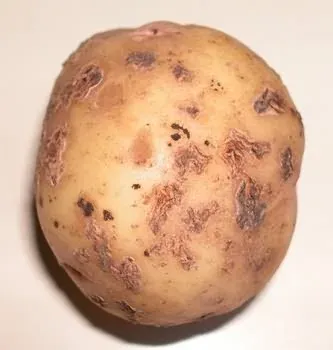
Symptoms appear as corky lesions on the tuber surface. These can vary from shallow, superficial scabs to deeply pitted, crater-like lesions depending on the susceptibility of the cultivar.
The skin texture around the infection site becomes rough, thickened, and often cracks. Over time, the lesions may coalesce, covering a significant portion of the tuber.
Infection is usually visible at harvest time, but early signs can be detected in young tubers as small, water-soaked spots that eventually transition into brown, necrotic areas.
While the internal flesh of the potato usually remains healthy, the exterior damage is severe enough to render the tubers unattractive for commercial sale.
The lesions provide an entry point for secondary rot-causing organisms, which can lead to significant breakdown of the potato tubers during the storage period.
Pathogen
The causative agent of common potato scab is Streptomyces scabies and related species like Streptomyces caviscabies. These organisms are soil-dwelling filamentous bacteria that act as saprophytes on organic matter.
The pathogen primarily affects the potato tubers, although it can also infect other root crops. It enters the tuber through lenticels, wounds, or the points of attachment for stolons during the early development phase.
The pathogen thrives in neutral to alkaline soils. Unlike many fungal pathogens, Streptomyces species are highly tolerant of dry soil conditions, which allows them to persist effectively.
These bacteria survive in the soil for several years by utilizing decaying plant residues as a food source, making it a persistent challenge for farmers in affected fields.
The biological nature of the pathogen makes it difficult to eradicate, emphasizing the need for long-term integrated management rather than simple short-term fixes.
Conditions for development
Development of common scab is highly dependent on environmental conditions, particularly soil temperature and moisture levels during the early tuberization period.
Soil temperatures between 20°C and 25°C are ideal for the pathogen. A dry soil environment during the critical period of tuber initiation significantly increases infection rates.
Soil pH plays a decisive role in the disease cycle. Soils with a pH of 6.0 to 7.5 are highly conducive to the growth of Streptomyces, whereas acidic soils (below 5.0) inhibit its development.
The addition of non-decomposed organic matter or large amounts of lime increases the risk of outbreaks by altering the soil environment to favor the pathogen.
Repeated planting of potatoes in the same field encourages the buildup of the pathogen population, leading to chronic outbreaks in subsequent years.
Why it matters
The primary economic impact of common scab is the loss of marketability. Potatoes with visible scabs are rejected by retailers and consumers, leading to reduced farm income.
Increased waste during peeling is a major concern for both households and processing industries, as the corky tissue must be removed, leading to significant yield loss.
Potatoes affected by common scab exhibit reduced shelf life. The damaged skin allows for increased water loss and provides access to spoilage bacteria during storage.
Infected seed tubers act as vectors for the disease, potentially introducing the pathogen to clean soils and perpetuating the disease cycle on the farm.
Management costs are significantly higher for producers in infested areas due to the need for specific soil amendments, resistant cultivars, and intensive irrigation management.
Protection
Integrated management is essential for controlling common scab. Crop rotation with non-host crops and green manures is one of the most effective cultural practices.
Maintaining adequate soil moisture during the tuber initiation stage is critical, as moist conditions inhibit the penetration of the pathogen into the tubers.
Avoid applying lime to fields where potato scab is a recurring problem. If possible, use fertilizers that have an acidifying effect on the soil, such as ammonium sulfate.
- Selection of resistant potato varieties.
- Implementation of a 3-4 year crop rotation.
- Maintaining high soil moisture during early tuber growth.
- Avoiding fresh manure application before planting.
- Using clean, certified seed potatoes.
Chemical control options include the use of seed tuber treatments, which provide a protective zone around the seed piece, reducing early-season colonization by Streptomyces.
Content graph
Connections · Common scab of potato
Most often together:
Marketplace
Products · 2

Community
Discussion
No discussions yet — be the first.