
Sarcodon scabrosus
Sarcodon scabrosus
Description
Symptoms
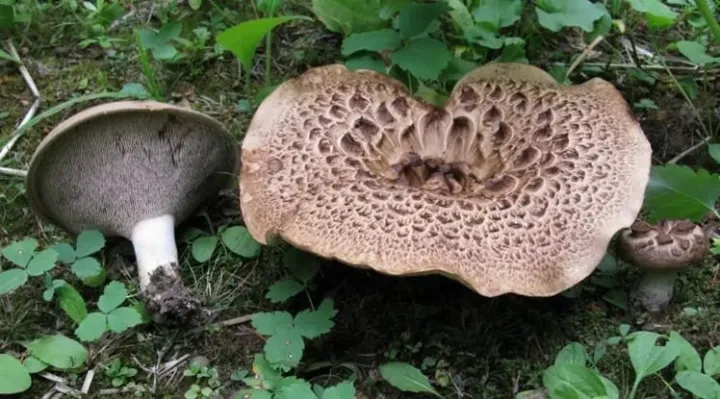
The fruit body is defined by a scaly, brownish cap that becomes rougher as the mushroom matures.
A distinctive feature is the presence of downward-pointing spines on the underside of the cap, which are fragile.
The flesh is known for its intense bitter taste, which makes it unsuitable for culinary purposes despite its appearance.
The stem often features a dark, bluish-green base, which serves as a key diagnostic identification marker.
The texture of the cap feels firm, and the scales may become woody as the specimen ages during the season.
Pathogen
Sarcodon scabrosus is not a plant pathogen and does not cause diseases in agricultural crops or trees.
It is classified as a mycorrhizal fungus that thrives in symbiotic relationships with various tree species.
The fungus plays a beneficial ecological role, aiding in nutrient cycling within the forest ecosystem.
It lacks the necessary metabolic pathways to attack living plant tissue, distinguishing it from parasitic fungi.
From an agronomic perspective, it is considered a harmless organism, not a threat to yield or plant health.
Conditions for development
The species is primarily found in coniferous and mixed forest environments with rich leaf litter.
High soil moisture and appropriate temperature conditions in autumn are critical for the formation of sporocarps.
A healthy forest floor with established root systems is necessary for the colonization of its mycelial network.
It thrives in shaded areas where humidity levels remain stable throughout the active growth phase.
Soil composition, specifically the presence of organic debris, supports the symbiotic life cycle of this fungus.
Why it matters
There is no evidence of harm associated with Sarcodon scabrosus regarding agriculture or commercial plant production.
The fungus does not obstruct plant growth; rather, it facilitates a symbiotic exchange of water and minerals with host trees.
It is not implicated in any plant disease cycles, making it irrelevant to plant pathology control programs.
Economic impact on agricultural sectors is nonexistent, as it does not compete with crops or damage commodities.
No agricultural damage has ever been attributed to this species in scientific literature.
Protection
No control measures are necessary, as the organism provides ecological benefits and is not a pest.
Preventative programs are not required for this species, as it naturally contributes to soil health.
The use of chemical agents to eliminate this fungus is discouraged due to potential disruption of soil microbiota.
Management efforts are focused on forest conservation rather than eradication of mycorrhizal species.
Awareness of its harmless nature is sufficient for any agricultural or forestry planning purposes.
Discussion
No discussions yet — be the first.