

Description
Symptoms
Early symptoms include leaf chlorosis, thinning of the canopy, and a general decline in plant vigor, often misidentified as drought stress or nutrient deficiency.
As the root system decays, the plant shows signs of wilting, premature leaf drop, and eventually, the dieback of branches and twigs starting from the crown.
Examination of the roots reveals a lack of healthy, white root tips. Infected roots appear brittle, blackened, and necrotic, often emitting a foul odor.
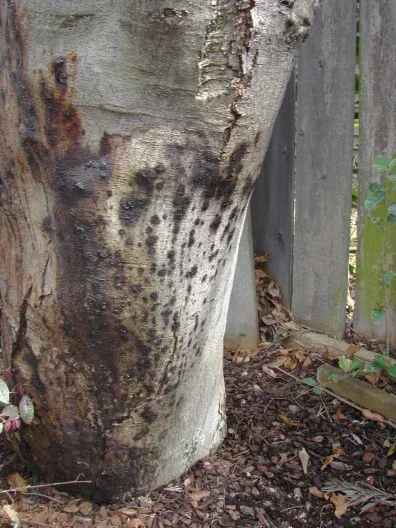
In some species, cankers or necrotic lesions may develop on the lower trunk or the root crown, sometimes accompanied by sap exudation or staining of the bark.
Avocado trees infected with this pathogen often show a rapid decline, where branches die suddenly, and the tree becomes unable to support fruit development.
Pathogen
The causal agent of this disease is the oomycete Phytophthora cinnamomi. It is a soil-borne pathogen often referred to as a water mold.
The pathogen produces motile zoospores in the presence of water, which are capable of swimming through soil films to reach the roots of susceptible host plants.
Phytophthora cinnamomi is notorious for its ability to produce long-lived chlamydospores that can persist in the soil for years, waiting for ideal conditions to germinate.
Once it encounters a root, the mycelium penetrates the epidermis and rapidly spreads through the root system, killing the tissues and disrupting nutrient uptake.
This pathogen has an exceptionally wide host range, affecting thousands of plant species worldwide, making it a critical threat to both commercial and wild ecosystems.
Conditions for development
The primary environmental driver for this disease is water saturation. High soil moisture is essential for the production and movement of the pathogen's zoospores.
Warm soil temperatures, typically between 20°C and 30°C, significantly enhance the metabolic activity and reproductive rate of the oomycete in the environment.
Heavy, clay-rich soils with poor infiltration rates are the most prone to severe outbreaks because they retain the water necessary for the pathogen to spread.
The pathogen is easily disseminated by contaminated nursery stock, movement of infested soil via equipment, footwear, and the flow of surface water during heavy rain.
Poorly drained orchards or garden sites provide a perfect reservoir for the pathogen to thrive and eventually overwhelm the host root systems.
Why it matters
Phytophthora root rot is arguably the most destructive disease in avocado production worldwide, leading to massive financial losses and the abandonment of orchards.
The disease weakens the tree's immune system, making it highly susceptible to opportunistic pathogens and secondary pests that would otherwise be manageable.
Productivity is severely impaired long before the tree actually dies, as the damaged roots cannot provide the necessary moisture and nutrients for quality fruit yield.
Management of the soil is extremely difficult once the pathogen is established, as there is currently no practical way to fully eradicate it from large field sites.
The ecological impact is also significant, as the pathogen causes dieback in native forests, leading to the loss of biodiversity and habitat for local wildlife.
Protection
Preventative measures are paramount; this includes using only disease-free, certified nursery stock and avoiding the introduction of soil from infested areas.
Improving soil drainage through mounding or tile drainage is the single most important cultural practice to minimize the risk of root infection.
Chemical control involving phosphonate-based fungicides (potassium phosphite) can be very effective when applied as a soil drench or trunk injection.
Sanitation practices such as cleaning tools and footwear before entering different sectors of the orchard are critical to prevent the cross-contamination of sites.
- Incorporating organic matter to improve soil structure and beneficial microbial activity.
- Selecting resistant rootstocks for new avocado plantings.
- Regular monitoring of canopy health and foliage appearance.
- Avoiding over-irrigation during the peak disease-conducive temperature windows.
In brief
1
Affects crops
Biology
Pathogens and affected parts
Pathogens
Affected plant parts
root
Content graph
Affects crops · 1
Content graph
Connections · Phytophthora root rot
Most often together:
Marketplace
Products · 1
Community
Discussion
No discussions yet — be the first.