

Disease
Especially harmful
Cereal powdery mildew
Blumeria graminis
Description
Symptoms
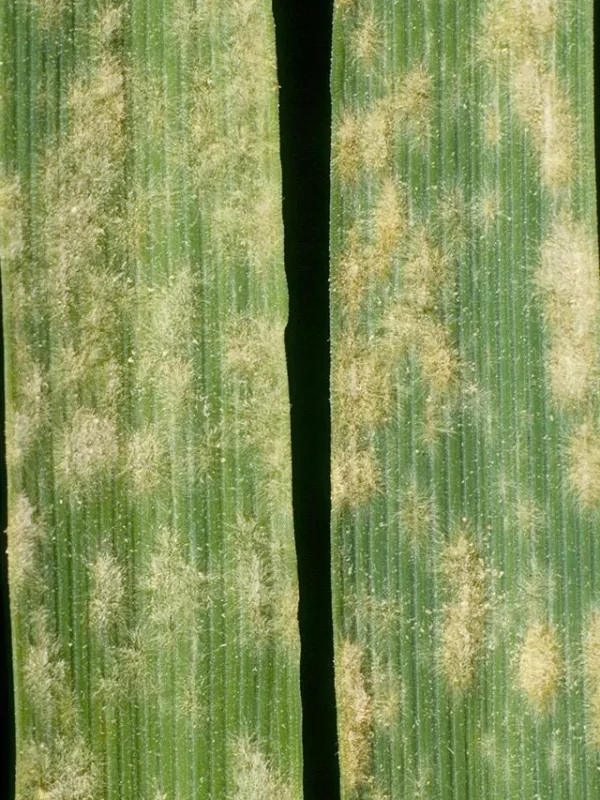
The primary symptom of the disease is the appearance of white, cottony, web-like mycelium patches on the leaves, stems, and leaf sheaths.
As the infection progresses, these white patches become denser, taking on a dusty or powdery appearance, often turning grey or brown.
Small, black, spherical structures known as cleistothecia may develop within the mycelial mat, indicating the pathogen is entering its sexual stage.
Infected foliage often turns yellow prematurely and eventually withers, which weakens the plant and limits the supply of nutrients to the grain.
Severe infestations can lead to the infection of the entire plant canopy, including the heads, causing stunted growth and poor crop development.
Pathogen
The disease is caused by the obligate biotrophic fungus Blumeria graminis (previously referred to as Erysiphe graminis).
This pathogen specifically targets various cereal species, including wheat, barley, rye, and oats, by feeding through specialized organs called haustoria.
The fungus survives the winter as mycelium on volunteer crops or autumn-sown cereals, as well as in the form of cleistothecia on crop debris.
Dissemination occurs primarily via conidia, which are asexual spores carried by wind currents over long distances to new host plants.
The high genetic variability of the pathogen allows it to overcome the resistance of certain crop varieties, making management challenging.
Conditions for development
Powdery mildew thrives in cool to moderate temperatures, typically between 15 and 20 degrees Celsius, accompanied by high relative humidity.
Unlike many other fungal pathogens, powdery mildew does not require free water or leaf wetness to germinate and infect the plant tissue.
Excessive application of nitrogen fertilizers promotes lush canopy growth, which increases the density and humidity favorable for the disease.
High crop density prevents air circulation, leading to microclimates within the field that accelerate the rapid spread of the fungus.
Mild winters and cool, humid springs are particularly conducive to the early development and widespread occurrence of the disease.
Why it matters
The infection significantly reduces the photosynthetic capacity of the plants, which directly interferes with grain filling and biomass accumulation.
Plants affected by the disease exhibit reduced tiller numbers and lower grain counts per head, leading to significant yield losses.
The development of shriveled, low-quality grains is a common consequence of early-season infection, negatively impacting market value.
Depending on the timing of the infection and the susceptibility of the cultivar, crop yield reduction can range from 15 to 30 percent.
In addition to direct losses, diseased plants become more susceptible to other stressors, such as drought, frost, and secondary pathogen attacks.
Protection
The most sustainable strategy is the cultivation of resistant or tolerant crop varieties that are adapted to the specific regional pathogen races.
Implementing crop rotation is crucial to disrupt the infection cycle and prevent the massive buildup of fungal inoculum in the field.
Balanced fertilization practices, specifically avoiding excessive nitrogen, help maintain plant vigor and natural resistance to the pathogen.
When the disease threshold is reached, the application of systemic fungicides, such as triazoles or strobilurins, is recommended for protection.
- Proper management and burial of crop residues after harvest.
- Effective control of volunteer cereals to eliminate inoculum sources.
- Monitoring fields regularly to apply treatments at early stages of infection.
Reference
Connections · Cereal powdery mildew
Most often together:
Marketplace
Products · 4

Community
Discussion
No discussions yet — be the first.